

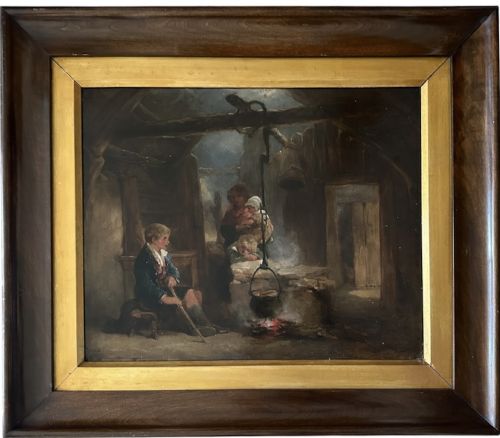
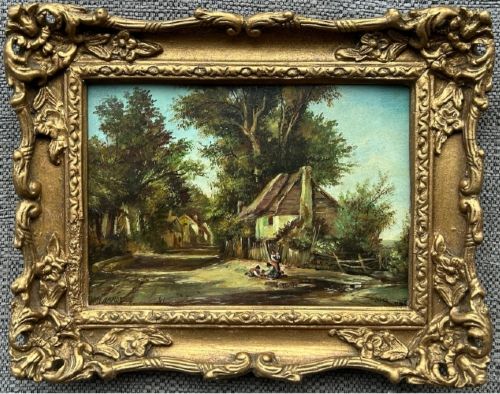
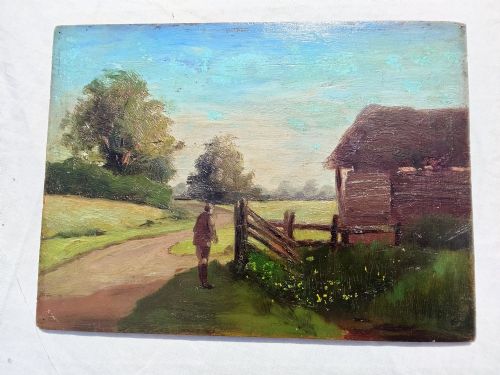
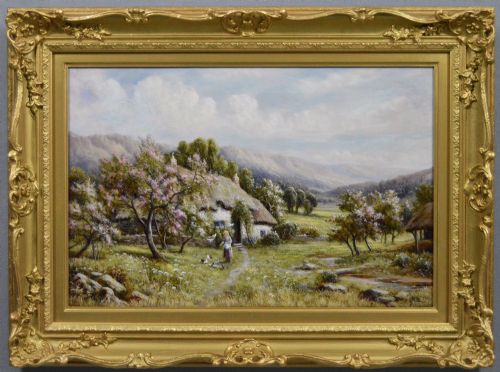


Rural Cottage Oil Artwork
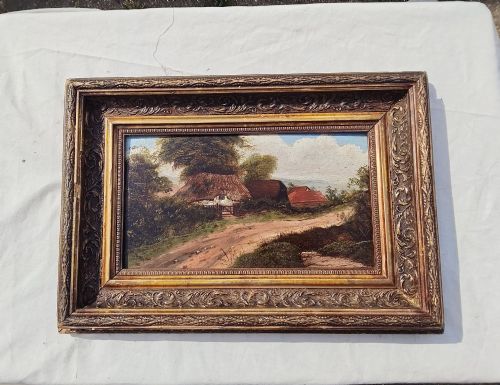
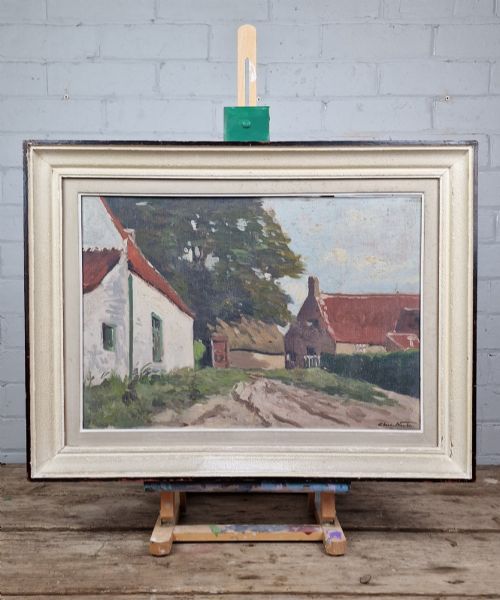
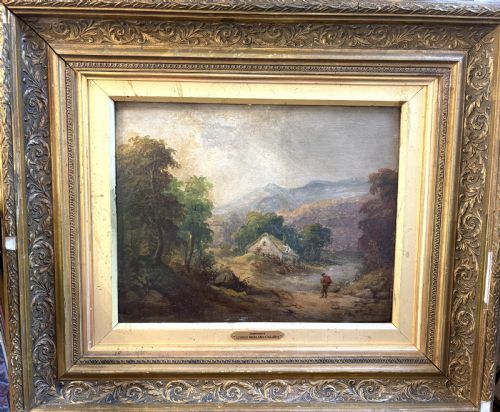
Rural cottage oil artwork captures domestic country scenes on canvas and board from the nineteenth and twentieth centuries.
Rural Cottage Oil Artwork
When you search for rural cottage oil artwork, you encounter painted scenes of country houses, farmsteads, and pastoral landscapes. These works record rural life across Britain and Europe through the brush of artists working from the nineteenth century into the mid-twentieth century.
The most common examples on this page are oil paintings executed on canvas, wood panel, or card. Subjects range from thatched cottages and river banks to farmyards with figures and livestock.
Makers span the English, Scottish, and continental schools, including named artists and regional painters of the Victorian and Edwardian periods. Works often measure modest dimensions suited to domestic interiors.
Materials and Technique
Paintings of this category utilise oil paint applied to prepared supports such as canvas, wooden boards, panels, or stiff card. Canvas provides a textured ground suited to brushwork, whilst wooden boards and card offer rigid surfaces for smaller compositions.
Frames are frequently constructed from wood, including gilt wood and giltwood mouldings that complement the palette of the oil paint. Artists built up layers of pigment to capture light on rural subjects, farmhouses, and natural landscapes.
Rural Cottage Oil Artwork Retail Price Guide 2026
Typical asking prices for rural cottage oil artwork among the pieces listed under this phrase on Sellingantiques today, from the lower quarter to the upper quarter. They describe what is for sale here now, not the wider market.
Geese, cattle, and sheep frequently wander into the background of these quiet cottage views.
Differentiating Quality
Quality rests upon the handling of light, brushwork confidence, and compositional balance within the landscape. Works by established painters demonstrate a secure grasp of perspective and atmospheric tone that elevates the rural subject.
The preservation of the pigment layer and the originality of the mounting frame contribute to the standing of a piece. Finer examples maintain the integrity of the original oil medium without heavy overpainting.
George Morland·Robert John Hammond·Charles Houben·John Horace Hooper·Reginald Grange Brundrit·Frederick James Knowles·William Greaves·Charles Vickers·Robert Finley McIntyre·Lorenzo Headley·Helmut Reuter·Ralph Hedley·John Falconar Slater·Robert Gemmell Hutchinson·Abraham Hulk Junior·Harry Pennell·Ernest Cox·Herbert Royle·Ernest Higgins Rigg·T.B. Garvie·James William Stamper·James Ward·John B. MacDonald·Robert Gallon·George Augustus Williams
The Rural Cottage Oil Artwork Glossary
- Canvas
- A heavy woven fabric stretched across a wooden frame to form a painting surface. It provides flexibility and texture characteristic of traditional oil paintings.
- Oil on Board
- A painting technique where pigment is applied directly to a rigid wooden panel or board rather than fabric. This method appears frequently in nineteenth and early twentieth-century landscapes.
- Impressionism
- A style of painting emphasising spontaneous brushwork and the accurate depiction of light in its changing qualities. British and Scottish variations of this movement appear within these rural scenes.
- Victorian
- A period spanning the reign of Queen Victoria, associated with detailed realism and narrative rural subjects in art. Many landscape and cottage paintings date from this era.
Rural Cottage Oil Artwork: Frequently Asked Questions
What periods do these rural paintings cover?
The works span from the nineteenth century through the Edwardian era up to the mid-twentieth century. Most examples cluster around nineteen hundred and the surrounding decades.
Artists worked in Victorian, Edwardian, and Post-Impressionist styles, recording rural cottages and agricultural landscapes across Britain and Europe.
What surfaces are these paintings created on?
Artists utilised canvas, wooden boards, panels, and stiff card as supports for their oil pigments. Canvas on stretchers remains common for larger landscape compositions.
Smaller works frequently appear on wooden panels or card, which provided a portable and rigid surface for plein air painting.
How should I display an antique oil painting?
Hang paintings away from direct sunlight and sources of extreme heat to protect the canvas and oil pigments. Stable indoor humidity helps preserve both the wooden stretcher and the paint layer.
Ensure the piece is supported securely by its frame, using appropriate wall fixings suited to the weight of the wood and glass if present.
How do I identify the school of a painting?
Examine the signature, subject matter, and handling of the paint to determine the regional school. Many works document specific British or Scottish countryside locations.
Framing style, stretcher construction, and inscriptions on the reverse of the board or canvas often provide further clues to the artist and date.