



Traditional Country Cottage Picture
Traditional country cottage pictures capture rural domestic life through oils and watercolours spanning the Victorian era to the mid-twentieth century.
Traditional Country Cottage Picture
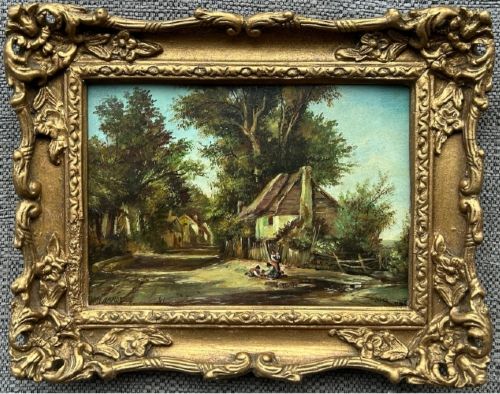
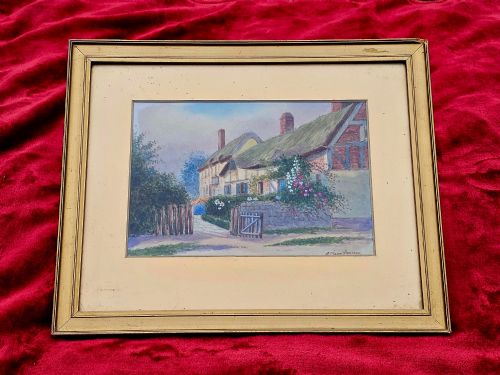
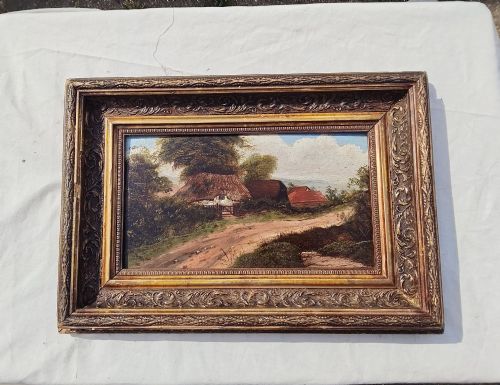
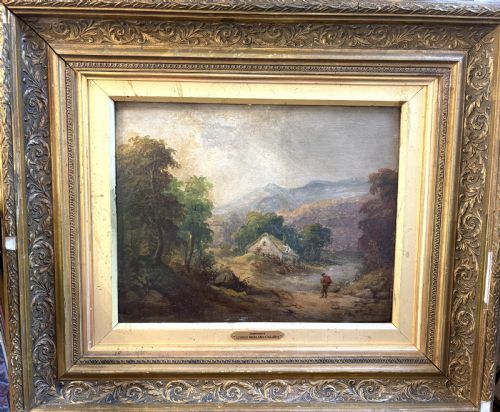
A traditional country cottage picture focuses on rural dwellings, village scenes, and pastoral landscapes rendered in oil or watercolour. These works depict thatched roofs, stone walls, and cottage gardens across Britain during the nineteenth and twentieth centuries.
Most examples originate from the Victorian and Edwardian periods, extending through the nineteen-thirties and nineteen-sixties. Painters record specific locations in Devon, Somerset, Hampshire, and Nottinghamshire alongside anonymous rural settings.
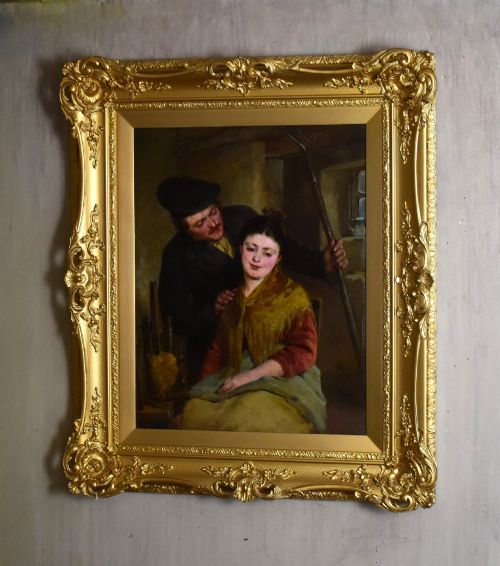
The category encompasses framed oil paintings on canvas, panel, board, and card, alongside detailed watercolours under glass. Framed works frequently utilise period gilt wood frames that complement the domestic pastoral subject matter.
How traditional country cottage pictures were made
Artists apply oil paint to canvas, panel, board, and card, building rich textures and deep colour tones to capture rural light and shadow. Watercolours on paper utilise washes and fine line work to portray village scenes and architectural details.
Finished paintings are housed in wooden frames, frequently finished in gilt to enhance the visual depth of the artwork. Paper works are protected beneath glass within traditional framing mounts.
Traditional Country Cottage Picture Retail Price Guide 2026
Typical asking prices for traditional country cottage picture among the pieces listed under this phrase on Sellingantiques today, from the lower quarter to the upper quarter. They describe what is for sale here now, not the wider market.
Listings feature works across the nineteenth and twentieth centuries, utilising oil, watercolour, paper, canvas, and gilt wood.
What varies in quality
Quality rests upon the handling of light, atmospheric depth, and the precision of architectural and landscape rendering by the artist. Named painters with documented exhibition histories achieve greater recognition than unsigned or amateur works.
The condition and period authenticity of the frame significantly influence the overall integrity of the piece. Original gilt wood frames that complement the painting elevate the presentation of nineteenth and twentieth-century works.
William Howard Hardy·A Marie Parsons·Howard Helmick·George Morland·James Hardy Junior·Abraham Hulk Junior·David Woodlock·Ernest Cox·Herbert Royle·Arthur Claude Strachan·Walter Henry Sweet·Thomas Nicholson Tyndale·Ernest Higgins Rigg·James William Stamper·Theresa Sylvester Stannard·George Frederick Nicholls·Thomas Thomas·David Heward·James Hughes Clayton·G R Vaughan
The Traditional Country Cottage Picture Glossary
- Watercolour
- A painting method where fine pigment is suspended in water-based solution on paper. These works are typically displayed under glass.
- Oil on Canvas
- Pigment mixed with drying oil applied to a woven fabric stretched across a wooden frame. This medium allows for deep layering and textured brushwork.
- Gilt Wood
- Wood treated with a thin layer of gold leaf or metallic gilt paint. These frames are standard for nineteenth-century pastoral paintings.
- Genre Painting
- Artwork depicting scenes from everyday life involving ordinary people in domestic or rural settings. These pieces often feature figures working or tending gardens.
- English School
- A term used to designate artists trained or working within Britain during a specific historical period. It groups works sharing regional stylistic traits.
Traditional Country Cottage Picture: Frequently Asked Questions
How do I date a cottage painting?
Dating relies upon stylistic clues, artist signatures, framing materials, and backing supports recorded on the piece. Victorian works often display heavier gilt frames, while twentieth-century examples show lighter rural palettes.
Examining the canvas preparation or paper type provides further chronological context for unsigned works.
Where should I hang these paintings?
These pastoral scenes suit living rooms, studies, and hallways where natural light enhances the painted tones. Keep them away from direct sunlight and damp conditions to preserve the paper or canvas.
Pairing watercolours with sympathetic wall colours allows the traditional subject matter to stand out.
What is the difference between oil and watercolour?
Oil paintings utilise thick, opaque pigments on canvas or board that create textured surfaces and deep shadows. Watercolours employ translucent washes on paper that produce lighter, luminous effects.
Oils are typically displayed without glass, whereas watercolours require protective glazing.
Are all cottage pictures signed by the artist?
Many works bear legible signatures or monogram initials from listed artists active during the period. Unsigned pieces frequently emerge from regional British schools and anonymous creators.
Both signed and unsigned works capture authentic historical depictions of rural life.