




Ruby Statement Ring
A ruby statement ring commands the room with deep red stones and precious metal, offering bold character for everyday wear.
Ruby Statement Ring
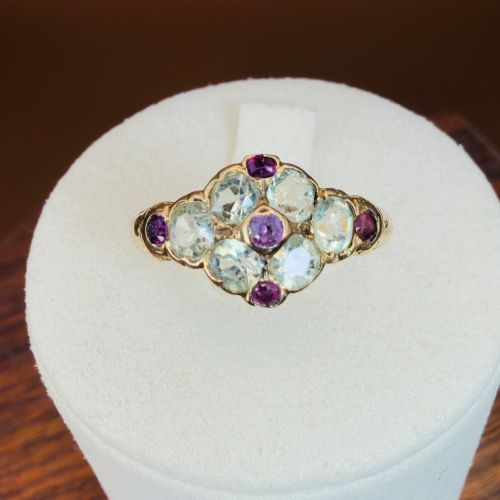
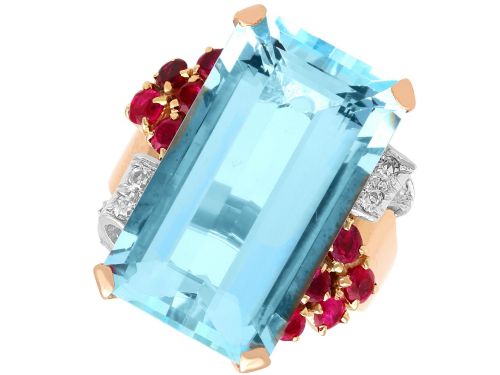
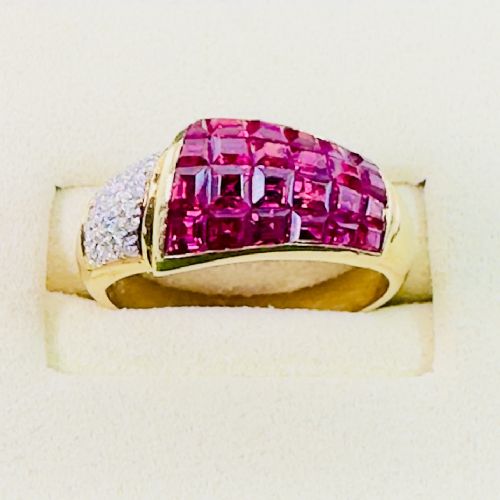
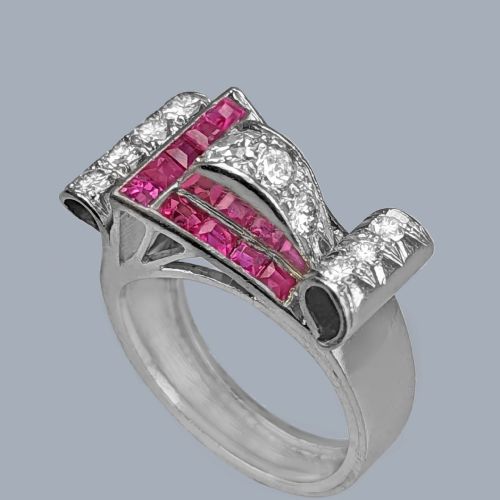
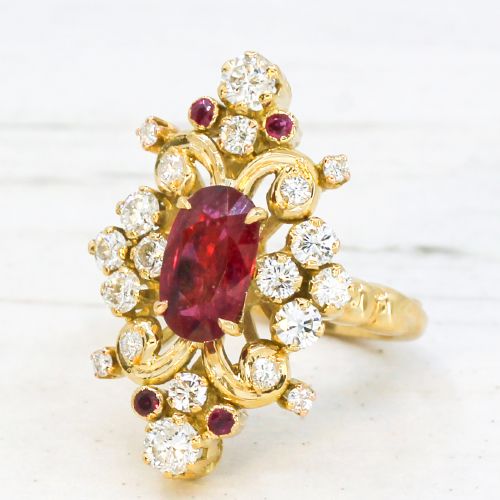
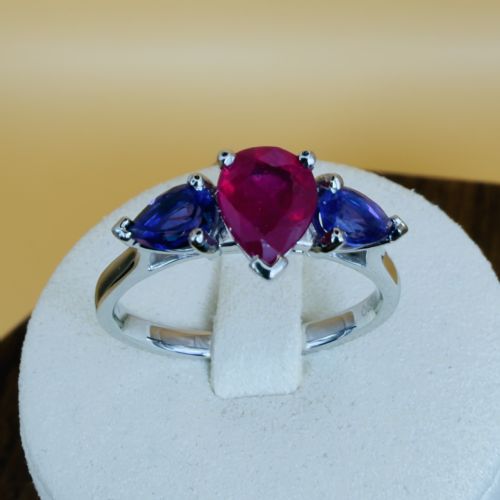
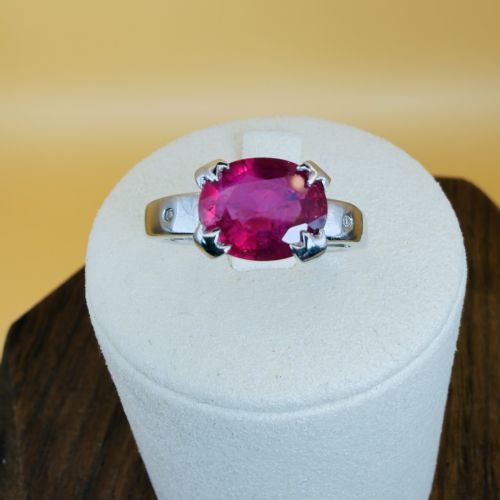
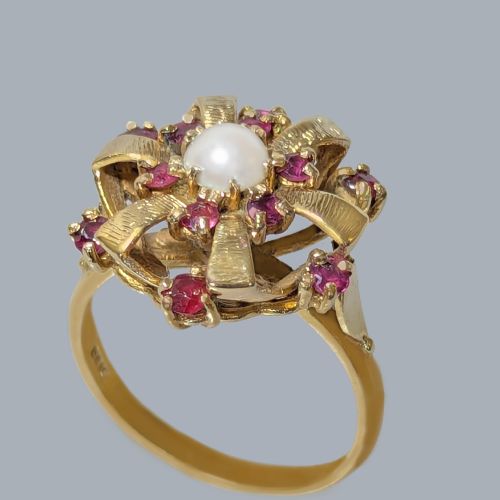
A ruby statement ring is a piece of finger jewellery designed to draw the eye through significant gemstone weight and striking geometric or cluster forms. These rings emerge from periods spanning the Victorian era through the Edwardian years and the mid-twentieth century, including Art Deco, Retro Modern, and 1950s designs.
The most common examples on this page are mid-century cocktail rings and cluster configurations featuring central red stones flanked by diamonds. Yellow gold, white gold, and platinum serve as the primary foundational metals for these robust mountings.
How they were made
Goldsmiths set natural rubies, unheated Burmese stones, and occasional synthetic varieties alongside diamonds into precious metal mountings of 18ct gold, platinum, and yellow gold. Techniques range from delicate Edwardian claw settings to substantial Art Deco platinum work and heavy 1940s tank rings.
Makers utilised cast and fabricated constructions, integrating pavé, cluster, and spiral arrangements to secure the stones firmly within the metal framework.
Ruby Statement Ring Retail Price Guide 2026
Typical asking prices for ruby statement ring among the pieces listed under this phrase on Sellingantiques today, from the lower quarter to the upper quarter. They describe what is for sale here now, not the wider market.
Some mid-century rings wear their tank styling so heavily they practically require a parking permit on your finger.
What varies in quality
The standard of a ruby statement ring rests on the natural origin and saturation of the central red corundum, alongside the scale and clarity of accompanying diamonds. Substantial carat weights in both rubies and diamonds elevate a piece significantly.
The weight, purity, and integrity of the gold or platinum mounting further separate standard workshop output from exceptional mid-century cocktail creations.
Kutchinsky
The Ruby Statement Ring Glossary
- Cluster ring
- A jewellery design where a central stone is surrounded by a tight ring of smaller gems, usually diamonds framing a ruby. This layout maximises visual presence on the hand.
- Platinum
- A dense, durable white precious metal favoured in Art Deco and mid-century settings for its strength and bright finish. It holds intricate stone settings securely without adding excessive bulk.
- Tank ring
- A bold, architectural ring style popular during the 1940s, characterised by chunky, stepped gold work reminiscent of military vehicle treads. These pieces often incorporate calibrated rubies and diamonds.
- Bombé ring
- A domed or puffed ring profile that curves outward from the finger to display pavé-set stones. This voluminous shape became prominent in post-war cocktail jewellery.
- Old cut diamond
- A precursor to the modern brilliant cut featuring a smaller table and wider facets, commonly found in antique and vintage rings dating from the Edwardian and Art Deco periods.
Ruby Statement Ring: Frequently Asked Questions
How do I wear a cocktail ring?
A statement piece of this scale suits the middle or ring finger, where the substantial mounting sits comfortably without hindrance.
Keep other hand adornments minimal to let the red corundum and surrounding diamonds command attention.
Are these rubies treated?
The stones span natural unheated Burmese varieties as well as mid-century synthetic alternatives, depending on the specific decade of production.
Each period brought different supply sources and laboratory techniques to the market.
How do I date a platinum mounting?
Platinum was heavily utilised during the Edwardian and Art Deco eras for its strength in delicate, lace-like geometric arrangements.
Heavier platinum construction often points toward the 1940s when military restrictions on other metals shifted workshop practices.
Can I resize an antique gold ring?
Most gold and platinum bands permit adjustment by a skilled jeweller, though intricate gallery work or channel-set shoulders require careful assessment.
Consult a specialist to ensure the structural integrity of the cluster or basket remains undisturbed.