



Ruby Red Crystal Glass
Ruby red crystal glass brings rich colour and deep reflection to a room, offering striking mantel ornaments, decanters and chandeliers.
Ruby Red Crystal Glass
When you search for ruby red crystal glass, you encounter a range of decorative and functional objects spanning the Victorian era into the Art Deco period. The selection on this page centres heavily on Victorian mantel lustres, perfume bottles, and overlay glass vessels from English, Bohemian, and Belgian makers.
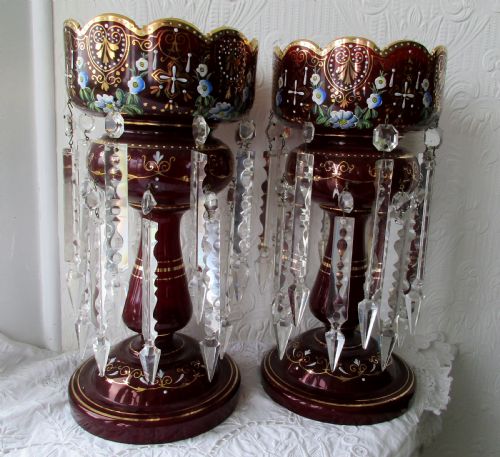
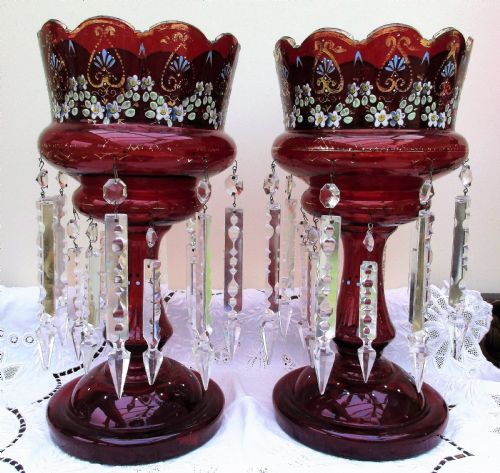
Mantel lustres dominate the nineteenth-century offerings, usually appearing as matched pairs with hanging glass drops designed to catch the candlelight. Alongside these sit decanters, carafes, champagne coupes, and wine jugs, alongside later Art Deco perfume bottles and chandeliers.
How they were made
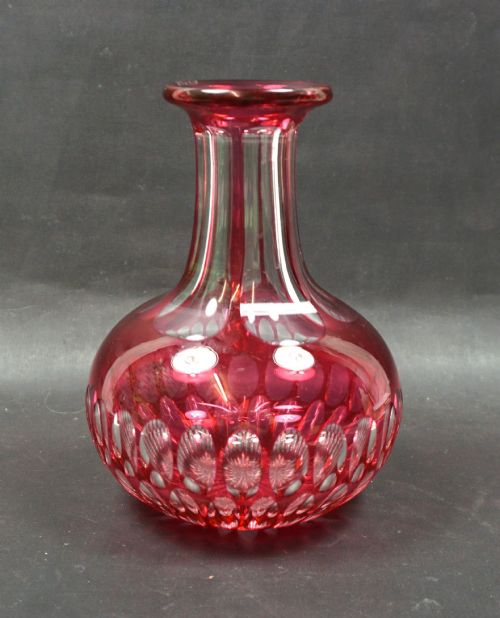
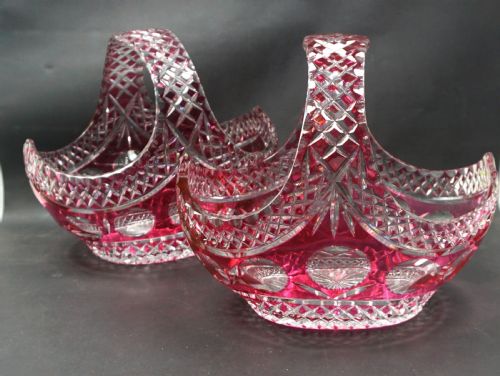
Many of these pieces utilise an overlay or flash technique, where a layer of ruby glass is cased over clear crystal before being cut back to reveal the colour beneath. Engraving and gilding frequently finish the surface, displaying intricate foliate motifs like fruiting vines.
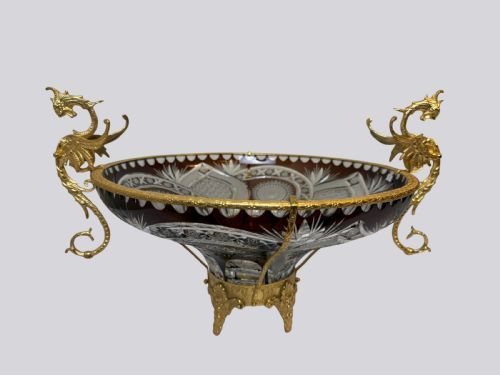
Makers shaped lead crystal and glass through blowing and cutting, often combining the deep red material with gilt bronze mounts or enamel highlights to heighten the contrast.
Materials recorded across the inventory include ruby glass, lead crystal, enamel, and gilt bronze.
What varies in quality
Quality rests in the crispness of the glass cutting and the depth of the ruby colour, where superior examples show sharp facets and brilliant clarity in the underlying crystal. Pieces with intact gilding, original pendant drops, and well-executed wheel engraving command greater appreciation.
Proportion and weight also distinguish the work, as heavier lead crystal vessels with balanced forms and clean thermal joins represent the higher tier of production from English and continental workshops.
Karl Palda·Val St Lambert·Charles Graffart
The Ruby Red Crystal Glass Glossary
- Mantel lustre
- A decorative mantelpiece ornament featuring a central vase or pedestal hung with cut glass crystal pendants. They became popular in Victorian drawing rooms to reflect candlelight.
- Overlay glass
- A technique involving two or more distinct layers of glass fused together, typically a ruby layer over clear crystal. The outer layer is then cut away to create contrasting patterns.
- Cranberry glass
- A transparent pinkish-red glass coloured with gold chloride during the melting process. It appears frequently in nineteenth-century tableware and decorative items.
- Flash glass
- A thin layer of coloured glass applied over a colourless base glass body. This method allows artisans to achieve deep colour saturation while retaining structural clarity.
Ruby Red Crystal Glass: Frequently Asked Questions
How do I clean antique ruby glass?
Wash the glass gently in lukewarm water using mild soap, avoiding harsh abrasives that might damage surface gilding or delicate engraving.
Dry each piece thoroughly with a soft lint-free cloth to maintain the brilliance of the crystal facets.
Are mantel lustres supposed to have hanging drops?
Traditional mantel lustres feature pierced rims designed to hold crystal drops or prisms that refract light. Matched sets with all original drops intact remain particularly desirable.
Replacements do occur, so examining the suspension loops helps confirm originality.
What is the difference between ruby glass and cranberry glass?
Ruby glass tends to have a deeper, more saturated crimson tone, often achieved through layered overlay techniques. Cranberry glass uses gold in the glass mixture to produce a lighter, pinker hue.
Both materials appear frequently across nineteenth-century European decorative pieces.
How can I tell Victorian pieces from Art Deco ones?
Victorian examples lean toward ornate shapes, heavy cutting, and rich embellishments like gilding and enamel. Mantel lustres and engraved decanters typify this period.
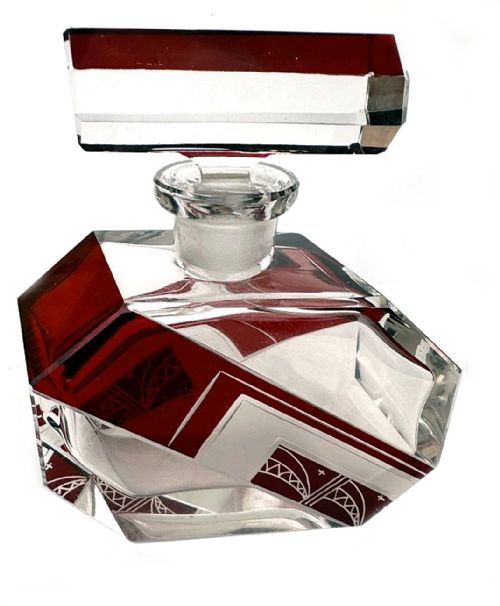
Art Deco items, such as perfume bottles from the 1930s, favour geometric lines, streamlined silhouettes, and minimal surface decoration.