

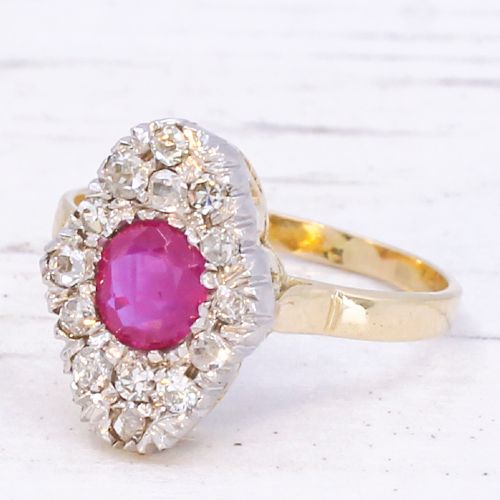
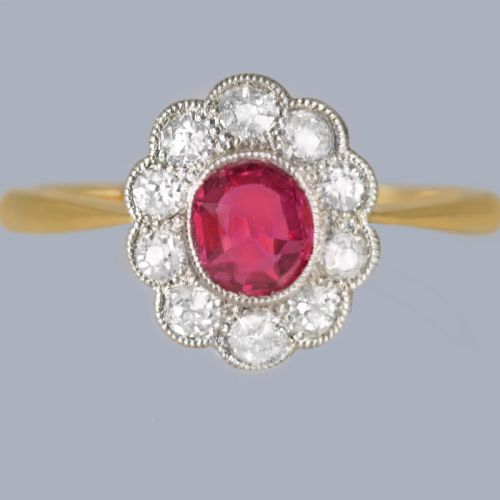

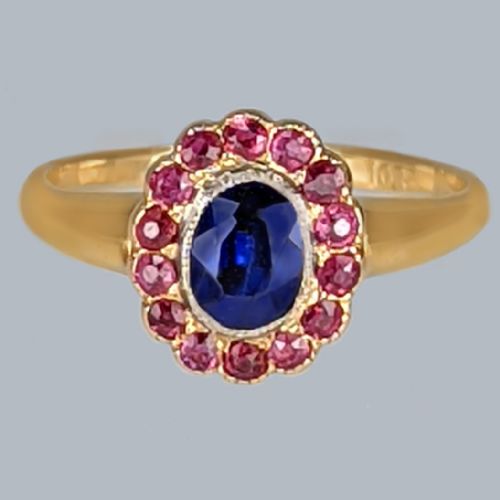


Ruby Halo Ring
A ruby halo ring brings together a bright central stone framed by sparkling diamonds, offering rich colour and striking presence on the hand.
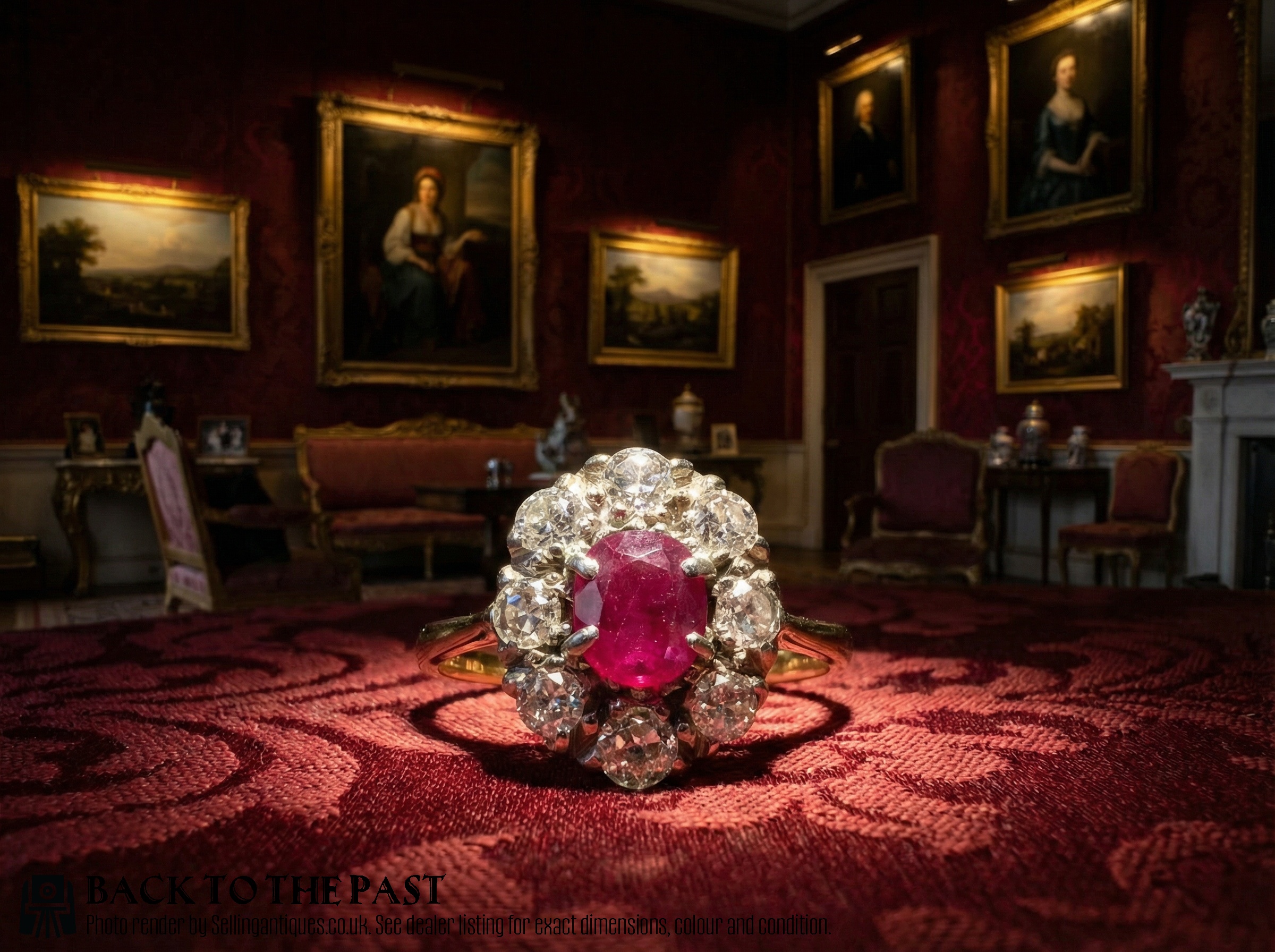
Ruby Halo Ring
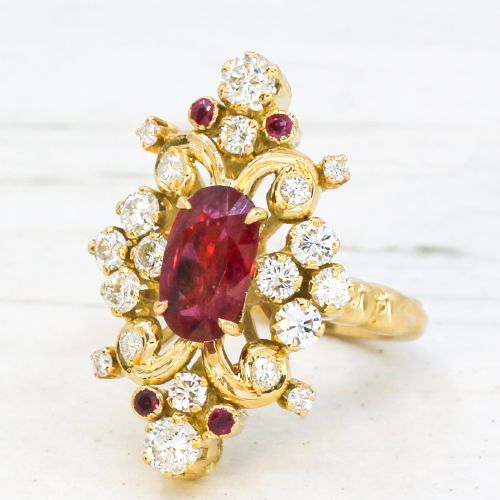
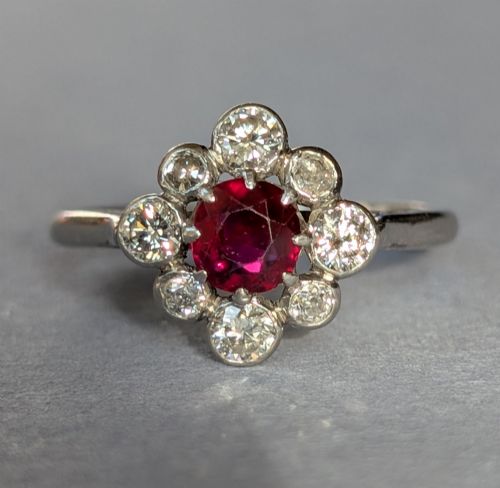
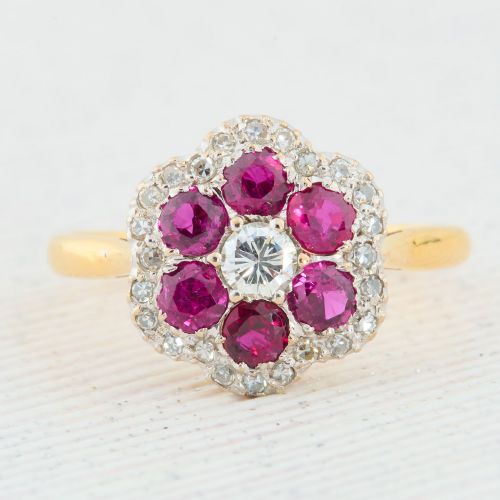
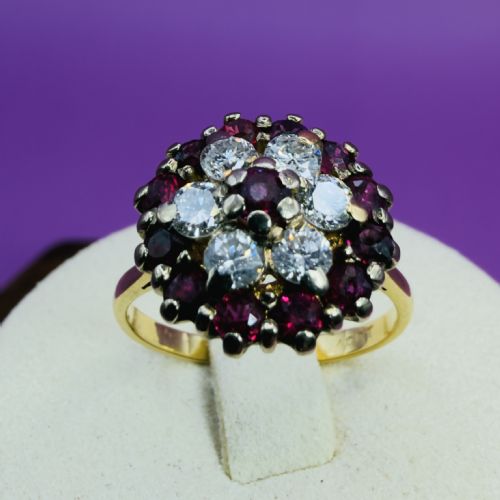
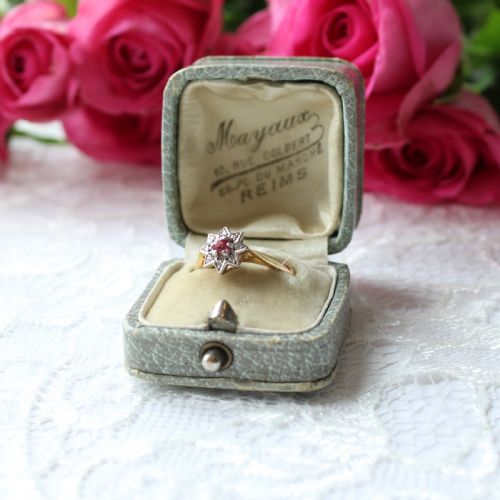
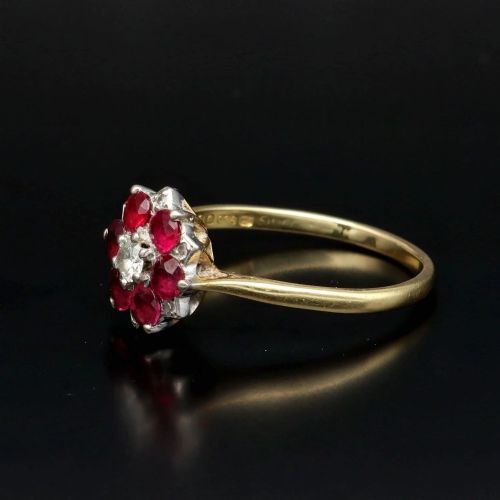
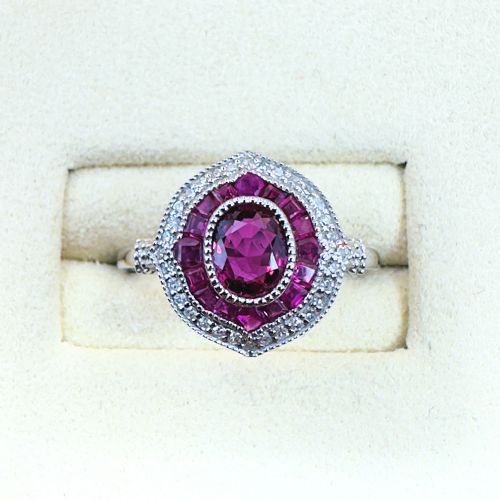
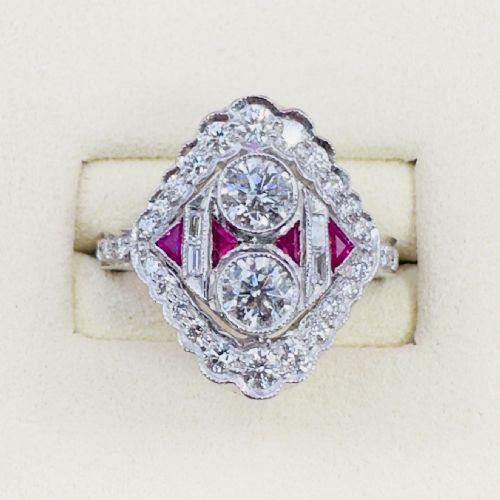
A ruby halo ring consists of a central red gemstone surrounded by a border of smaller accent stones, typically diamonds. These pieces appear across several eras in the record, spanning Edwardian, Art Deco, 1930s, and 1950s designs.
The cluster formation maximises visual impact by making the central ruby appear larger while adding lively brilliance from the surrounding border. Such rings serve traditionally as dress pieces or alternative engagement jewellery.
Edwardian examples lean towards delicate floral or openwork arrangements, whereas 1930s and 1950s variants tend toward geometric clarity or bold cluster proportions. Yellow gold, white gold, and platinum all provide the structural framework for these stones.
How they were made
Goldsmiths constructed these mountings using traditional hand-working methods in platinum and various carats of gold, including 9ct and 18ct white or yellow metal. Metalworkers often combined contrasting metals to highlight the white sparkle of diamonds against warmer gold shanks.
Stone setting involved careful claw or bezel techniques to secure both the central ruby and the surrounding diamond border. Gemstones were shaped primarily as oval or circular cuts to fit the characteristic concentric frame of the halo.
Ruby Halo Ring Retail Price Guide 2026
Typical asking prices for ruby halo ring among the pieces listed under this phrase on Sellingantiques today, from the lower quarter to the upper quarter. They describe what is for sale here now, not the wider market.
Some cluster designs double as miniature metal gardens, transforming precious stones into everlasting floral bouquets.
What varies in quality
Quality differences rest primarily on the origin and optical purity of the central stone, such as documented Burmese material versus synthetic alternatives. The presence of formal gemological reports often accompanies superior natural stones.
Construction standards also distinguish finer examples, visible in the precision of the setting work and the matching clarity and colour distribution of the surrounding diamond halo.
The Ruby Halo Ring Glossary
- Halo
- A ring of smaller accent stones, usually diamonds, encircling a larger central gem. This layout enhances the perceived size and brightness of the principal stone.
- Cluster ring
- A jewellery design featuring multiple stones grouped closely together, often in a floral or geometric pattern rather than a single solitaire setting.
- Synthetic ruby
- A laboratory-grown gemstone sharing the identical chemical and physical properties of a mined ruby. These appear frequently in mid-twentieth-century pieces.
- Rose cut
- An antique diamond cut featuring a flat base and a domed crown with triangular facets. This historic style produces a soft, translucent gleam rather than sharp modern brilliance.
- Platinum
- A dense, durable white metal utilised in fine jewellery manufacture since the Edwardian period. Its strength allows for delicate claw work without risking stone loss.
Ruby Halo Ring: Frequently Asked Questions
Are ruby halo rings suitable for daily wear?
Rubies rank high on the hardness scale, making them robust enough for everyday use when mounted securely in gold or platinum.
However, older settings require periodic inspection by a jeweller to ensure the claws holding the halo and central stones remain tight.
How do I tell an Edwardian ruby ring from a 1930s one?
Edwardian pieces generally feature lighter, more intricate platinum work with floral motifs and delicate millegrain detailing.
Items from the 1930s often show stronger geometric influences and bolder structural lines typical of the Art Deco transition.
What is the difference between natural and synthetic rubies in old rings?
Natural rubies formed within the earth over millions of years and frequently contain internal growth characteristics documented in gem reports.
Synthetic stones were manufactured in laboratories using flame-fusion or flux methods, becoming widely used in affordable jewellery from the mid-century onwards.
Can I resize a vintage halo ring?
Most gold and platinum rings can be adjusted by a competent bench jeweller who understands antique construction methods.
The presence of intricate side shoulders or continuous cluster work means the band must be altered carefully near the bottom of the shank.