




Ruby Halo Dress Ring
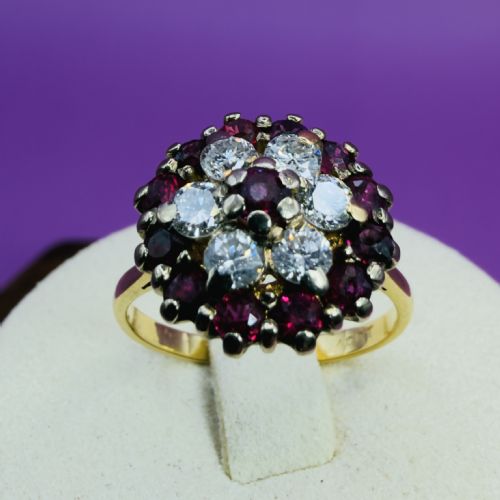
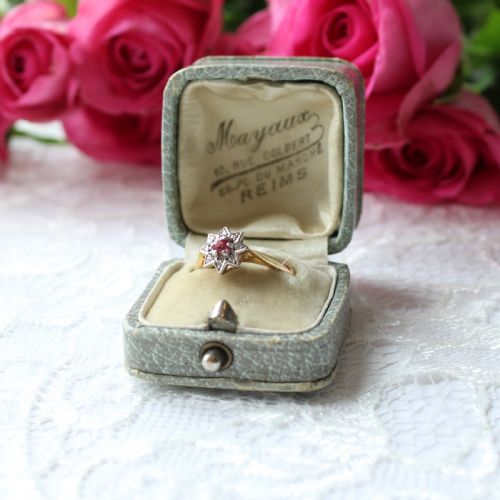
A ruby halo dress ring commands attention with a vivid central stone framed by diamonds.
Ruby Halo Dress Ring
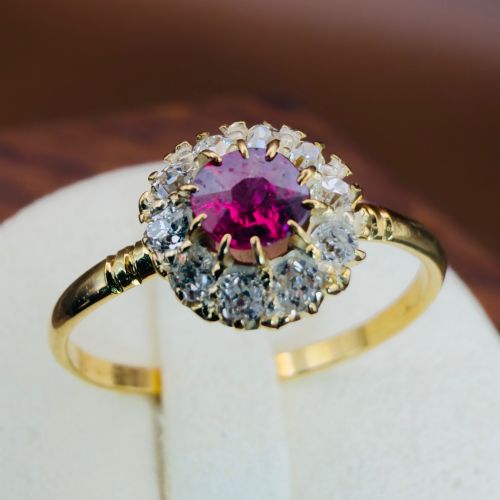
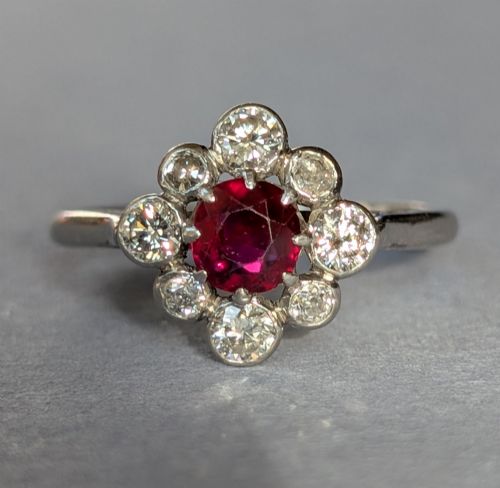
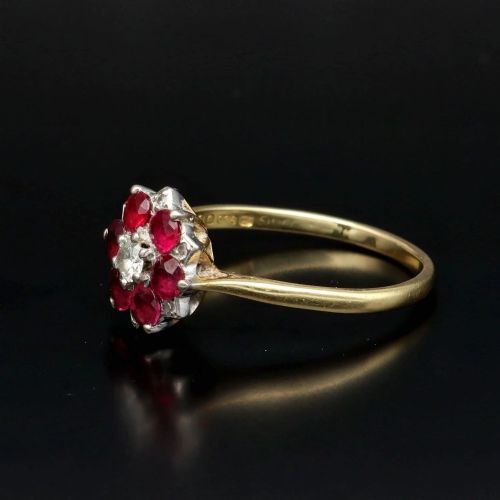
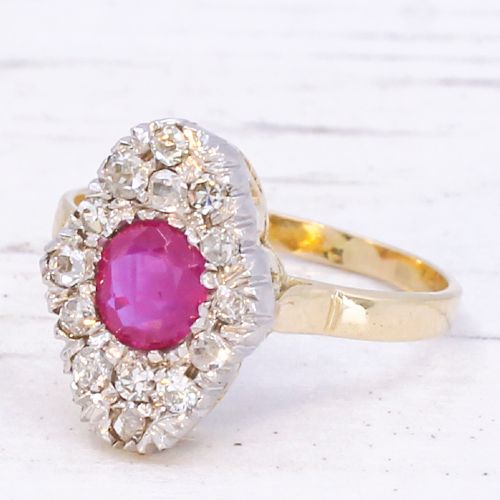
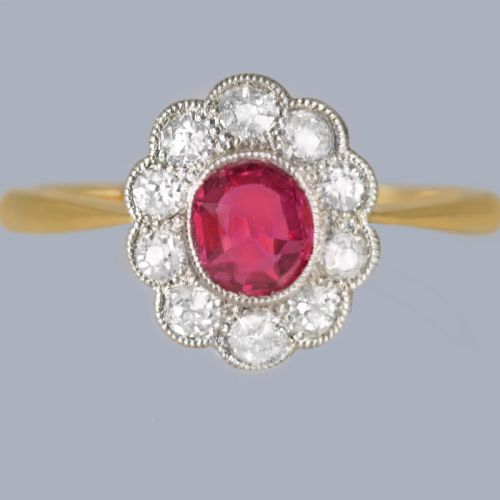
A ruby halo dress ring consists of a central red corundum surrounded by a border of smaller sparkling stones, usually diamonds. These pieces appear across multiple historical periods, including Victorian, Edwardian, Art Deco, and mid-century eras.
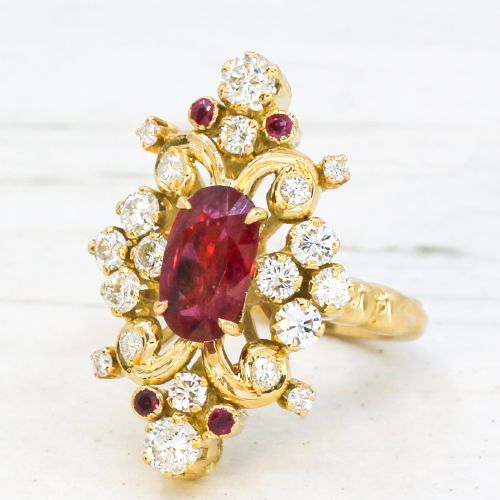
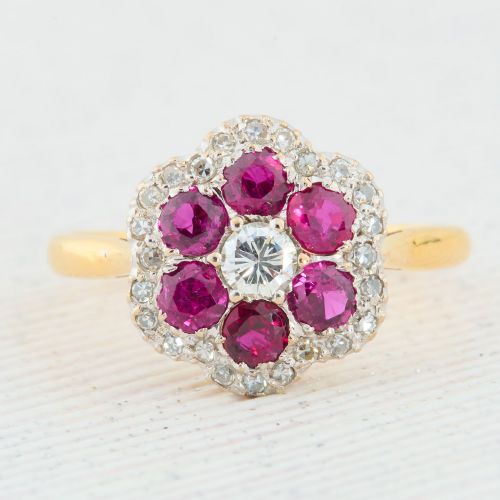
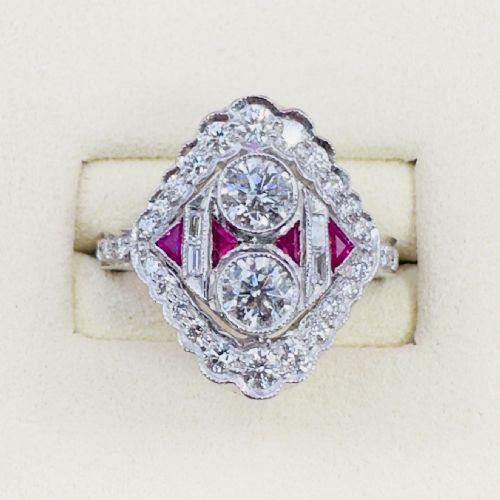
The format prioritises visual impact on the hand, utilising cluster formations that make the central red gem appear larger. Buyers encounter geometric Art Deco shapes alongside floral and traditional oval clusters set on precious metal bands.
Origins span from the late nineteenth century through to the 1960s, showing shifts from heavy yellow gold settings to crisp white gold and platinum structures. Each example reflects the prevailing design language of its decade.
How they were made
Goldsmiths constructed these mountings predominantly in 18ct yellow gold, 18ct white gold, and platinum, frequently combining yellow gold for the shank with platinum or white gold for the stone settings. This dual-metal technique securely holds the diamonds while maintaining a bright backdrop for the metalwork.
Gemstones are secured using claw settings, millegrain edges, or flush mounts, depending on the period. Art Deco and Edwardian examples employ precise hand-pierced platinum work to create delicate geometric patterns around the central ruby.
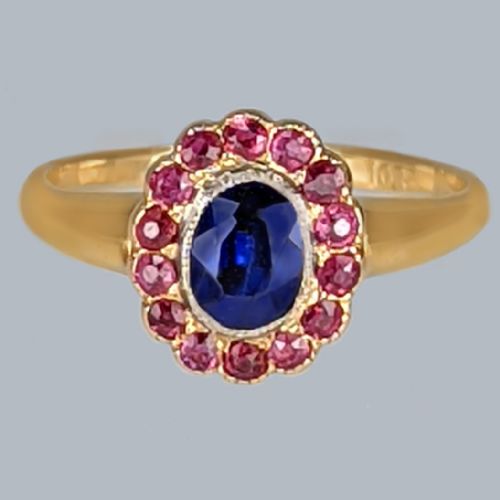
Some Victorian cluster rings incorporate tiny seed pearls alongside rubies, offering a softer alternative to the diamond halo.
What varies in quality
Quality rests primarily on the provenance and optical properties of the central ruby, with Burmese stones and unheated specimens commanding particular interest. The clarity, saturation, and geographic origin noted in accompanying gemmological reports elevate an individual piece.
The standard of surrounding diamonds and the precision of the metal setting contribute equally to the overall merit. Hand-worked platinum detailing and symmetrical cluster arrangements distinguish finer examples from standard production pieces.
The Ruby Halo Dress Ring Glossary
- Halo cluster
- A central gemstone encircled by a ring of smaller diamonds or accent stones. This arrangement maximises the perceived brilliance and spread of the central gem.
- Navette
- A boat-shaped or marquise-pointed ring design that extends along the finger. The elongated silhouette is typical of Edwardian and Art Deco jewellery.
- Millegrain
- A decorative technique featuring a line of tiny, raised metal beads along the edge of a setting. It adds a soft texture frequently seen in antique and period pieces.
- Old cut
- A diamond facet style hand-polished before modern machine-cutting standards emerged. These stones exhibit smaller tables and deeper pavilions that catch candlelight effectively.
- Corundum
- The mineral species encompassing both rubies and sapphires. Chromium impurities give rubies their characteristic red coloration.
Ruby Halo Dress Ring: Frequently Asked Questions
How do I care for a ruby halo ring?
Rubies rank high on the hardness scale, making them durable for regular wear, but the surrounding diamonds and delicate metal settings require gentle handling. Clean the piece using warm soapy water and a soft brush, avoiding harsh chemical ultrasonic cleaners.
Store the ring separately from other jewellery to prevent scratching softer metals or gemstones. Periodic checks by a jeweller ensure the claws holding the halo stones remain secure.
What does unheated Burmese mean?
This designation indicates that the central ruby originated from Myanmar and underwent no thermal enhancement to improve its natural colour or clarity. Unheated stones with desirable geographical origins hold distinct status among collectors.
Gemmological reports accompany such pieces to verify these specific characteristics. Such documentation confirms the natural state of the gem.
How do I date an antique cluster ring?
Dating relies on stylistic clues, metal choices, and the cutting style of the diamonds. Edwardian and Art Deco pieces feature platinum settings and geometric or floral motifs, whereas Victorian examples typically utilise yellow gold and heavier, warmer tones.
Internal hallmarks on the shank provide official assay office stamps and date letters. Comparing these markers against historical records clarifies the exact decade of manufacture.