



Ruby Anniversary Band
A ruby anniversary band combines deep red stones with precious metals, offering a lasting token of enduring devotion.
Ruby Anniversary Band
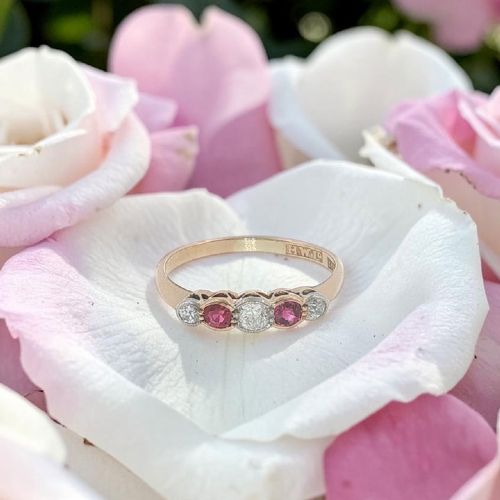
A ruby anniversary band brings together rich red gemstones set into precious metal rings designed for continuous wear. These pieces span periods from the Victorian era through the Edwardian years and Art Deco times into mid-century and modern designs.
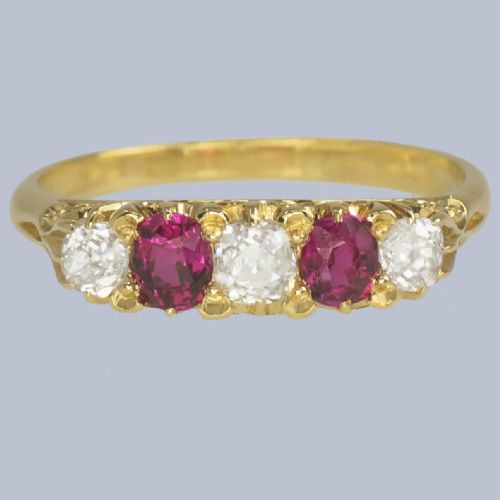
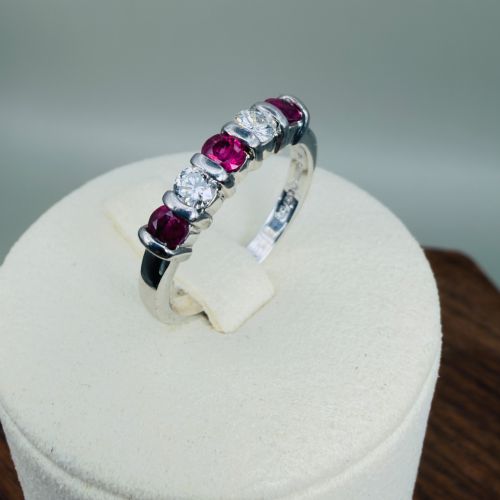
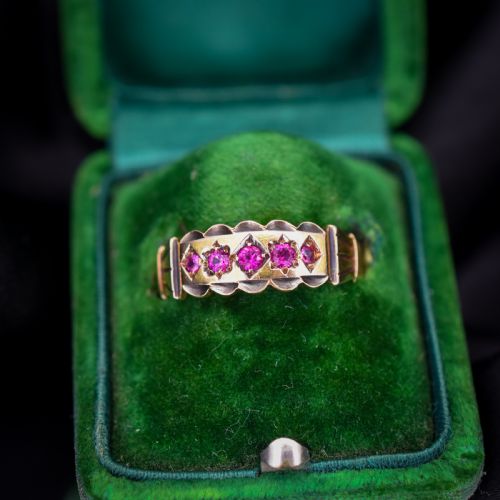
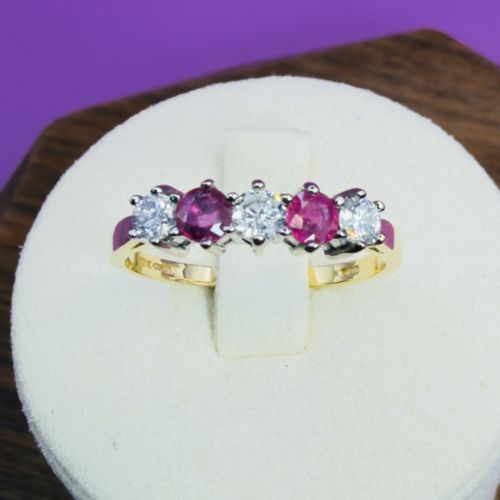
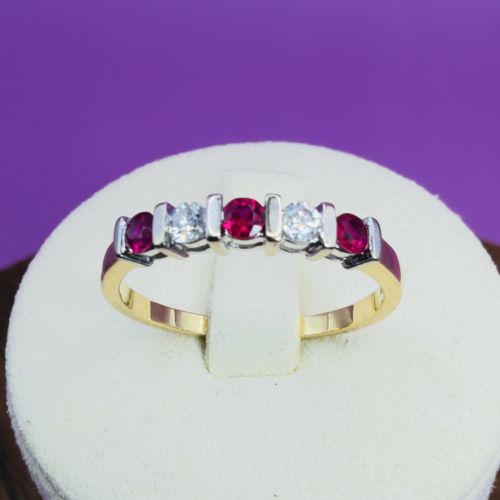
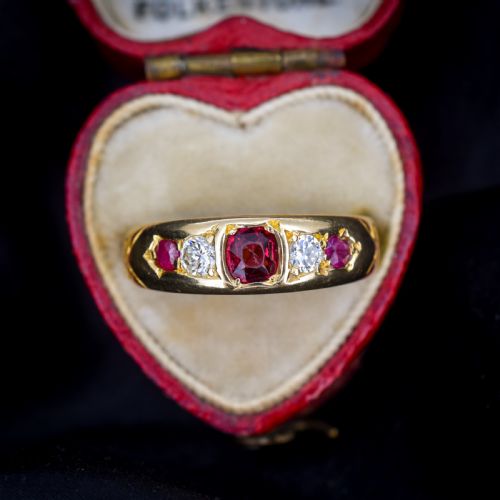
The most common formats on this page include five stone configurations and patterned bands featuring rubies alongside diamonds, pearls, or garnets. Metals range from traditional yellow gold to 15ct gold, 18ct white gold, and platinum combinations.
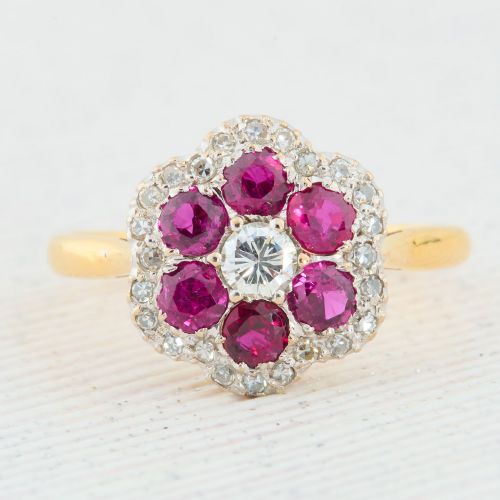
Buyers seeking a ruby anniversary band will encounter rings originating from the nineteenth and twentieth centuries, reflecting diverse aesthetic shifts from floral clusters to straight five stone rows.
Materials and Construction
Goldsmiths utilised 15ct and 18ct gold alongside platinum to mount rubies, old mine cut diamonds, pearls, and garnets securely. Metalwork often incorporates detailed patterning or clean lines suited to Victorian and Art Deco tastes.
Stone settings rely on traditional claw, flush, or cluster arrangements that hold the coloured gems and diamonds safely in place across the band. These techniques ensure the structural integrity of rings intended for daily use.
Listings feature items spanning the Victorian era, Edwardian period, Art Deco years, and mid-century design eras in gold and platinum.
Assessing Quality and Craftsmanship
Quality rests upon the natural depth and saturation of the rubies, the cut and clarity of accompanying diamonds, and the preservation of original metalwork. Finer examples display well-matched stones with minimal wear to the surrounding gold or platinum settings.
The precision of the five stone layout or floral cluster configuration distinguishes exceptional pieces from standard manufacture. Hallmark clarity and intact patterned bands also contribute significantly to the overall standing of the ring.
The Ruby Anniversary Band Glossary
- Five stone ring
- A design featuring a row of five principal gems, commonly alternating or pairing rubies and diamonds. This layout creates a balanced silhouette across the finger.
- Old mine cut
- An early diamond cut characterised by a cushion shape, high crown, and large open culet. It reflects light with a softer, warmer glow than modern brilliant cuts.
- Floral cluster
- A central arrangement of stones resembling a flower head, often placing rubies at the centre surrounded by diamonds. This style was favoured during the Victorian and mid-century periods.
- Platinum
- A dense, durable white metal utilised in jewellery manufacturing for its strength and secure setting capabilities. It provides a bright backdrop for contrasting rubies and diamonds.
- Hallmark
- An official stamp marked on precious metals indicating purity, origin, and sometimes the date of manufacture. These marks help authenticate the age of antique rings.
Ruby Anniversary Band: Frequently Asked Questions
Can I wear a ruby band every day?
Rubies possess good hardness, making these rings suitable for daily wear when proper care is observed. Regular inspection of the metal settings ensures stones remain secure during routine activities.
Gentle cleaning with warm soapy water helps maintain the brilliance of the rubies and diamonds without harming the antique gold or platinum band.
How do I identify a Victorian ruby ring?
Victorian pieces often feature characteristic design motifs such as floral clusters, patterned shanks, or lower carat yellow gold like 15ct. Hallmarks and Chester assay stamps frequently provide definitive clues to the exact decade of origin.
Old mine cut diamonds and natural rubies set in heavier gold bands also point firmly toward nineteenth-century craftsmanship.
What is an Art Deco ruby ring?
Art Deco examples showcase geometric lines, platinum settings, and symmetrical stone arrangements popular during the 1920s and 1930s. These rings often pair calibre-cut or straight-set rubies with sparkling diamonds for a striking contrast.
The aesthetic moves away from Victorian floral themes toward clean, architectural shapes.
Are these rubies treated?
Antique and vintage rubies from the nineteenth and early twentieth centuries generally predate modern enhancement techniques. Natural stones from these eras exhibit organic inclusions that testify to their earth-mined origin.
Examining the gemstone under magnification reveals internal characteristics unique to antique stones.