

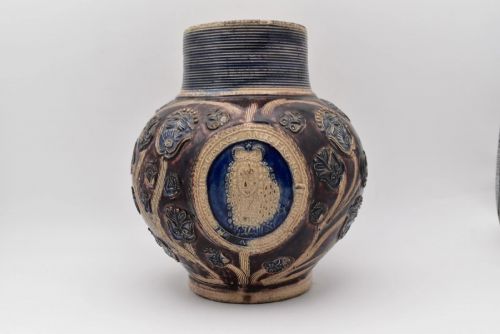


Royal Portrait Pottery
Royal portrait pottery captures monarchs and leaders in earthenware and salt-glazed stoneware, offering a tangible link to historical dynasties.
Royal Portrait Pottery
Royal portrait pottery encompasses ceramic figures, groups, and jugs depicting monarchs, imperial families, and political alliances from the seventeenth and nineteenth centuries. These pieces record significant events such as weddings, jubilees, and international treaties through modelled ceramic likenesses.
The version most commonly encountered on this page is the nineteenth century Staffordshire earthenware figure, frequently moulded as flatbacks intended for display on mantelpieces. These figures often bear titles or names on their bases, depicting Queen Victoria, Prince Albert, Napoleon III, and members of their family circles.
Earlier examples appear far less frequently, represented by seventeenth century salt-glazed stoneware jugs such as Westerwald pieces featuring Willem III. These utilitarian vessels carried political messages and royal likenesses into domestic spaces long before the Victorian Staffordshire industry flourished.
How they were made
Makers shaped these objects using local clays and earthenware bodies, pressing them into multiple-part moulds to achieve the complex forms of standing figures, equestrian groups, and handled jugs. Potters then applied lead glaze, enamel colours, and cobalt or manganese pigments before firing the pieces in kilns.
Stoneware pieces like the Westerwald jugs relied on salt-glazing techniques, where salt thrown into the hot kiln reacted with the silica in the clay to produce an orange-peel texture. Artisans highlighted the incised portraits and applied medallions using cobalt blue and manganese purple washes.
Royal Portrait Pottery Retail Price Guide 2026
Typical asking prices for royal portrait pottery among the pieces listed under this phrase on Sellingantiques today, from the lower quarter to the upper quarter. They describe what is for sale here now, not the wider market.
Object forms vary between standing figures, multi-person figure groups, and commemorative jugs decorated with cobalt and manganese.
What varies in quality
The accuracy of the historical naming and the complexity of the grouping also distinguish finer specimens. Multi-figure groups involving several personages and elaborate bases demand greater technical skill in moulding and firing than single, straightforward standing figures.
Doulton Lambeth·Westerwald Stoneware
The Royal Portrait Pottery Glossary
- Flatback
- A figure moulded with a finished front and sides while the reverse remains flat, designed specifically to stand against a wall or mantelpiece. This method saved clay and reduced weight during firing.
- Salt-Glazed Stoneware
- A dense, impervious ceramic created by throwing common salt into the kiln at the height of the firing. The vapour reacts with the clay body to form a durable, glossy surface with a textured finish.
- Earthenware
- A porous, non-vitreous pottery body fired at lower temperatures than stoneware or porcelain. It requires a lead glaze to render it impermeable to liquids.
- Cobalt
- A metallic oxide used to produce a deep blue pigment on ceramics. It withstands high kiln temperatures without fading, making it ideal for highlighting incised details.
- Manganese
- A mineral oxide utilised by potters to achieve purple, brown, or black tones in underglaze decoration. It provides contrasting dark washes on stoneware vessels.
Royal Portrait Pottery: Frequently Asked Questions
What is royal portrait pottery?
Royal portrait pottery consists of ceramic figures, groups, and jugs created to honour monarchs and political figures. They range from seventeenth-century salt-glazed stoneware vessels to nineteenth-century earthenware portrait figures.
These pieces served as commemorative objects in homes, marking royal weddings, jubilees, and diplomatic alliances. Makers used moulded clay and painted details to make recognizable likenesses of rulers and their families.
How were these figures displayed?
Nineteenth-century Staffordshire figures were primarily designed as flatbacks, meaning the backs were left unadorned so the pieces could sit flush against a wall or mantelpiece. This placement made them prominent decorative elements in Victorian parlours.
Jug forms, such as salt-glazed stoneware pieces, were often used functionally on tables or displayed on sideboards while communicating political loyalties through their portrait medallions.
How do I identify Victorian pieces?
Victorian examples typically present as earthenware figures or groups finished with enamel colours and lead glaze. They frequently portray Queen Victoria, Prince Albert, Napoleon III, or members of the royal family, often with raised lettering on the base.
Earlier pieces from the seventeenth century utilise salt-glazed stoneware with incised cobalt and manganese decoration rather than the brightly coloured earthenware bodies characteristic of the Victorian era.
Who do these figures depict?
The subjects include British and European royalty, most notably Queen Victoria, Prince Albert, and their children such as the Prince of Wales. Other common subjects reflect mid-nineteenth-century alliances, including Napoleon III, the Empress of France, and figures related to the Crimean War.
Earlier pieces from the seventeenth century portray monarchs such as William III on Westerwald stoneware jugs, connecting domestic vessels with specific political eras.
How should I care for them?
Keep these ceramic pieces away from direct sunlight and areas prone to high humidity to protect the glaze and enamel colours. Dust them gently with a soft, dry brush.
Avoid using water or chemical cleaners on nineteenth-century earthenware, as the porous body and old enamel paints can be sensitive to moisture.