


Royal Dux Bohemia Ceramics
Royal Dux Bohemia ceramics bring expressive sculptural forms and delicate painted surfaces into your home, prized for their distinctive continental artistry.
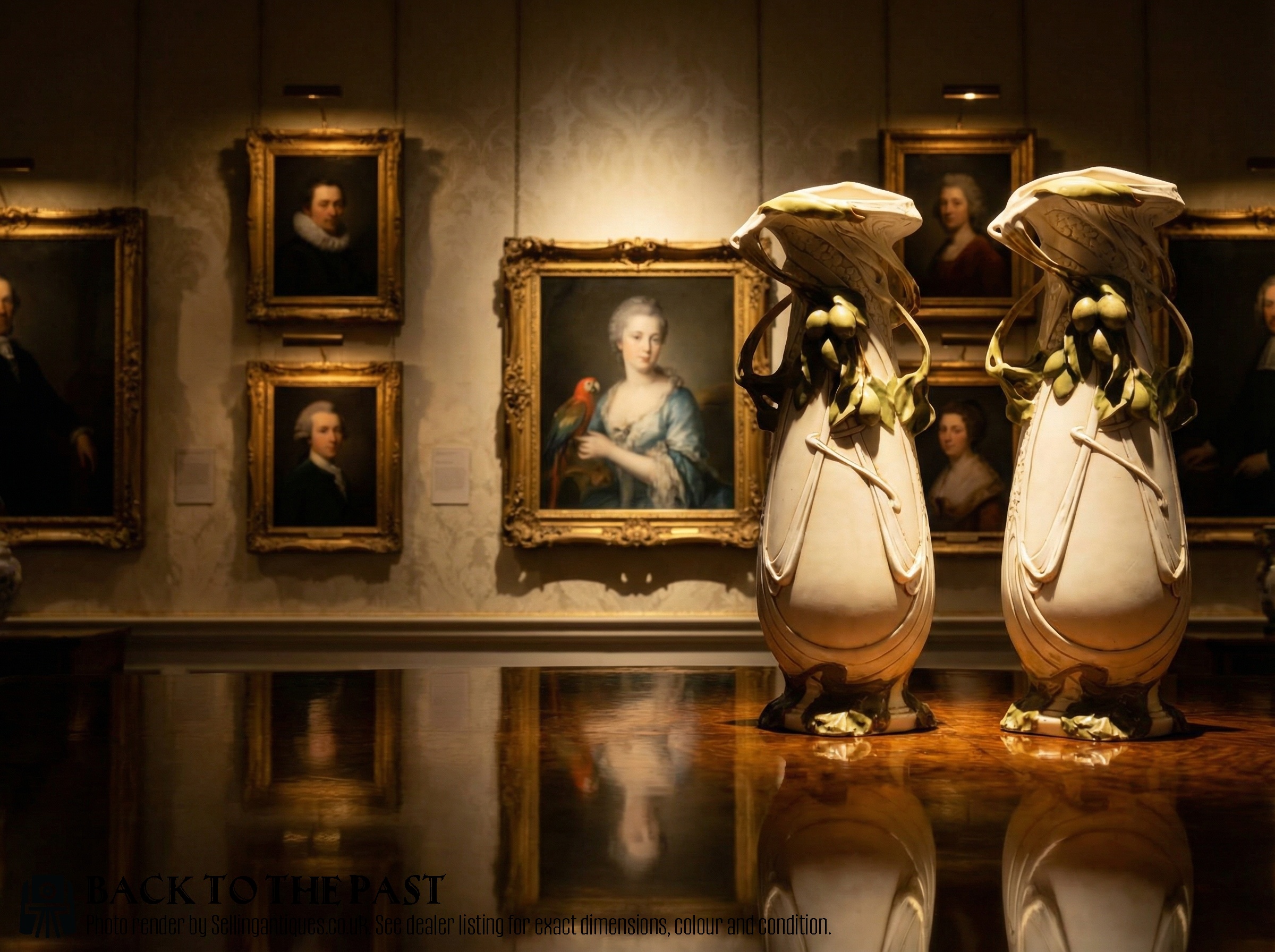
Royal Dux Bohemia Ceramics
When you search for royal dux bohemia ceramics, you encounter figurative and decorative works originating from the famous Bohemian factory. The listings before you span the late nineteenth century into the Edwardian era, capturing the graceful transition of tastes from Victorian styling into flowing continental curves.
You are most likely to meet sculptural figures and vases on this page, often depicting human subjects such as fishermen, water carriers, and young women. These pieces utilise porcelain as their primary medium, rendered in scales ranging from cabinet ornaments to huge, commanding display groups.
How they were made
The makers utilised fine porcelain and terracotta shaped into intricate figures and vases. These forms relied on precise moulding to achieve fluid anatomical details and drapery.
Surfaces received careful decoration through applied glaze, enamel, paint, and gold leaf. Gilt highlights and delicate brushwork accentuated the contours characteristic of the Art Nouveau and Victorian Orientalism movements.
Royal Dux Bohemia Ceramics Retail Price Guide 2026
Typical asking prices for royal dux bohemia ceramics among the pieces listed under this phrase on Sellingantiques today, from the lower quarter to the upper quarter. They describe what is for sale here now, not the wider market.
The listings on this site span the nineteenth century, eighteen-eighty, nineteen-hundred, the Edwardian period, and nineteen-ten, utilising porcelain, terracotta, and gold leaf.
What varies in quality
Quality rests upon the ambition of the modelling and the crispness of the porcelain detail. Large groups and complex figural pairings demand superior technical skill in firing and balancing compared to simpler standalone vessels.
The finesse of the hand painting and the application of enamel and gold leaf dictate the visual success of a piece. Finer examples retain sharp definition in facial expressions and botanical or sculptural ornaments.
H Schubert
The Royal Dux Bohemia Ceramics Glossary
- Porcelain
- A fine, hard ceramic material fired at high temperatures to achieve a vitrified, white body. It provides the smooth canvas necessary for detailed painted and glazed finishes.
- Art Nouveau
- A decorative style prevalent in the late nineteenth and early Edwardian periods, characterised by sinuous, organic lines and floral motifs. This aesthetic heavily influences the flowing figures and vases in these listings.
- Terracotta
- A porous, unglazed or glazed baked clay used for sculptural modelling. It offers a warm earthen tone distinct from white porcelain bodies.
- Gilt
- A thin layer of gold leaf or gold paint applied to ceramic surfaces to highlight decorative details and create rich metallic contrasts.
Royal Dux Bohemia Ceramics: Frequently Asked Questions
What subjects do these figures depict?
The pieces frequently portray human figures engaged in everyday or classical pursuits, including fishermen, water carriers, and young women.
Pairs of figures and large sculptural groups also appear, sometimes accompanied by domestic animals like dogs.
How do I identify Art Nouveau examples?
Art Nouveau pieces display flowing, organic lines inspired by natural forms, moving away from rigid classical symmetry.
You will notice this in the swirling drapery of the figures and the sweeping contours of the vases.
What periods do these ceramics cover?
The listings span from the late nineteenth century through the Edwardian era and into the nineteen-tens.
This encompasses Victorian Orientalism alongside the dominant Art Nouveau aesthetic of the early twentieth century.
How should I display large vases and figures?
Large Royal Dux pieces require stable, sturdy surfaces capable of supporting substantial porcelain or terracotta weights.
Position them where adequate lighting can catch the gilt highlights and painted enamel details.