
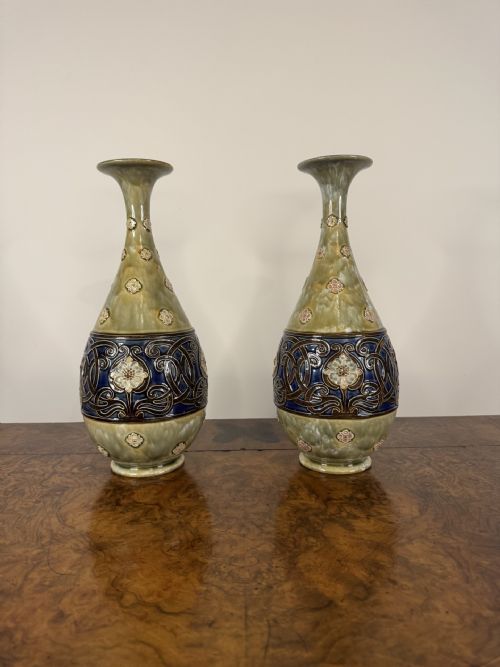
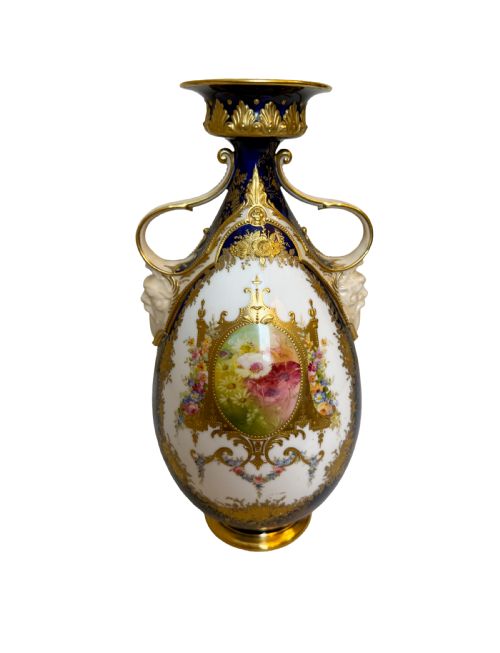


Royal Doulton Urn
Royal doulton urn pieces bring late nineteenth and early twentieth century ceramic artistry into your home through distinctive handled forms and decorative glazes.
Royal Doulton Urn
When you search for royal doulton urn, you encounter vessels shaped for display and utility, originating primarily from the Victorian and Edwardian eras. The selection on this page centres on stoneware and earthenware vases, jardinieres, and related vessels produced across several decades from the late nineteenth century onwards.
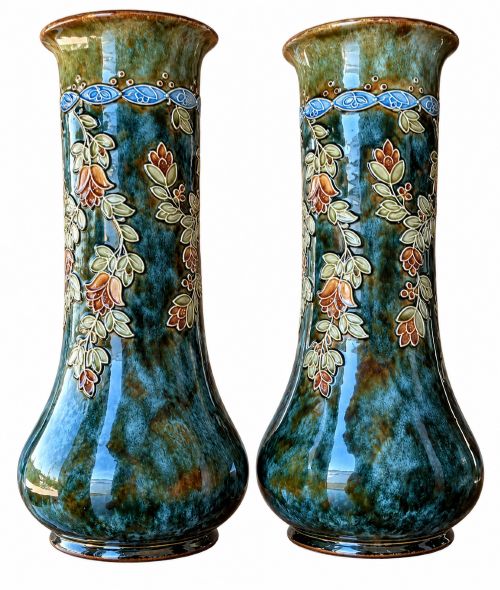
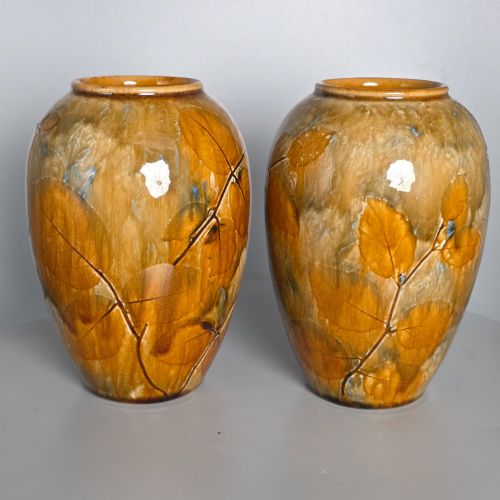
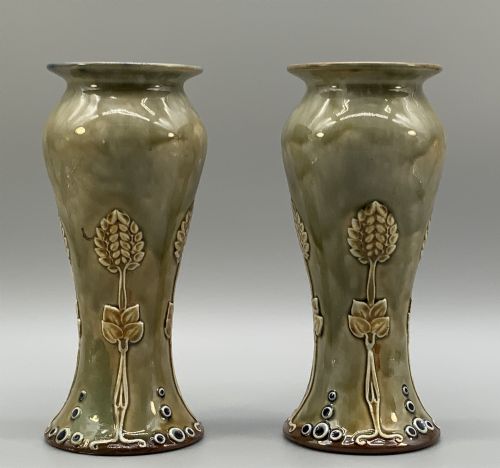
The objects span distinct design movements, with Art Nouveau and Arts and Crafts styles appearing frequently alongside Victorian decorative work. You will find matched pairs and individual pieces, ranging from small cabinet items to large baluster and beaker forms designed to command attention in a room.
Materials and production methods
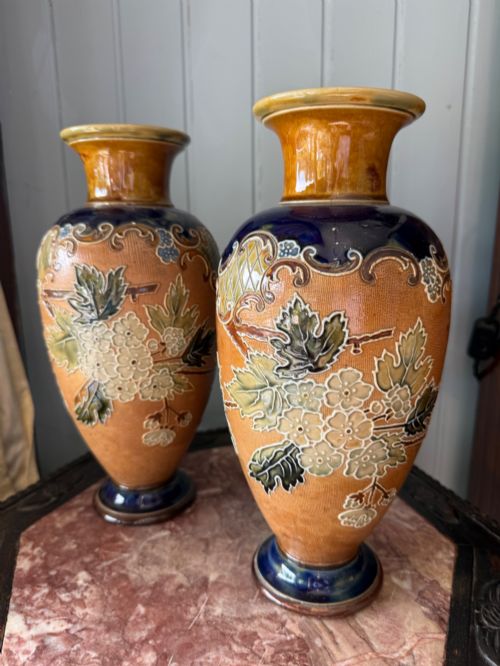
Potters utilised robust stoneware, glazed ceramics, and earthenware as foundations for these pieces, often applying specialised textures like Slater's patent finishes. Surface decoration involved hand painting, enamel floral motifs, and delicate applications of gold leaf to enhance the contours of the vessels.
Many items bear the individual signatures or marks of notable studio artists who shaped, potted, and decorated the earthenware and stoneware bodies by hand. The combination of durable ceramic bodies with intricate glaze work defines the technical standard of these workshops.
The listings span from the Victorian era through the Edwardian period, capturing both early stoneware experiments and later earthenware forms.
Assessing quality in the range
Quality separates standard production wares from pieces executed by named artists working within the Lambeth and Burslem studios. The crispness of the moulded or incised details, the complexity of the enamel work, and the depth of the glaze dictate the standing of an individual piece.
The presence of hand-painted scenic or botanical panels elevates a vessel beyond simple decorative pottery. Furthermore, surviving as a matched pair rather than a single survivor substantially increases the integrity of the grouping.
Louisa Wakely·John H Plant·Emily Stormer·Ethel Beard·R Allen
The Royal Doulton Urn Glossary
- Stonerware
- A dense, hard pottery material fired at high temperatures until vitrified, making it impermeable to liquids. This medium forms the heavy, durable base for much of the Lambeth output.
- Slaterware
- A decorative technique where lace or textile textures were pressed directly into the damp clay body before firing. This method created a distinctive patterned background often highlighted with enamel and gold.
- Baluster
- A vertical architectural form featuring a rounded lower body that tapers upward toward a narrow neck. Many vases in this category adopt this traditional silhouette.
- Jardiniere
- A large ornamental pot or receptacle designed to hold a potted plant, typically displayed on a stand or floor. These vessels feature wide circular openings and robust proportions.
- Mandarin Ware
- A vibrant ceramic line characterised by strong monochrome grounds, such as yellow, paired with contrasting enamel decoration. Pieces in this style reflect early twentieth century decorative tastes.
Royal Doulton Urn: Frequently Asked Questions
How do I identify a Lambeth piece?
Lambeth pieces typically utilise a heavier stoneware body often marked with impressed factory stamps and artist monograms. The finish frequently incorporates textured grounds and salt glaze techniques characteristic of the London studio.
Studying the specific blue and brown tones alongside the incised ornamentation helps distinguish these urban studio pieces from later provincial output.
Where should I display large jardinieres?
Large jardinieres suit prominent floor positions, entryways, or heavy wooden plant stands where their substantial weight and decorative presence can be appreciated. Their original purpose as indoor plant holders makes them ideal for housing ferns or trailing foliage.
Ensure the surface beneath is protected against moisture if used with live potted plants rather than dried arrangements.
How do I clean antique glazed ceramics?
Dust these surfaces gently using a soft, dry brush to prevent accumulation in textured areas like Slaterware patterns or incised lines. Avoid harsh chemical cleaners and abrasive cloths that might damage delicate enamel details or gold leaf.
Wash only when necessary with lukewarm water and mild soap, drying immediately with a lint-free cloth.
What defines Art Nouveau styling here?
Art Nouveau styling appears as flowing, organic lines inspired by natural forms, plant stems, and asymmetric floral patterns. Artists applied these sinuous motifs across the bodies of vases and vessels during the late Victorian and Edwardian periods.
This aesthetic prioritises movement and rhythm over rigid symmetry, distinguishing it from earlier revivalist designs.