



Round Walnut Tea Table
A round walnut tea table brings warmth to a room, offering a circular surface rooted in nineteenth- and twentieth-century traditions.
Round Walnut Tea Table
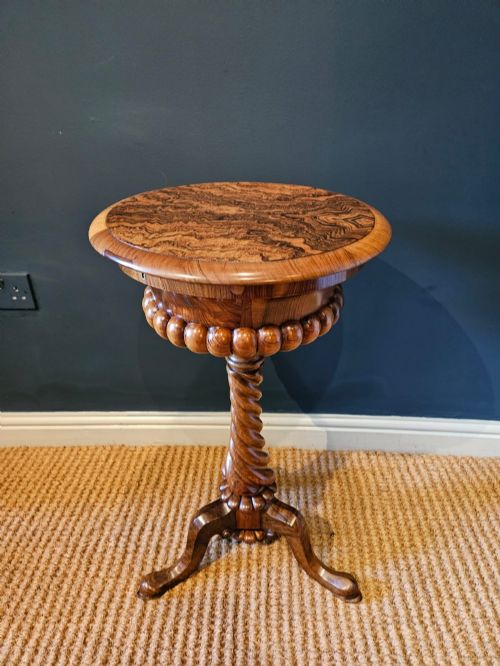
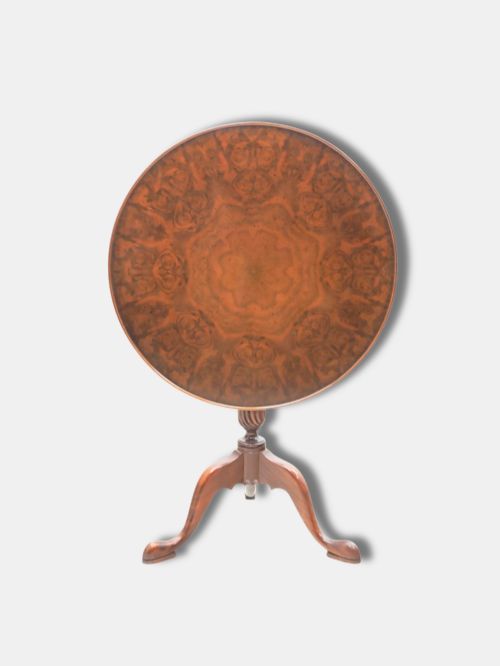
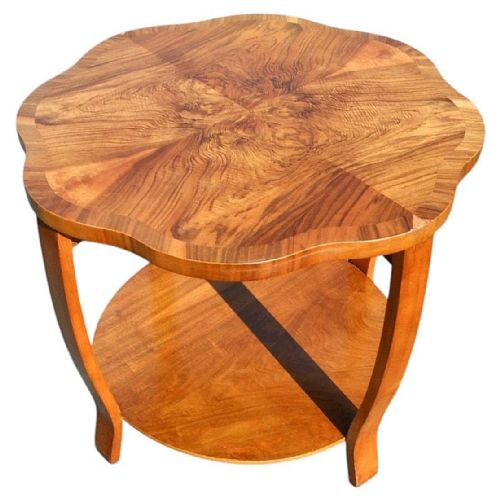
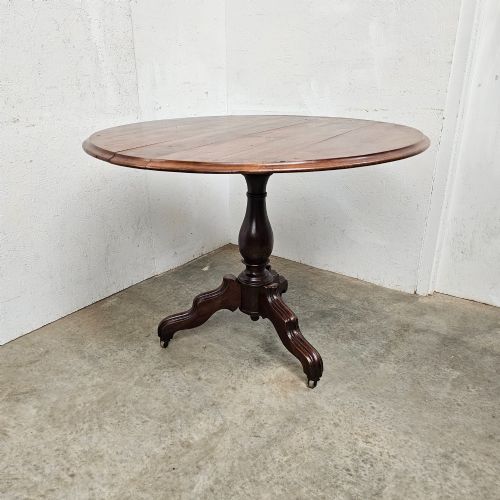
A round walnut tea table functions as a central surface for gatherings, taking the form of tripod tables, coffee tables, and occasional tables. These pieces appear across Victorian, Edwardian, and Art Deco periods, spanning nineteenth-century examples and twentieth-century interpretations.
The most common formats on this page include low coffee tables and traditional tripod tables featuring circular tops. Makers from the Victorian era onward adapted these round tables for afternoon tea, wine, and general domestic use.
How they were made
Construction relies on solid timber and applied veneers, utilising walnut, burr walnut, and figured walnut over secondary woods like mahogany. Marquetry inlay, brass accents, and marble tops appear on select pieces.
Joinery methods encompass traditional tripod bases with turned pillars, tilt-top mechanisms, and tiered Art Deco frameworks. Surfaces receive polished finishes that accentuate the natural grain of the burr and figured walnut veneers.
Some nineteenth-century tables tilt their tops entirely vertical, ready to tuck against the parlour wall when the tea service ends.
What varies in quality
Quality rests in the selection of the wood veneer and the precision of the marquetry inlay. Figured and burr walnut surfaces display intricate grain patterns that elevate the visual depth of the top.
Structural integrity of the tripod base and the crispness of carved elements distinguish standard examples from finer ones. The cohesion between the period style, such as Queen Anne Revival or Rococo Revival, and the execution dictates the standard.
The Round Walnut Tea Table Glossary
- Burr walnut
- Timber taken from a tree growth, yielding swirling, highly figured grain patterns. It is sliced into veneers for decorative table tops.
- Tripod table
- A small freestanding table supported by a pillar on three legs. Many examples feature a tilt-top mechanism for storage.
- Marquetry
- The art of applying pieces of veneer to a structure to form decorative patterns. Floral and geometric designs often adorn the table top.
- Pie crust
- A carved, raised, undulating edge modelled on pastry crust. This decorative border appears on circular table tops.
Round Walnut Tea Table: Frequently Asked Questions
What is a round walnut tea table used for?
These tables serve primarily as occasional surfaces for holding drinks, books, or lamps in a living space.
Historically, they functioned as tea poy or wine tables during afternoon gatherings before evolving into modern coffee table heights.
How do I date a round walnut tea table?
Dating relies on examining the construction methods, the timber veneers, and the stylistic cues of the period. Victorian pieces often display heavier carved details, while Art Deco examples showcase clean tiers and figured walnut.
Comparing the base structure, such as tripod legs versus lower tiers, helps narrow down the era of manufacture.
Are these tables solid walnut or veneered?
Many examples utilise walnut veneer over a secondary wood base, particularly when featuring figured or burr walnut patterns. Solid walnut is also found, especially on earlier turned components and tripod legs.
Veneering allowed cabinetmakers to display symmetrical grain patterns across the circular surfaces without warping.
How do I style a round walnut tea table?
A round table softens the linear geometry of sofas and larger furniture in a room. Pairing it with seating allows the circular top to act as a focal point.
Keep surface styling minimal to let the natural grain of the walnut and any marquetry inlay remain visible.