



Curved Art Deco Coffee Table
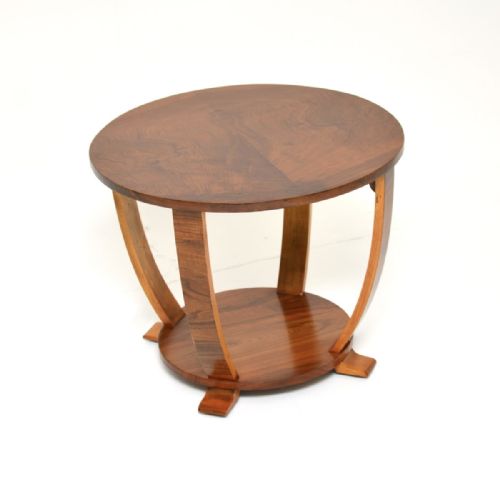
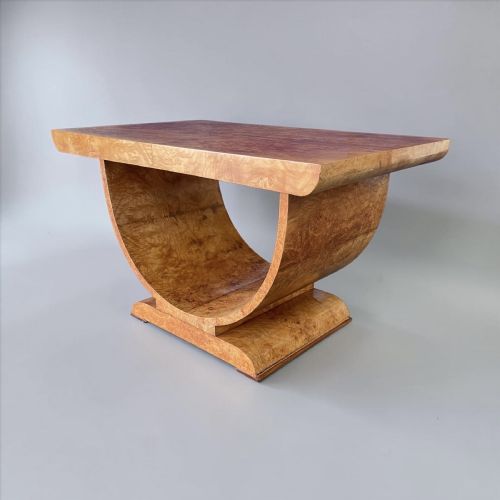
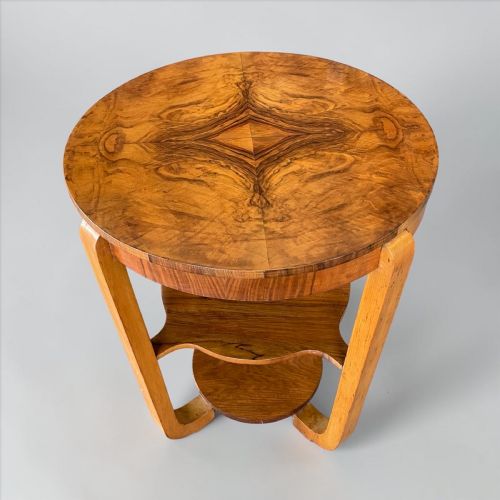
A curved art deco coffee table brings unmistakable geometric grace and striking wood grain to a sitting room.
Curved Art Deco Coffee Table
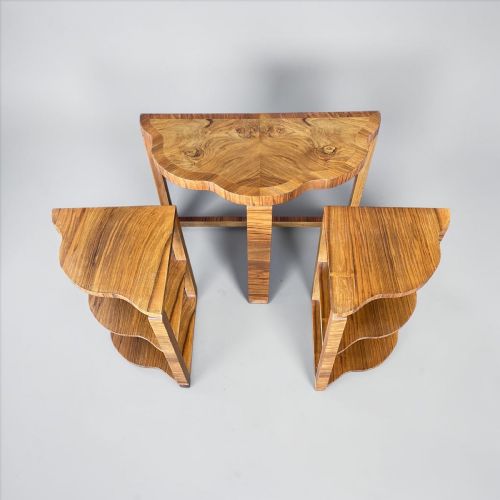
A curved art deco coffee table serves as a strong focal point in a sitting room, bringing geometric grace and purposeful design to the centre of the space. When you search for a curved art deco coffee table, you encounter low occasional tables, nests of tables, and tiered forms originating mainly from the nineteen thirties and nineteen twenties. Walnut, burr walnut veneer, oak, and maple dominate the pieces you meet on this page.
Makers such as Harry and Lou Epstein shaped the period, alongside designers working with blonde oak, ebonised wood, and glass surfaces. Forms range from simple low coffee tables to illuminated top sofa tables and three-tier occasional pieces. The emphasis remains firmly on curved silhouettes and rich timbers that display the natural grain to maximum effect.
Materials and construction
Cabinet makers utilised carefully selected veneers, particularly burr walnut, burr maple, and birds eye maple, laid over solid wood carcasses to create sweeping curved surfaces. The application of veneer required immense skill to ensure the grain patterns flowed harmoniously around rounded corners and circular tops.
Contrasting details such as ebonised wood frames and glass inserts frequently complemented the primary timbers. Carpenters constructed these tables to emphasise smooth, continuous lines without extraneous ornamentation, relying entirely on the quality of the wood and the precision of the curve.
Some tables even hid light bulbs beneath their surfaces, proving that nineteen twenties designers loved a glowing cocktail hour.
Judging quality in design and finish
The distinction between standard examples and finer pieces lies in the choice and matching of timber veneers. Tables that display highly figured burr walnut or birds eye maple with symmetrical grain patterns across curved surfaces represent superior craftsmanship.
Construction integrity also dictates quality, particularly in how seamlessly the wooden frames maintain their structural rigidity alongside glass components or illuminated elements. The depth of the polish and the preservation of original ebonised highlights further separate everyday workshop output from master cabinet work.
Harry and Lou Epstein
The Curved Art Deco Coffee Table Glossary
- Burr walnut
- A thin slice of wood taken from a growth on a walnut tree, producing swirling, highly decorative grain patterns. It forms the primary visual surface on many finer tables.
- Veneer
- A thin layer of superior wood applied over a base timber to provide an expensive appearance without structural instability. Master cabinet makers matched these sheets carefully across curves.
- Ebonised wood
- Timber treated with a chemical stain or black finish to imitate ebony. This dark contrast defined many edges and supports within the style.
- Occasional table
- A small, movable table designed for a specific, intermittent use within a room. These pieces often feature tiered surfaces or nests.
Curved Art Deco Coffee Table: Frequently Asked Questions
What defines a curved art deco coffee table?
These tables feature rounded or circular silhouettes characteristic of the nineteen twenties and thirties. They rely on geometric purity and rich wood grains rather than carved ornamentation.
Craftsmen shaped these forms using timbers such as walnut, oak, and maple, often incorporating curved glass or tiered surfaces for practical living room use.
How do I style one in a modern interior?
A curved art deco coffee table anchors a modern seating arrangement by introducing warm wood tones and strong horizontal lines. Keep surrounding decor relatively clean to let the natural grain and curved silhouette stand out.
Pair the piece with neutral upholstery and simple lighting that complements the polished walnut or maple surfaces without competing for attention.
What woods were commonly used?
Walnut and burr walnut veneer appear most frequently, prized for their rich colour and dynamic grain patterns. Makers also utilised birds eye maple, blonde oak, and burr maple.
Contrasting details often involved ebonised wood to accentuate the structural curves and define the edges of the table.
How do I date a piece correctly?
Dating relies on stylistic markers, construction methods, and the specific mix of materials characteristic of the early twentieth century. Most examples on this page date from the nineteen twenties and nineteen thirties.
Examine the underside and interior surfaces for period construction techniques, matching the timber choices against known records from the era.