

Round Top Tea Table
A round top tea table serves as a sturdy, compact surface for social gatherings, bringing historical charm and practicality to any room.
Round Top Tea Table
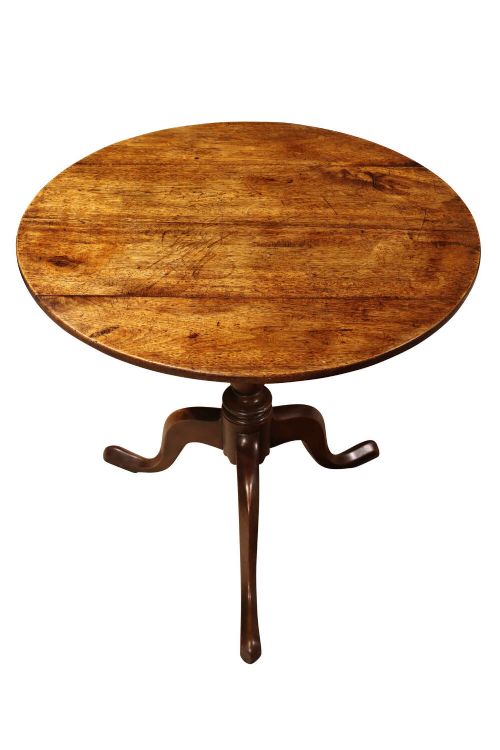
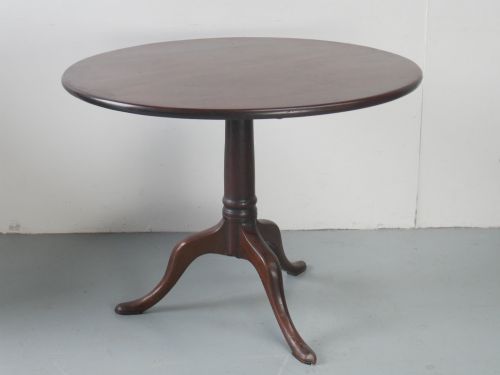
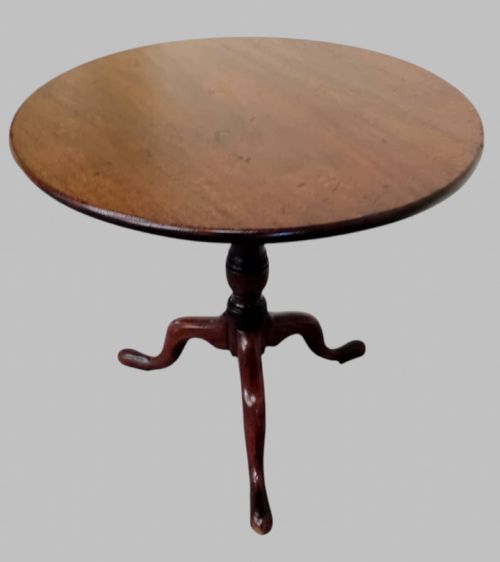
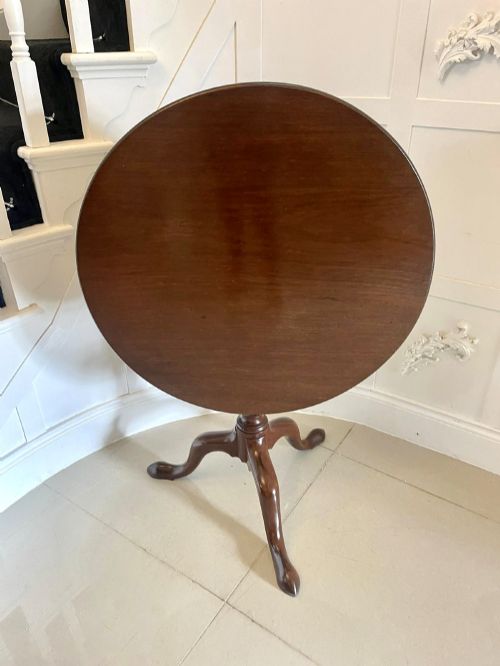
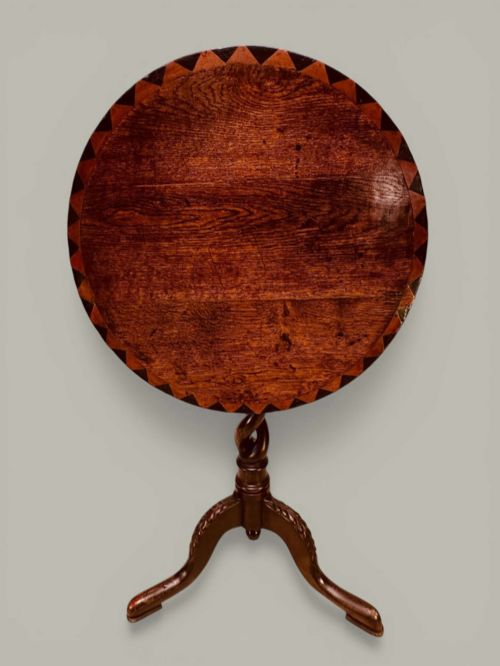
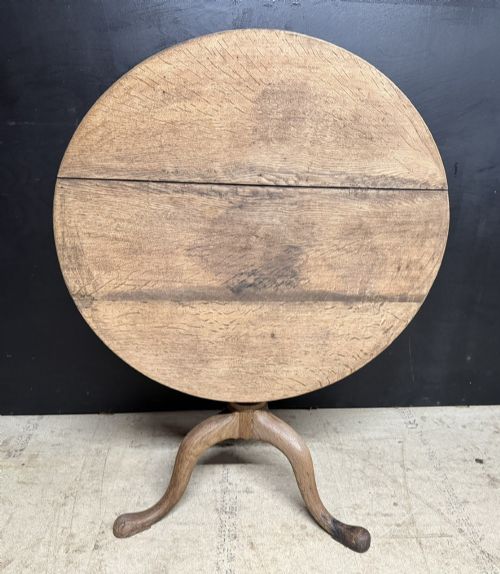
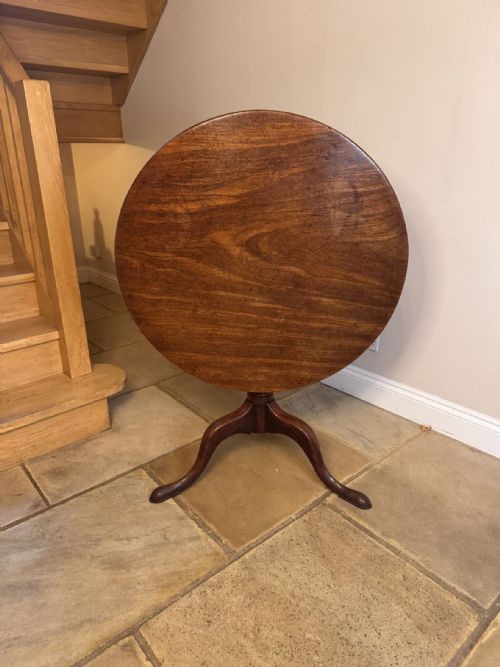
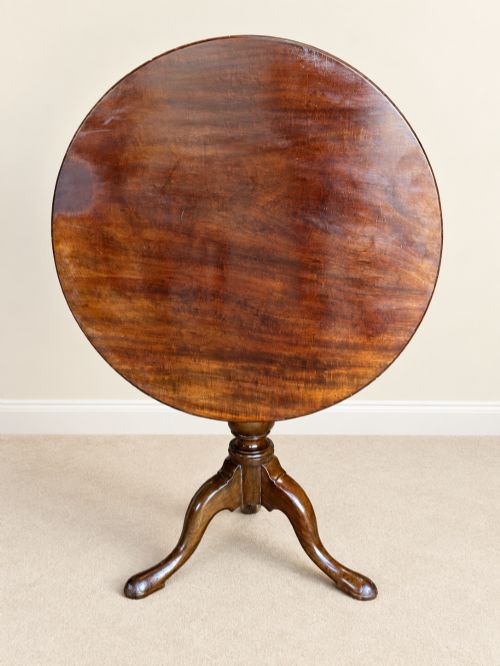
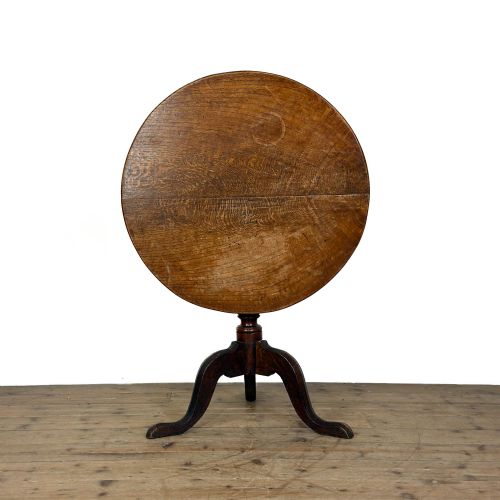
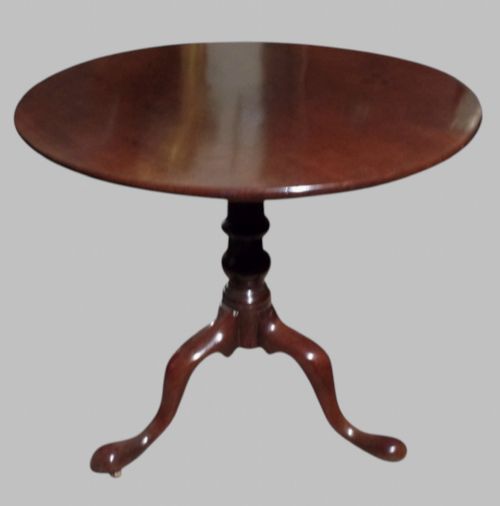
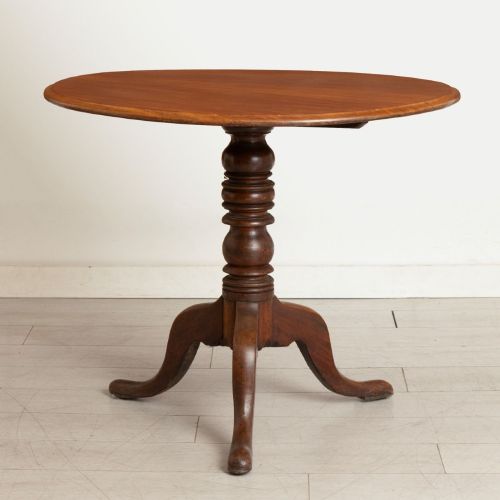
A round top tea table is typically encountered as a mahogany or oak tripod piece dating from the Georgian or Victorian eras. These tables frequently feature tilt-top mechanisms, allowing the circular surface to fold vertically when not in use.
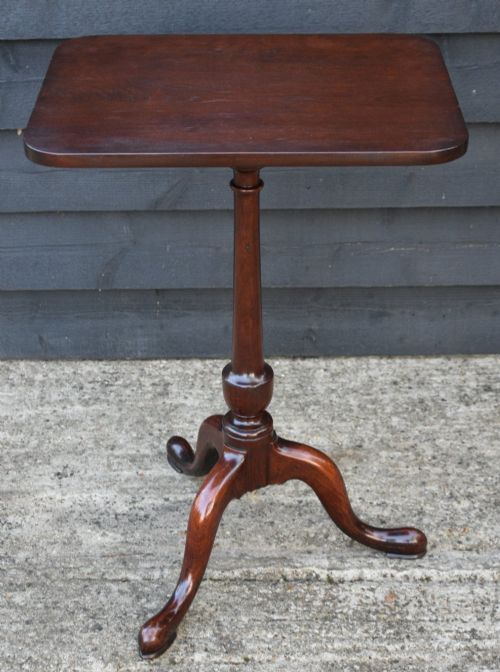
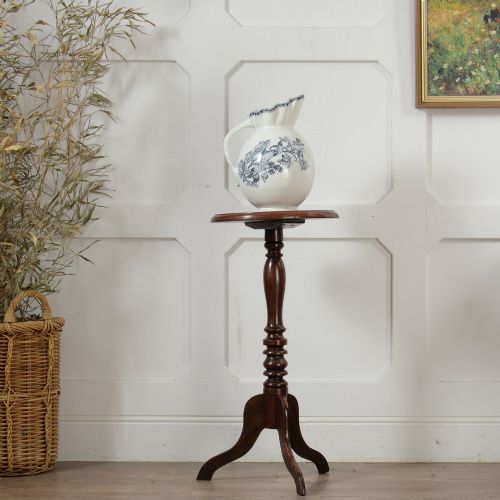
The selection here encompasses occasional tables, wine tables, and coffee tables produced across multiple centuries, including George III designs and later revivals. They stand on central pedestals supported by three legs, making them versatile additions to traditional interiors.
How they were made
Cabinetmakers utilised dense timbers such as mahogany, walnut, oak, and rosewood for the tops and pedestal bases. Turning lathes shaped the central columns, while hand-carving defined the cabriole legs and tripod feet.
Many examples incorporate a birdcage mechanism beneath the circular top, enabling both rotation and tilting. Secondary materials like brass catches and iron fixings provide structural support to the timber joints.
Round Top Tea Table Retail Price Guide 2026
Typical asking prices for round top tea table among the pieces listed under this phrase on Sellingantiques today, from the lower quarter to the upper quarter. They describe what is for sale here now, not the wider market.
One unusual survivor is an antique tarot parlour table complete with carved zodiac symbols, ready for evenings of nineteenth-century divination.
What varies in quality
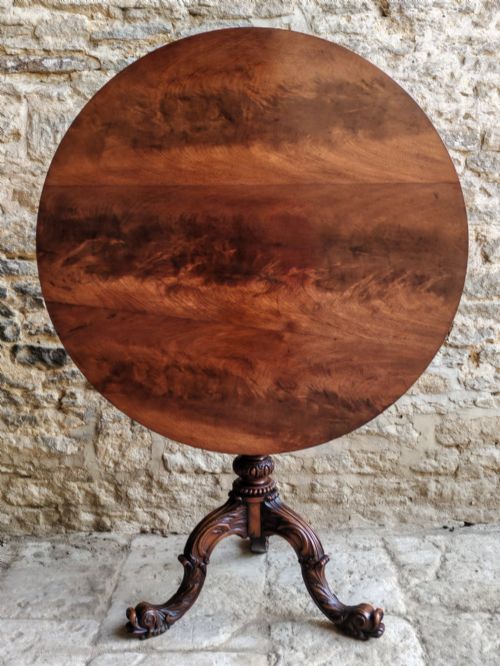
Quality rests primarily on the selection of timber, visible in the grain pattern of plum pudding mahogany or figured walnut. Finer specimens display superior figure in the wood and crisp, well-proportioned carving on the knees and feet.
The sophistication of the mechanism also dictates grade, with complex birdcage joints and secure brass latches indicating higher workshop standards. The integrity of the pedestal and the flatness of the circular board determine overall structural success.
The Round Top Tea Table Glossary
- Tilt-top
- A hinged table surface that pivots vertically to save space against a wall. This mechanism is standard on many tripod tables.
- Tripod table
- A small freestanding table supported by a central pillar resting on three legs. These form the majority of historical tea tables.
- Birdcage
- A timber framework beneath the table top that permits rotation and tilting. It connects the circular board to the central column.
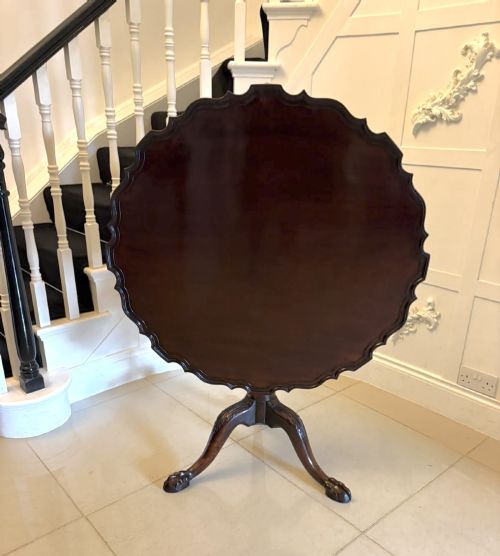
- Piecrust edge
- A raised, carved moulding shaped around the perimeter of the table top. It resembles decorative pastry work on fine Georgian examples.
- Cuban mahogany
- A dense, dark timber utilised in high-status cabinet making during the eighteenth century. It yields a rich surface polish.
Round Top Tea Table: Frequently Asked Questions
How do I identify a Georgian tea table?
Georgian tea tables often display dense mahogany or oak construction paired with tripod pedestals and pad or claw-and-ball feet. Details like birdcage mechanisms and carved piecrust edges frequently point to this eighteenth-century period.
Later Victorian and revival pieces emulate these forms but generally utilise softer turning or different secondary woods.
Where should I place a round top table?
Round top tables fit easily beside armchairs, in small corners, or as central accents in a reception room. Their compact footprint makes them practical for holding lamps, books, or decorative objects.
When tilted, they also function as visual wall panels that showcase the wood grain of the circular top.
What woods are commonly found on these tables?
Mahogany, oak, and walnut appear most frequently across the listed periods, supplemented by rosewood, fruitwood, and birch. Cabinetmakers selected these hardwoods for their strength and ability to take a smooth polish.
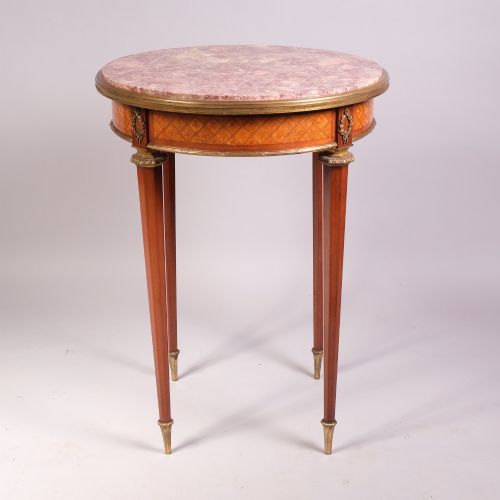
Some later or continental examples also incorporate marble inserts or painted surfaces.