




Round Satinwood Side Tables
Round satinwood side tables bring light, figured timber and classical proportion to a room, offering a surface that is both practical and decorative.
Round Satinwood Side Tables
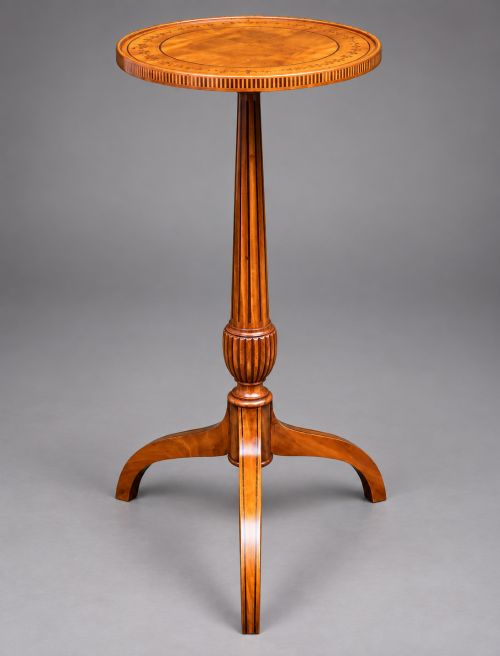
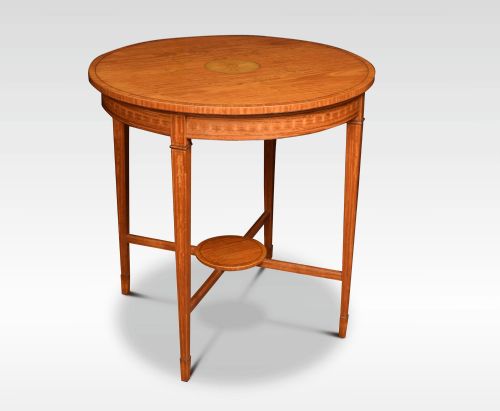
When you search for round satinwood side tables, you encounter circular occasional, wine, and centre tables alongside commodes and coolers spanning the eighteenth century through to the Edwardian period and nineteen-ten. The selection ranges from Regency and Georgian prototypes to Sheraton Revival interpretations and painted neoclassical examples.
The most common form on this page is the circular occasional table or wine table, frequently featuring inlaid woods, rosewood, mahogany, and brass details. These pieces bridge the gap between functional furniture and decorative arts, often designed with pedestal bases or delicate legs suited for smaller reception spaces.
How they were made
Cabinetmakers utilised satinwood veneers over secondary timbers, often pairing the light, golden ground with contrasting woods like rosewood, mahogany, and yew wood for geometric or classical inlay. Specimen marble tops and painted neoclassical decoration also appear among the techniques used to enrich these circular surfaces.
Pedestal columns and slender legs provide the structural support for these tables, employing traditional joinery appropriate to periods from Georgian Regency to Edwardian production. Brass fittings and mounts occasionally accent the timber, reflecting the Regency and Grand Tour neoclassical tastes.
Materials recorded across the selection include satinwood, rosewood, mahogany, satin birch, yew wood, burr oak, brass, and marble.
What varies in quality
Quality rests in the choice of timber and the precision of the inlay work, where finer pieces display intricate contrast and beautifully figured grain without disruption. The crispness of carved wooden elements and the integration of painted neoclassical details dictate the distinction between standard production and superior craftsmanship.
Proportion and structural integrity define the upper tier of these tables, ensuring that slender pedestals and circular tops maintain balance and harmony. The handling of secondary woods like burr oak or satin birch further indicates the care taken by the maker.
The Round Satinwood Side Tables Glossary
- Satinwood
- A light, hard timber with a natural sheen, highly prized for eighteenth-century and revival cabinetmaking. It provides a luminous ground for contrasting inlay.
- Sheraton Revival
- A late nineteenth and early twentieth century design movement that reinterprets the elegant neoclassical forms associated with designer Thomas Sheraton. These pieces often incorporate delicate satinwood inlay and painted surfaces.
- Neoclassical
- A style drawing inspiration from the classical art and architecture of ancient Greece and Rome. It appears here in painted table decoration and Grand Tour influences.
- Occasional table
- A small, portable table designed for specific, intermittent use within a room. On this page, these pieces take circular forms supported by pedestals or legs.
Round Satinwood Side Tables: Frequently Asked Questions
What periods do these tables cover?
The pieces span from the eighteenth century through the Regency and Victorian eras into the Edwardian period and nineteen-ten.
Revival movements also contribute significantly, notably Sheraton Revival and Neoclassical styles.
How were round satinwood tables used?
They served as occasional, wine, and centre tables for holding small objects, lamps, or drinks in reception rooms.
Some specialised forms functioned as commodes or wine coolers depending on the interior setting.
What materials appear alongside satinwood?
Makers combined satinwood with rosewood, mahogany, yew wood, satin birch, and burr oak.
Additional elements include brass mounts, inlaid woods, painted decoration, and Italian specimen marble.
How do I distinguish regional styles?
English pieces often reflect Georgian, Regency, or Sheraton traditions with disciplined inlay and classical proportions.
French and Italian examples introduce painted neoclassical scenes or specimen marble tops.