
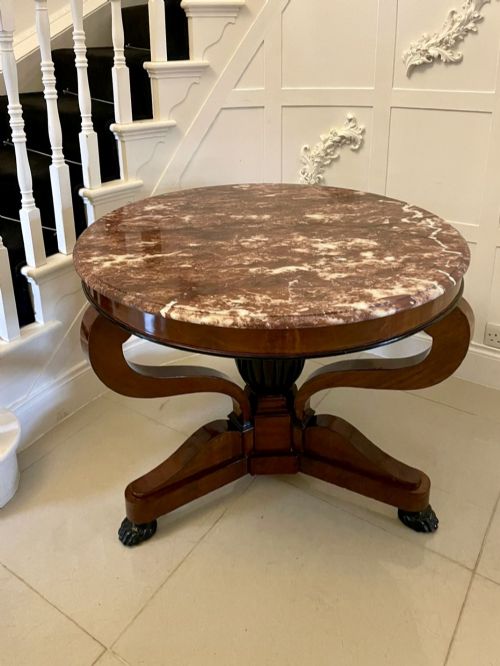

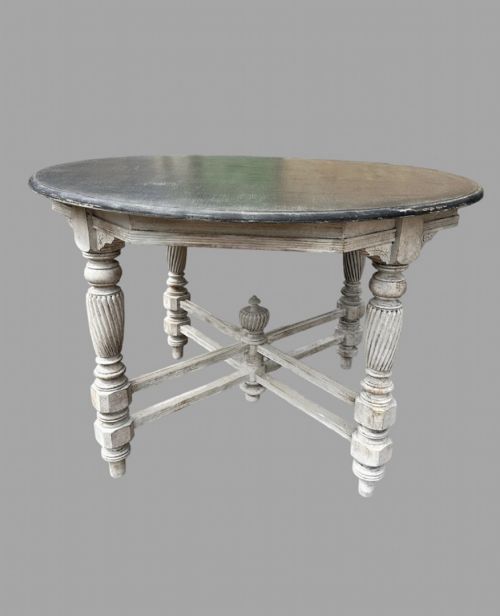
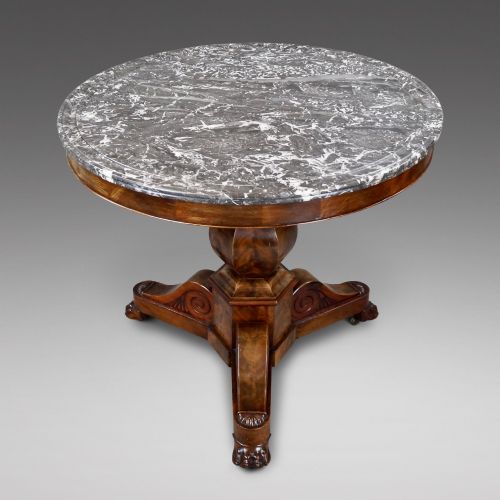
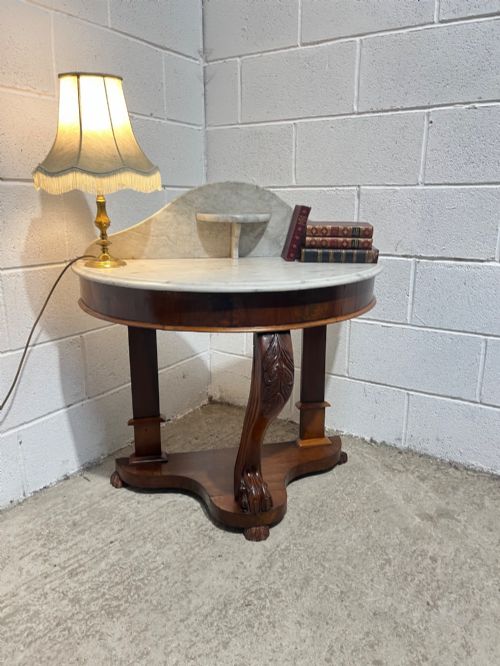


Round Entry Table
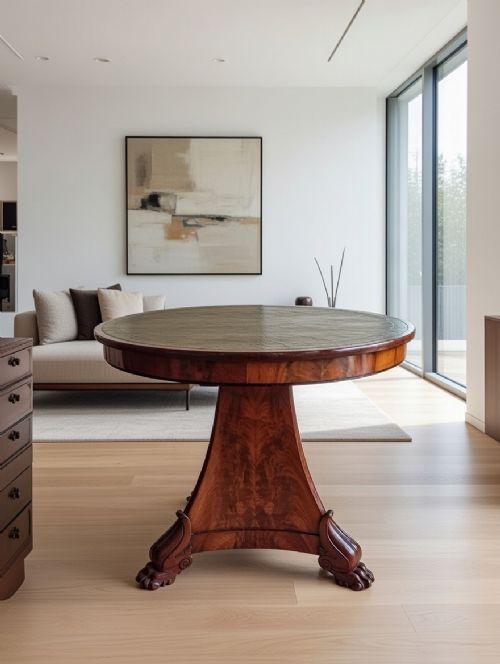
A round entry table greets guests with a surface for a lamp or flowers, anchoring a hall with warmth and history.
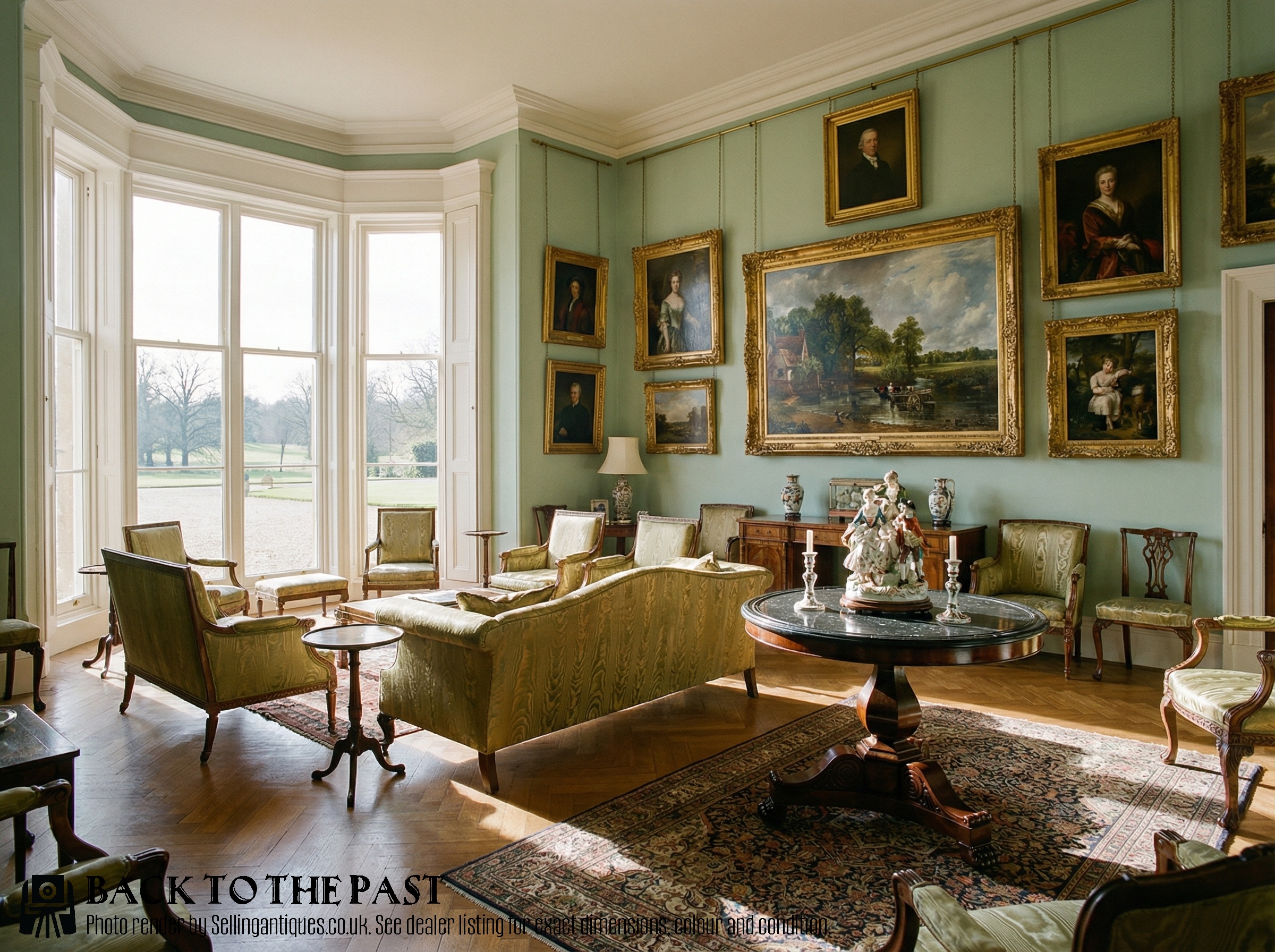
Round Entry Table
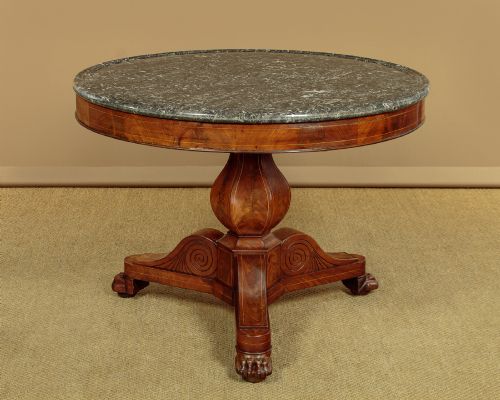
A round entry table serves as a central focal point in a hallway, often taking the form of a centre table, gueridon, or console table. These pieces emerge from periods spanning the Regency era through the Victorian epoch and into the art deco years of the twentieth century.
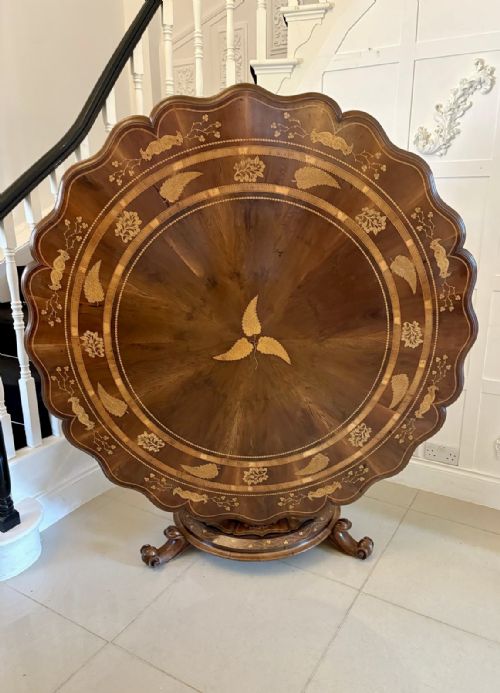
Makers shaped these hall pieces using diverse regional influences, ranging from French empire designs to Irish Killarney marquetry and Scandinavian birch constructions. The selection includes marble-topped variants and timber surfaces designed to stand freely in a spacious entrance.
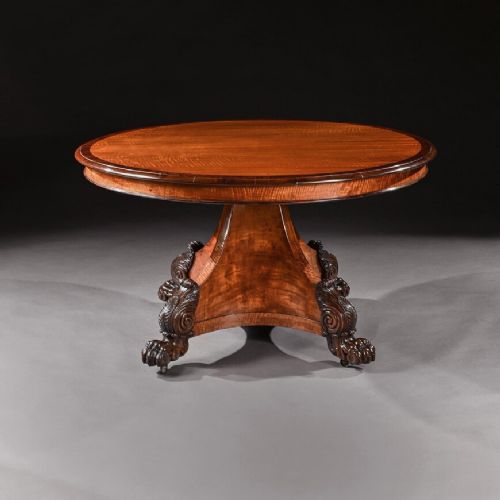
Most examples function as centre tables or gueridons, designed to be viewed from all sides rather than pushed against a wall. Their circular tops invite visitors to circulate around the furniture upon entering the home.
What separates high quality examples
Quality rests upon the selection of timber figures, such as the depth of flame mahogany or the precision of intricate marquetry and inlay work. Superior workshops invested heavily in the botanical variety of woods and the exact fit of stone marble tops.
The sophistication of mounts, bronze ornaments, and structural joinery distinguishes standard production from exhibition pieces. Finer specimens display meticulous hand-carved details and harmonious proportions suited to grand entrance halls.
Some nineteenth-century examples cleverly conceal a writing slope beneath the circular top for clandestine hallway correspondence.
Peters of Genoa·Egan Workshop
The Round Entry Table Glossary
- Gueridon
- A small round table, typically supported by a single central pillar or tripod base, originating in seventeenth-century France. These pieces often feature marble or timber tops.
- Marquetry
- The art of applying pieces of veneer to a structure to form decorative patterns and pictures. Craftsmen used various coloured woods to achieve pictorial effects on tabletop surfaces.
- Centre Table
- A freestanding table designed to be viewed from all sides rather than placed against a wall. They frequently occupy the middle of a room or a spacious entrance hall.
- Demilune
- Half-moon shaped furniture designed to sit flat against a wall, though the search phrase focuses primarily on fully circular variants. The term describes the semicursal footprint.
- Regency
- A British architectural and decorative style spanning the early nineteenth century. Furniture from this period exhibits classical restraint and refined proportions.
Round Entry Table: Frequently Asked Questions
Where do I place a round entry table?
These tables belong in the middle of a spacious hallway or foyer where people can walk entirely around them. They function well beneath a central ceiling light or chandelier.
Ensure there is adequate clearance on all sides for doors to open and guests to pass comfortably through the entryway.
How do I care for a marble top?
Marble surfaces require wiping with a soft, damp cloth and neutral cleaners to avoid etching from acidic liquids. Protect the stone from heavy impacts and scratching caused by ceramic or metal objects.
Apply a specialist stone sealer periodically to guard against stains from keys or dropped items left by visitors.
What is the difference between a gueridon and a centre table?
A gueridon typically refers to a smaller, round table with a pedestal base, heavily influenced by French design traditions. Centre tables encompass a broader category of freestanding tables placed in the middle of rooms.
Both types serve the same functional purpose in an entrance hall but vary in their specific underframe architecture.
How do I identify a Regency period table?
Regency tables date from the early nineteenth century and rely on clean architectural lines, classical motifs, and dark timbers like mahogany. They often feature pedestal bases with carved sabre legs.
Check for traditional construction methods, hand-cut joinery, and the absence of modern mechanical fasteners underneath the top.