




Round Cut Solitaire Ring
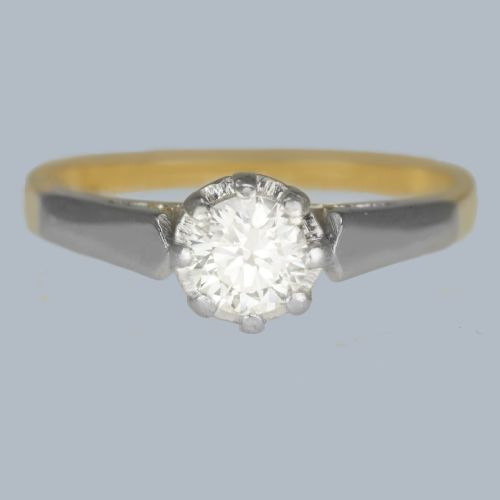
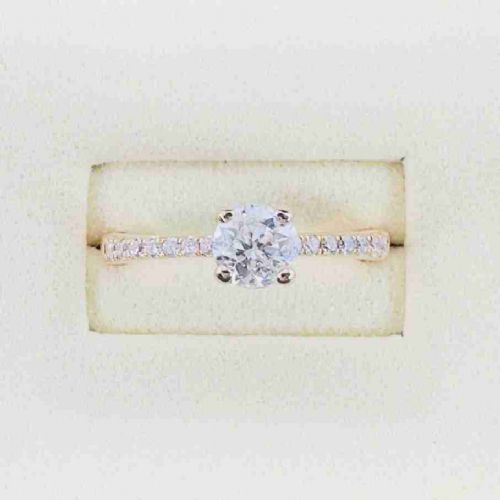
A round cut solitaire ring focuses attention entirely on a single central gemstone, making it the definitive choice for an engagement ring.
Round Cut Solitaire Ring
A round cut solitaire ring centres upon a single stone held securely within a precious metal mount, designed to showcase the brilliance of the principal gem. The selections span eras from the Victorian period through Art Deco and Mid-Century decades, reflecting shifting aesthetic preferences across the twentieth century.
Engagement rings dominate the selection, paired with classic designs that place the gemstone centre stage. Most pieces combine a central diamond with precious bands in platinum or gold.
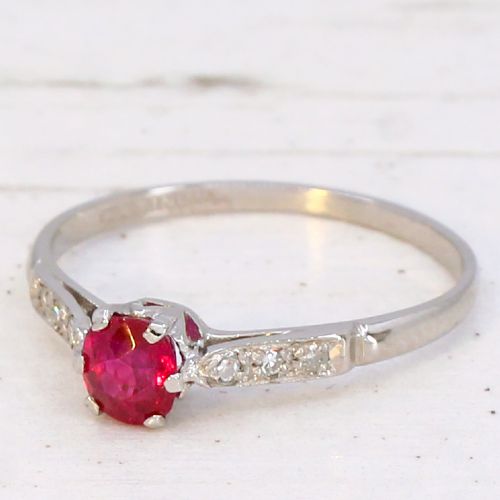
Variations include coloured gemstones such as ruby, sapphire, blue zircon, and alexandrite set in solitary prominence. Buyers encounter settings ranging from geometric Art Deco platinum mountings to simple yellow gold bands.
What varies in quality
The standard of a round cut solitaire ring rests upon the optical performance and cut quality of the central gemstone, alongside the integrity of the metalwork. Older hand-cut stones exhibit distinct facet patterns that interact with light differently than modern machine-cut equivalents.
The weight and purity of the precious metal mount influence the substance of the piece, with heavier platinum and solid gold settings offering greater longevity. Superior examples demonstrate precision in the alignment of claws and symmetry in any accompanying shoulder details.
The inventory spans Victorian, Art Deco, and Mid-Century periods, encompassing classic contemporary styles and vintage revivals.
The Round Cut Solitaire Ring Glossary
- Solitaire
- A ring mounting designed to hold a single central gemstone without competing stones. This setting method maximises the visual impact of the main gem.
- Old European Cut
- An early form of round cut diamond characterised by a small table, high crown, and large open culet. These stones were hand-faceted prior to the standardisation of modern brilliant cuts.
- Transition Cut
- A diamond cut used during the period when cutters moved from old European styles to modern brilliant specifications. They combine characteristics of both vintage and contemporary cutting geometries.
- Platinum
- A dense, silvery-white precious metal prized for its strength and hypoallergenic properties. It allows jewellers to create fine, secure settings that withstand daily wear.
Round Cut Solitaire Ring: Frequently Asked Questions
How do I care for a platinum ring?
Platinum bands endure daily wear well because the metal displaces rather than wears away over time. Routine cleaning in warm soapy water restores the natural lustre.
Scratches on the surface create a patina that many collectors appreciate. Professional polishing removes this surface texture if a bright finish is preferred.
What is an old European cut diamond?
An old European cut represents an antique facet arrangement popular in Victorian and Edwardian jewellery. These stones display smaller table facets and deeper pavilions.
Under candlelight or low illumination, they produce broad flashes of light rather than the pinpoint sparkle of modern cuts.
Can these rings be resized?
Most gold and platinum bands permit adjustment by a skilled jeweller. The presence of intricate shoulder work or continuous engraving requires careful evaluation before any alteration.
Consulting a specialist ensures the structural integrity of the setting remains intact during modification.
How do I identify an Art Deco setting?
Art Deco mountings typically feature geometric symmetry, linear motifs, and stylized patterns. Platinum serves as the primary metal for these crisp designs.
Openwork filigree and millegrain edging frequently accompany the central gemstone in pieces from this era.