

Round Brown Accent Table
A round brown accent table brings warmth and functional surface space to a room, drawing on centuries of cabinet-making traditions in mahogany, walnut and oak.
Round Brown Accent Table
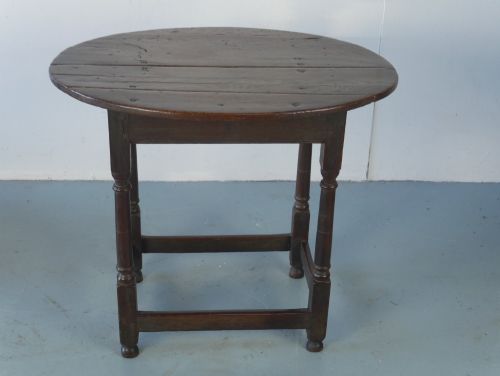
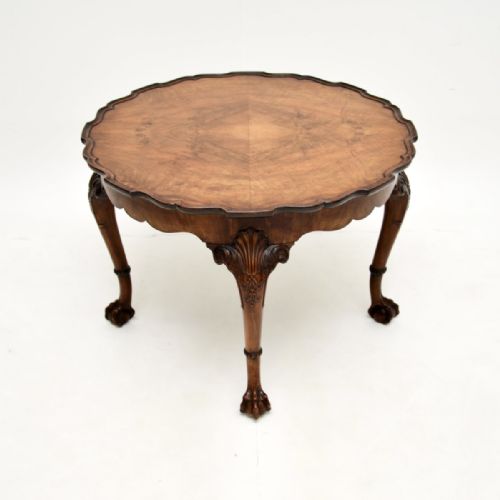
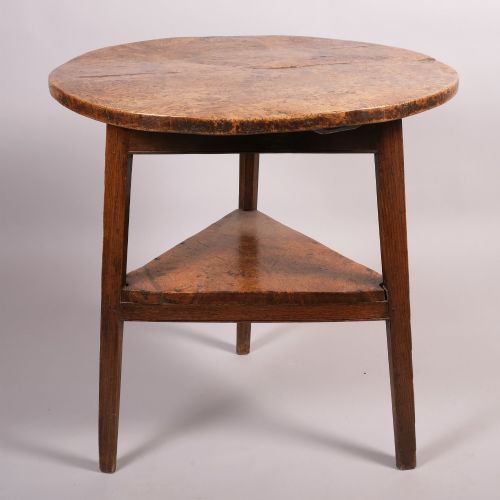
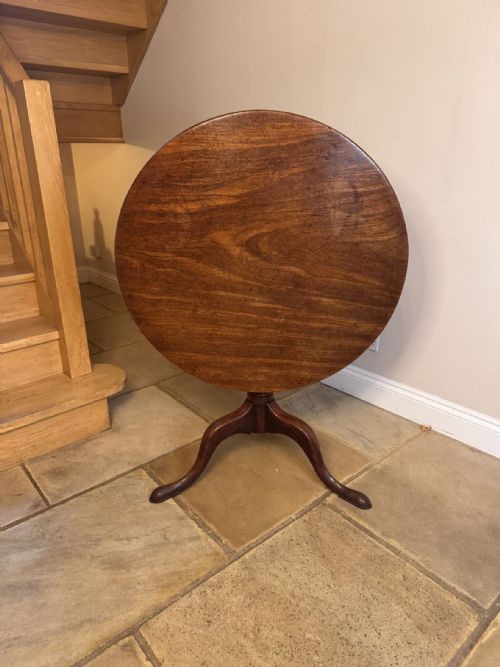
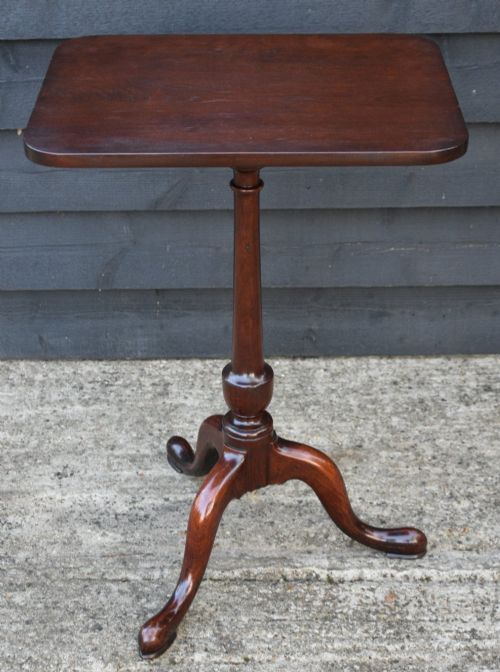
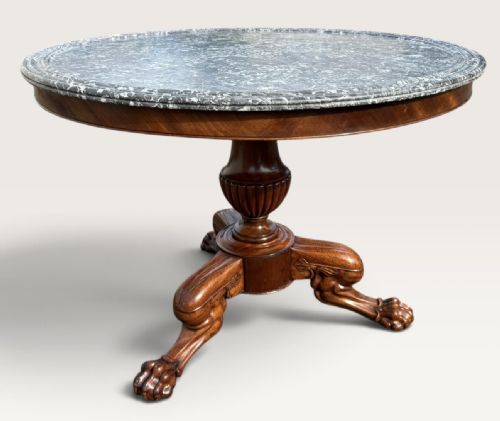
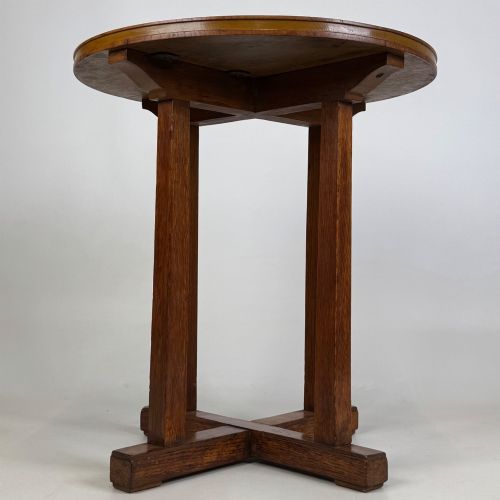
A round brown accent table encompasses diverse forms designed for domestic utility, including lamp tables, wine tables, tripod tables, occasional tables and centre tables. These pieces serve as compact surfaces for lamps, drinks or decorative objects while introducing natural timber tones to an interior.
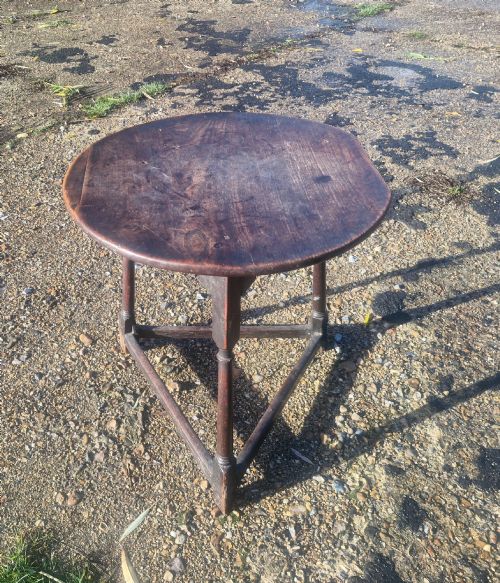
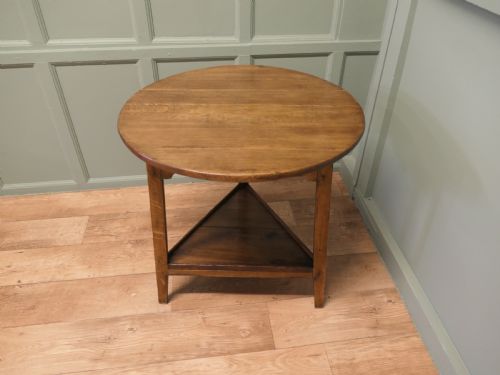
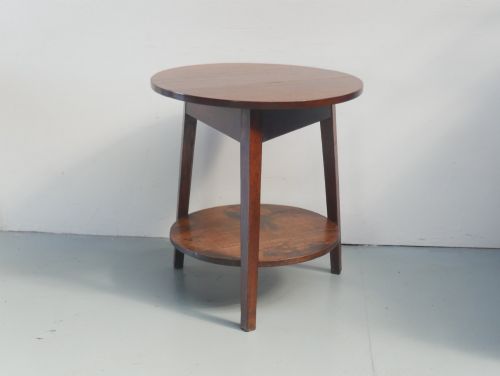
The selections available span multiple eras, with Victorian, Edwardian and Georgian examples appearing frequently alongside pieces from the 1920s and 1930s. Buyers routinely encounter traditional tripod bases, cricket tables and tilt-top mechanisms within this grouping.
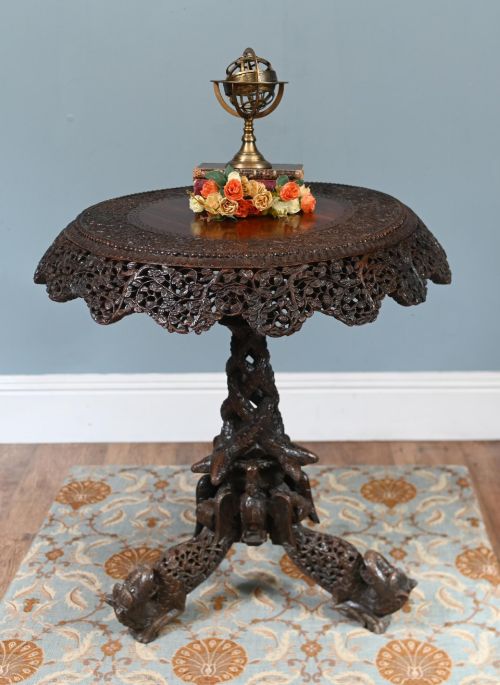
Origins vary from English workshops to French, Chinese and Burmese makers, reflecting global influences on domestic furniture design. Materials range from native British hardwoods to exotic imports, creating considerable variety in grain and colour.
How they were made
Cabinet-makers constructed these tables using solid timbers and veneers such as mahogany, walnut, burr walnut, oak, fruitwood and teak. Turned components frequently utilised matching hardwoods, while brass fixtures appeared on specific stylistic iterations.
Construction techniques include traditional joinery, tripod base assembly and sophisticated turning methods such as bobbin legs and barley twist supports. Marquetry inlay, raised galleries and tilt-top mechanisms demonstrate specialised carpentry skills across different periods.
Round Brown Accent Table Retail Price Guide 2026
Typical asking prices for round brown accent table among the pieces listed under this phrase on Sellingantiques today, from the lower quarter to the upper quarter. They describe what is for sale here now, not the wider market.
Current listings feature tables spanning from the Georgian and Victorian eras through the Edwardian period and into 1930s Art Deco designs.
What varies in quality
Quality differences emerge in the selection of timber, particularly where figured veneers like burr walnut or carefully matched mahogany grain are employed. The finesse of hand-carved details, such as those on hardwood and oak surfaces, distinguishes superior workshops from standard production.
Structural integrity depends on the precision of the joinery in tripod bases and the smooth operation of tilt-top mechanisms. Tables featuring inlaid marquetry or delicate gallery edges rely on exact execution by the maker to achieve lasting refinement.
Waring & Gillow·François Linke
The Round Brown Accent Table Glossary
- Tripod table
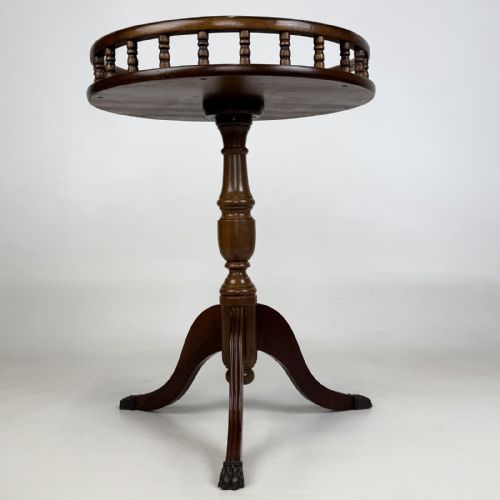
- A small freestanding table supported by a central pillar resting on three legs. This form gained popularity during the 18th century for serving tea or holding lamps.
- Cricket table
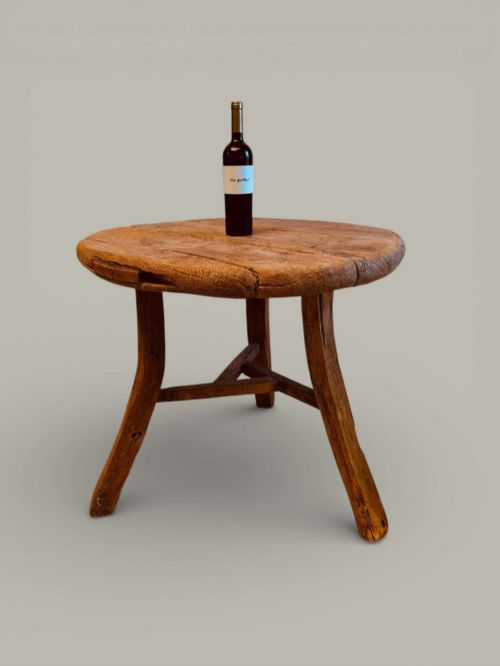
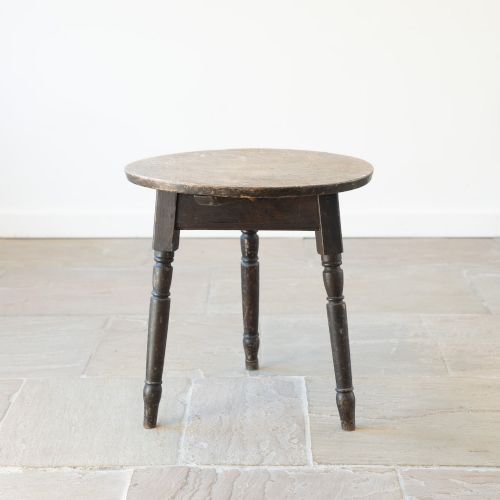
- A small, sturdy round wooden table with three splayed legs, traditionally constructed from oak or pine. The design provides stability on uneven floors.
- Tilt-top table
- A table featuring a mechanism that allows the circular top to pivot to a vertical position when not in use. This clever space-saving design is common in wine and occasional tables.
- Marquetry
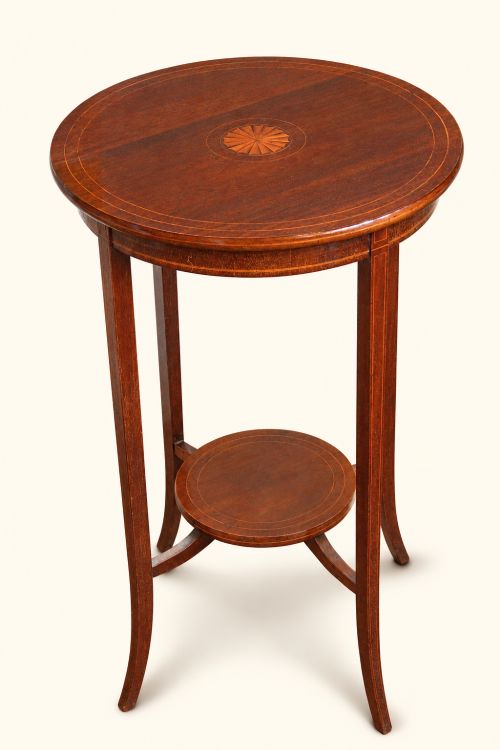
- The decorative art of applying pieces of veneer to a structure to form intricate designs. Cabinet-makers used contrasting woods to create elaborate geometric and floral patterns.
- Bobbin leg
- A turned furniture leg shaped to resemble a string of beads or bobbins used in bobbin lace making. This decorative turning style appears frequently on 17th-century revivals and Edwardian pieces.
Round Brown Accent Table: Frequently Asked Questions
What is a wine table?
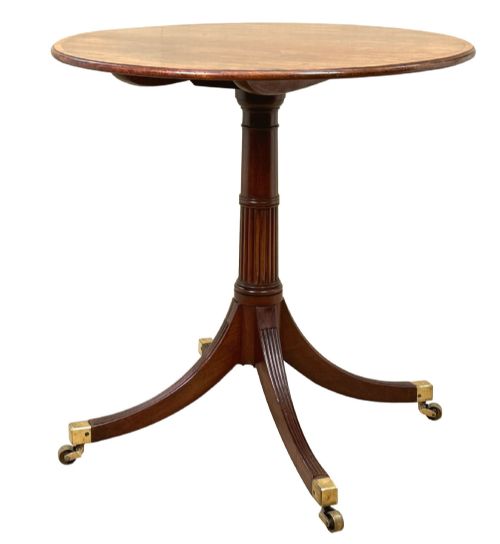
A wine table is a small, portable circular table designed originally to hold glasses and decanters during evening gatherings. They typically feature a slender central column supported by a tripod base.
Because of their compact footprint, these tables function well beside armchairs or sofas as convenient surfaces for drinks and small lamps.
What is the difference between a centre table and an occasional table?
A centre table is traditionally built to stand free in the middle of a room, often featuring finished detail all the way around its perimeter. They served as prominent display surfaces in Victorian and Georgian reception rooms.
An occasional table is generally smaller and lighter, designed to be moved around a room as needed for specific tasks or decorative displays.
How do I care for antique wood tables?
Antique wood tables require protection from direct sunlight and extreme changes in temperature to prevent the timber from drying or cracking. Regular dusting with a soft cloth preserves the finish without damaging the patina.
Applying a quality beeswax periodically nourishes mahogany, walnut and oak surfaces while maintaining their natural lustre.