



Rotating Tier Side Table
A rotating tier side table brings clever tiered shelving and nimble movement to a room, turning books or wine close at hand.
Rotating Tier Side Table
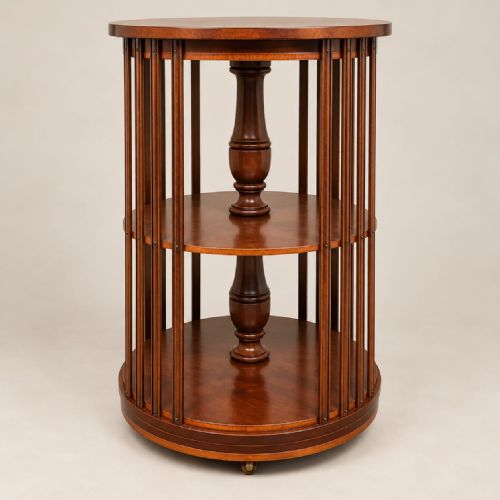
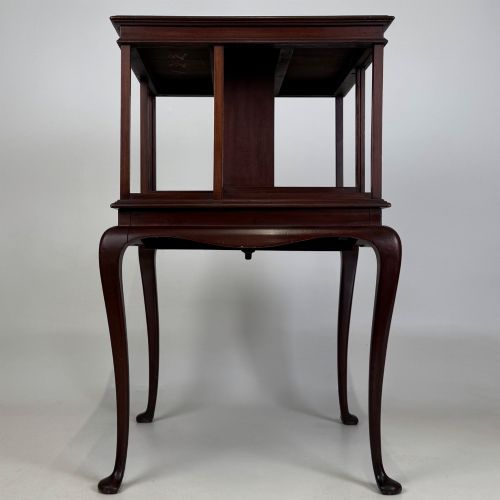
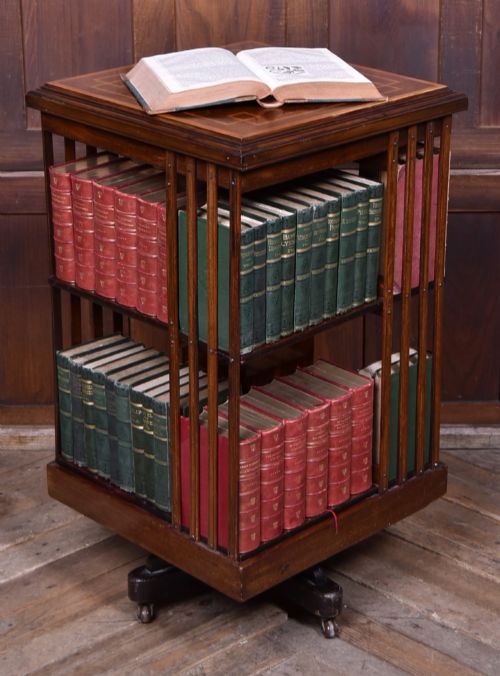
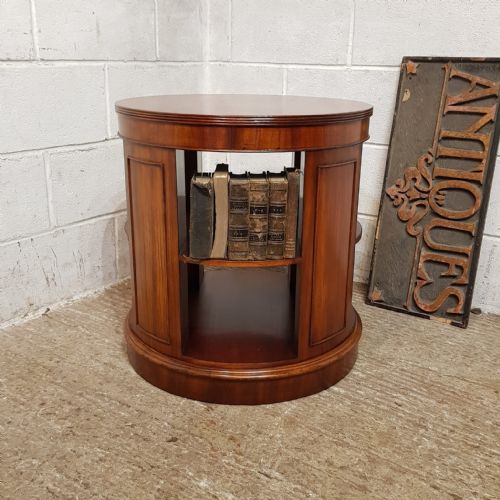
When you search for a rotating tier side table, you encounter practical revolving bookcases, dumb waiters and wine tables. These pieces span Georgian, Victorian and Edwardian periods.
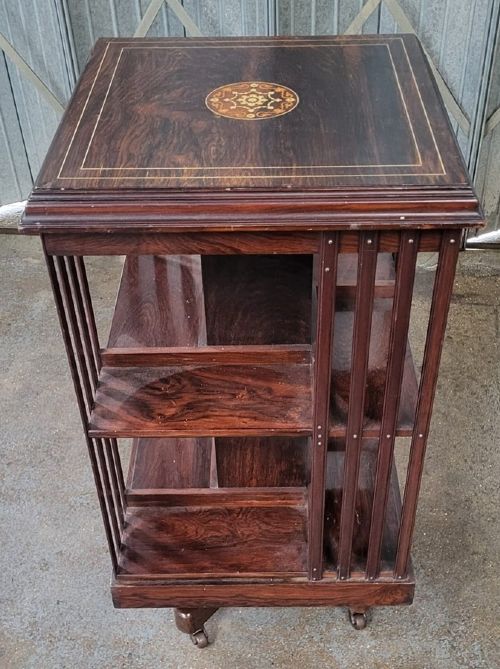
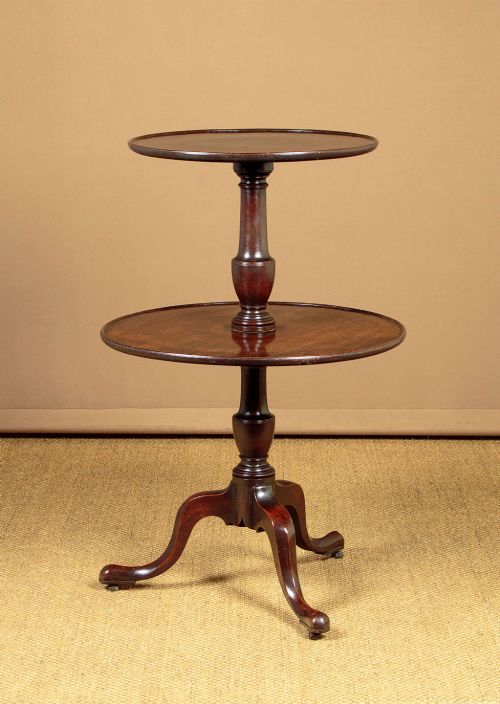
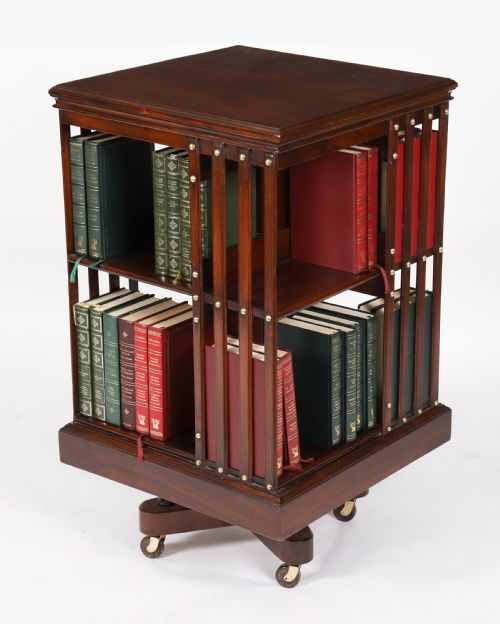
The Edwardian mahogany revolving bookcase appears most often on this page, alongside earlier Georgian dumb waiters in Cuban mahogany.
Forms vary from round rotating bookcases to graduated tiers designed to hold books or bottles beside a chair.
How they were made
Cabinet makers built these pieces using solid and veneered mahogany, rosewood and Cuban mahogany. Workshops incorporated brass fittings to support the rotating mechanism and add durability.
Fine boxwood inlay and satinwood contrast decorate the surfaces of Edwardian examples. Marble tops and brass inlays appear on specific Victorian tables.
Turning mechanisms allow the tiers to spin smoothly on a central column, uniting stationary display with functional movement.
Rotating Tier Side Table Retail Price Guide 2026
Typical asking prices for rotating tier side table among the pieces listed under this phrase on Sellingantiques today, from the lower quarter to the upper quarter. They describe what is for sale here now, not the wider market.
Listings feature mahogany, rosewood, satinwood and Cuban mahogany alongside marble and brass.
What varies in quality
The fidelity of the revolving mechanism dictates the mechanical success of the piece, separating smooth rotation from stiff movement. Heavier timbers like Cuban mahogany provide stability to tiered structures.
Subtlety in boxwood inlay and the crispness of turned columns show the maker's hand. Incorporating materials like marble elevates the decorative ambition of Victorian models.
Maple & Co
The Rotating Tier Side Table Glossary
- Dumb waiter
- A tiered side table with rotating or stationary shelves used for serving food or holding books. These pieces date back to the Georgian era.
- Revolving bookcase
- A low or tall bookcase mounted on a revolving base for easy access from a seated position. Edwardian makers produced these in large numbers.
- Cuban mahogany
- A dense, dark timber prized for its rich grain and utilised in fine 18th-century furniture. It yields a superior polished surface.
- Boxwood inlay
- Contrasting light wood inserted into the primary timber to create geometric or floral patterns. This technique defines many Edwardian designs.
Rotating Tier Side Table: Frequently Asked Questions
What is a rotating tier side table used for?
These tables serve primarily as revolving bookcases or dumb waiters positioned beside seating areas. They keep books, drinks or serving items within arm's reach.
The tier structure maximises surface area without requiring extra floor space. Users spin the tiers to access different compartments easily.
How do I identify a Georgian dumb waiter?
Georgian dumb waiters feature graduated mahogany tiers supported on a turned column with tripod legs. They date from the 18th century and early 1900s.
Unlike later revolving bookcases, these early pieces focus on serving dining rooms rather than storing libraries.
What woods were used for Edwardian revolving bookcases?
Edwardian makers relied heavily on mahogany and rosewood for their revolving bookcases. They often enhanced these timbers with boxwood inlay and satinwood.
The lighter woods reflect the decorative preferences of the Edwardian period compared to heavier Georgian designs.
How does the revolving mechanism work?
A concealed pivot mechanism allows the upper tiers to rotate independently around a central vertical shaft. Brass components frequently facilitate this movement.
Quality mechanisms ensure the tiers spin smoothly and quietly without wobbling.