
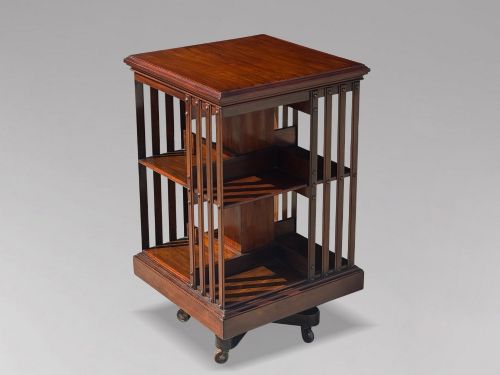
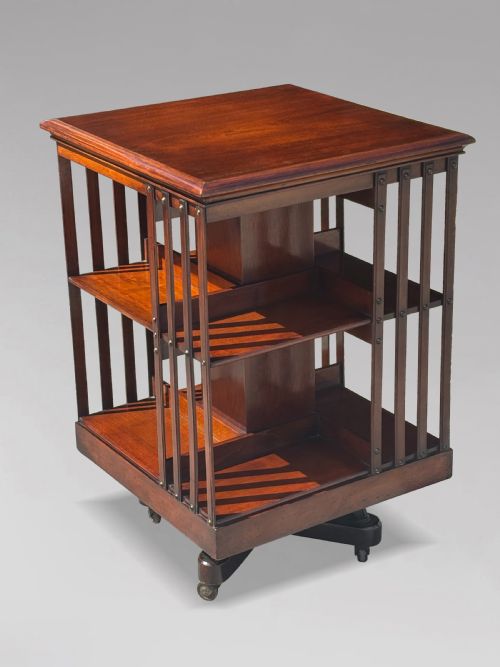
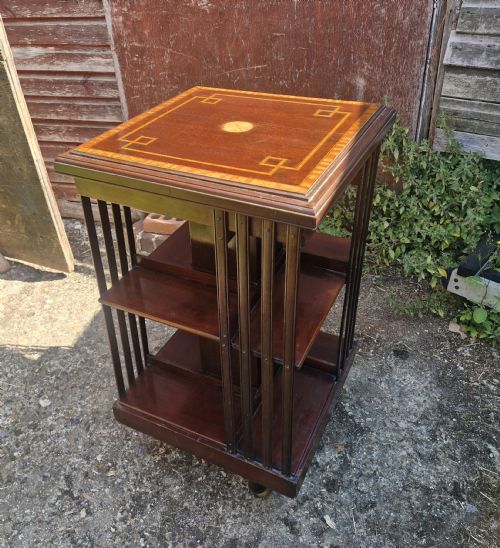
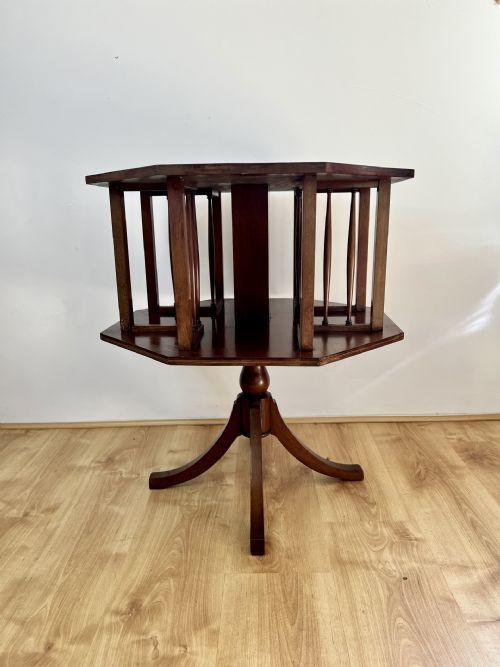
Rotating Bookcase Stand
A rotating bookcase stand brings practical volumes to hand with a gentle turn, holding reference sets and novels within easy reach.
Rotating Bookcase Stand
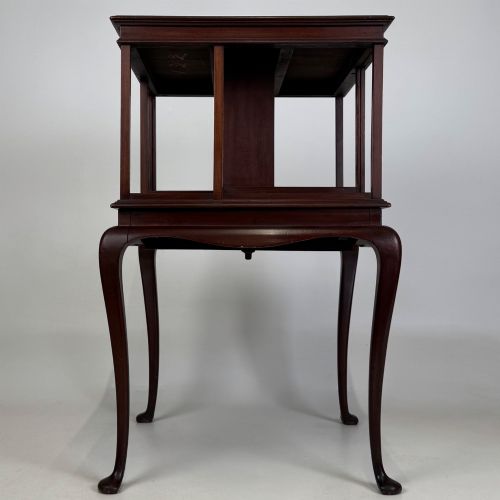
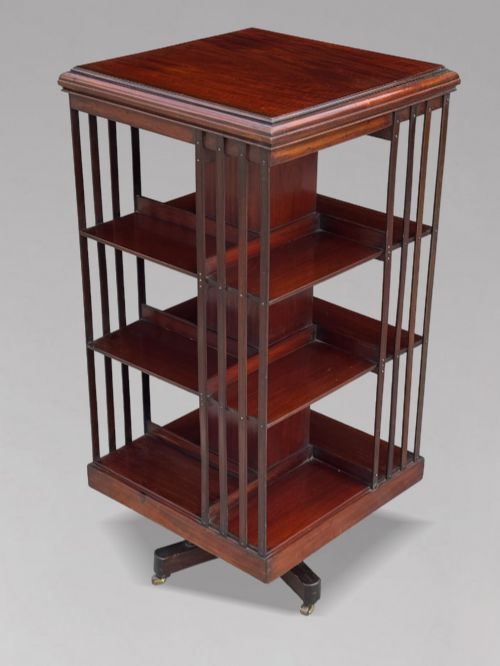
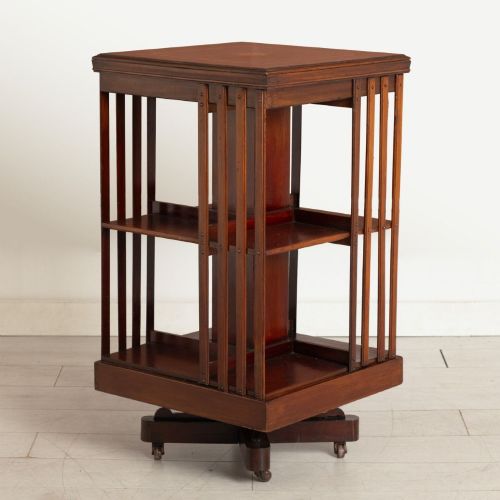
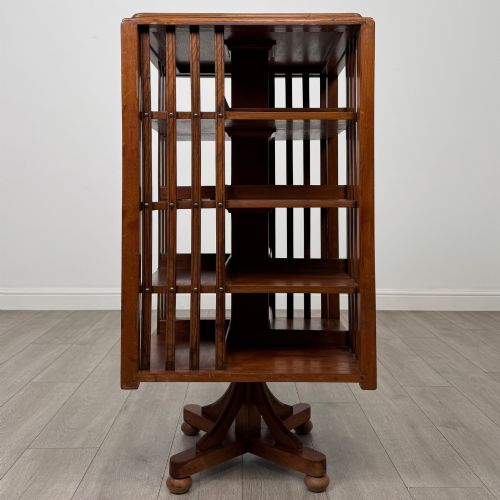
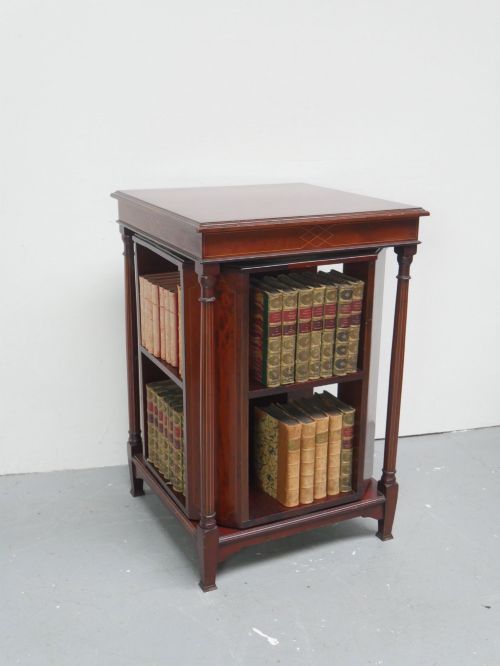
A rotating bookcase stand gathers books into a compact, revolving tower that sits comfortably beside an armchair or upon a desk. Most examples encountered here date from the Victorian and Edwardian eras, spanning the late nineteenth and early twentieth centuries.
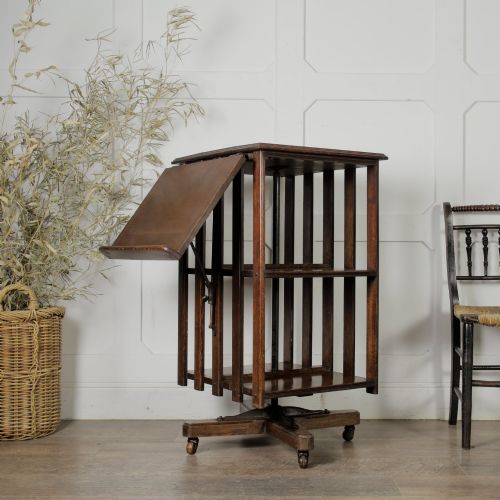
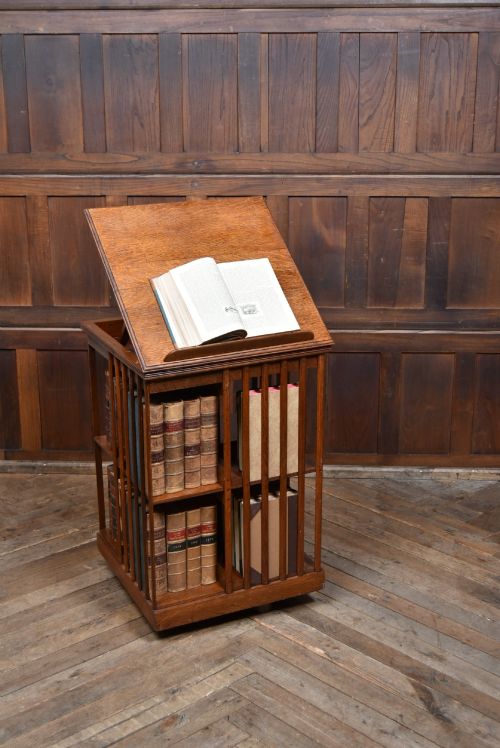
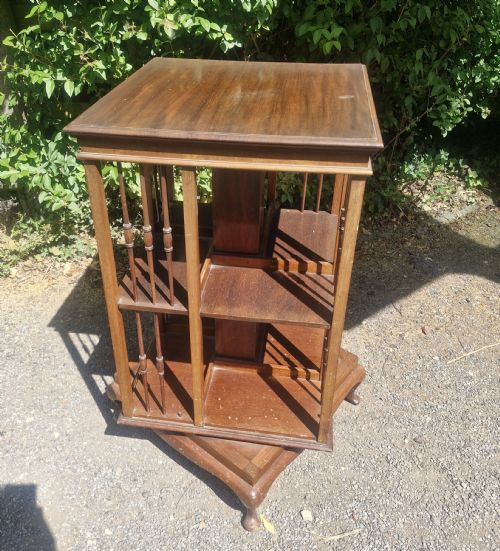
Makers produced these pieces in varying formats, from small desktop bookstands to large floor-standing library tables. The underlying mechanism allows the entire tier of books to pivot smoothly on a concealed base.
Materials and Construction
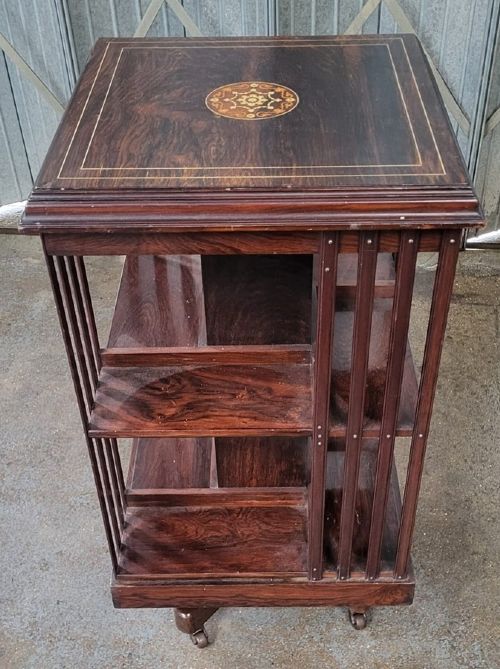
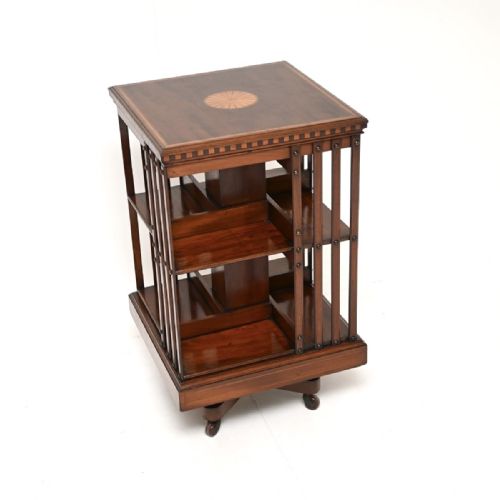
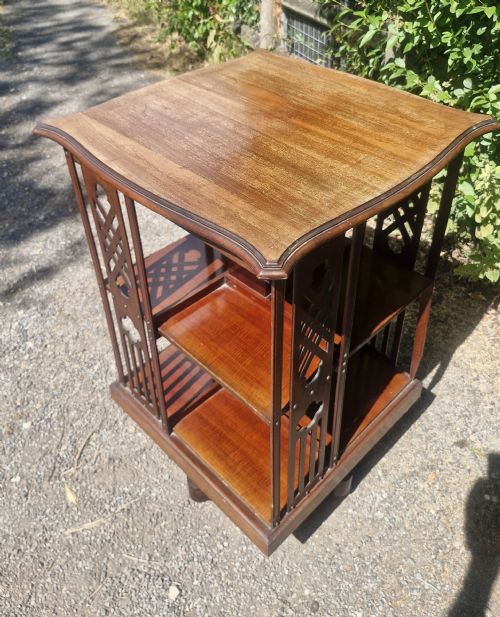
Cabinetmakers relied heavily on rich timbers such as mahogany, oak and walnut, often applying delicate stringing, satinwood inlay or floral marquetry to the surfaces. Brass and cast iron components frequently reinforced the internal rotating mechanism and corner mounts.
Solid construction methods ensured the central pivot could bear the substantial weight of heavy volumes without listing. Timber selection dictated whether the piece received a dark polish, flame figuring or a simpler grain.
A tiny turn brings an entire library into reach without the owner ever needing to stand.
Judging Quality and Execution
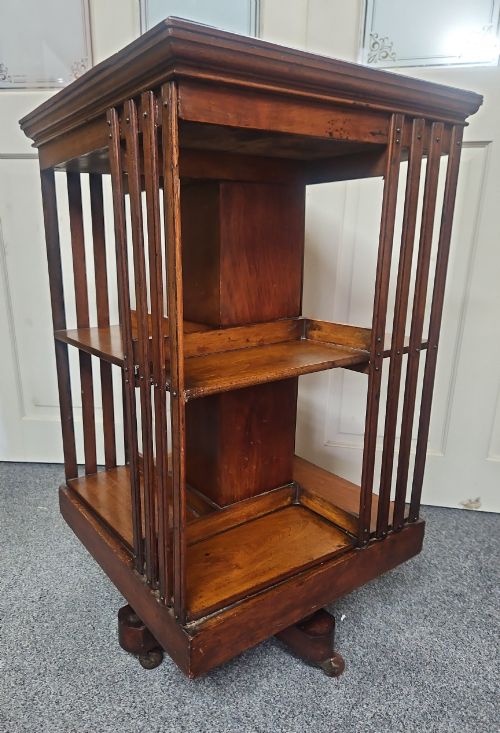
The smoothness of the rotation distinguishes superior examples from lesser items, reflecting the precision of the internal pivot mechanism. Finely turned spindle galleries and crisp inlay demonstrate the skill of the original workshop.
Timber selection plays a major role, as figured flame mahogany or quarter-sawn oak elevates the visual weight of the furniture. Desirable variations include marble tops or compact desktop formats designed for specific study spaces.
Maple And Co
The Rotating Bookcase Stand Glossary
- Revolving Bookcase
- A freestanding or table-top tier of shelving designed to turn on a central axis. This allows access to multiple compartments from a single seated position.
- Marquetry
- Decorative patterns formed by fitting together thin veneers of various woods. Artisans utilised this technique to create elaborate floral or geometric motifs on cabinet fronts.
- Sheraton Style
- A neoclassical furniture design characterised by straight lines, tapered legs and delicate inlay. Pieces adopting this aesthetic draw on the pattern books of the eighteenth century.
- Flame Mahogany
- Timber cut from the fork of the mahogany tree to produce a distinctive flickering flame pattern. Cabinetmakers reserved this wood for prominent display surfaces.
Rotating Bookcase Stand: Frequently Asked Questions
How do I maintain the turning mechanism?
Keep the central pivot clean and occasionally apply a light lubricant if the rotation stiffens.
Avoid overloading one side unevenly, as balanced weight distribution protects the internal bearings over decades of use.
Where should I place a rotating bookcase stand?
These pieces suit positions beside a reading chair, library desk or sofa where books require constant access.
Floor-standing versions need adequate clearance on all sides to complete a full rotation without striking nearby walls.
How can I distinguish Victorian from Edwardian pieces?
Victorian examples tend to feature darker, heavier timbers and robust structural proportions suited to formal libraries.
Edwardian pieces often display lighter mahogany or inlaid satinwood with slender proportions influenced by revival styles.
What is the difference between floor and table models?
Floor-standing models incorporate a heavy base designed to support multiple tiers of heavy volumes at a seated height.
Table top versions provide compact revolving storage specifically scaled for desks, side tables or smaller reading areas.