
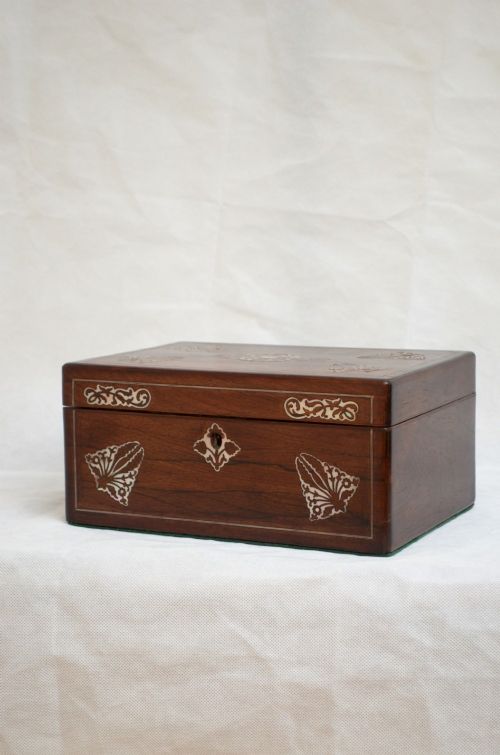


Rosewood Vanity Casket
A rosewood vanity casket is a timber box for keepsakes and grooming items, offering rich dark grain and fine craftsmanship.
Rosewood Vanity Casket
A rosewood vanity casket is an enclosed container designed for jewellery, correspondence, needlework, or grooming accessories. These pieces span the Regency, William IV, and Victorian eras, reflecting the domestic habits of the nineteenth century.
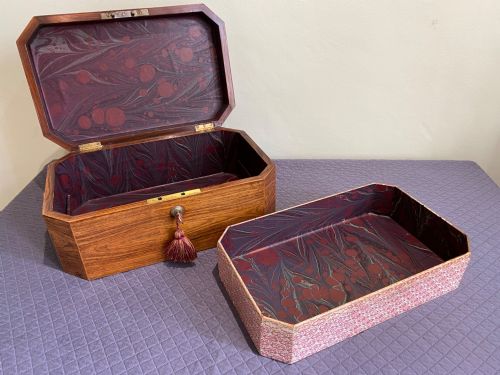
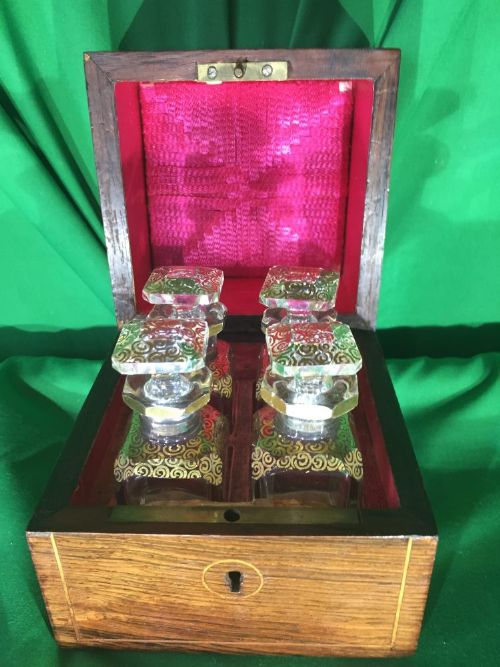
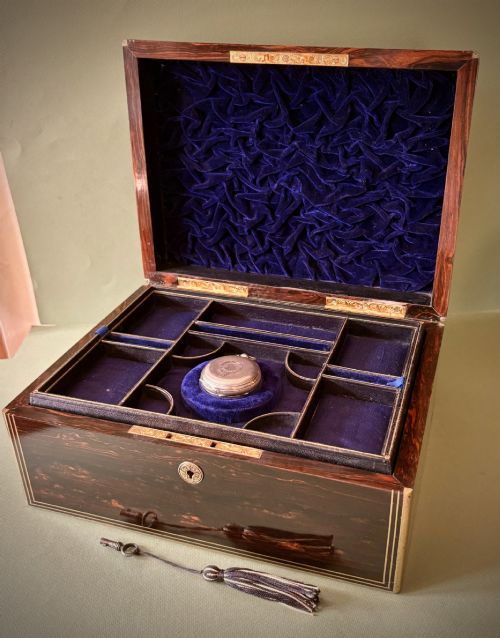
The version most commonly met on this page is the Victorian or Regency box, frequently fitted with internal trays, velvet or fabric linings, and compartments for scent bottles or trinkets.
Makers utilised rich tropical timbers to create functional desk and dressing table accessories. Surviving examples often show dedicated internal compartments for storage of personal valuables.
Materials and construction
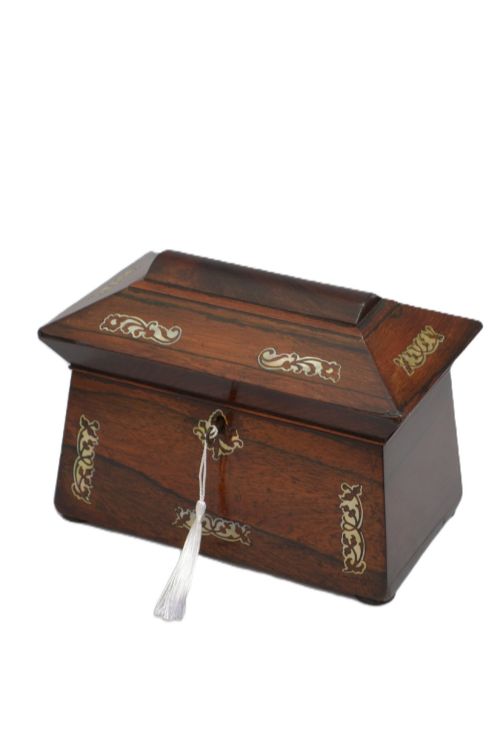
Caskets are built from dense rosewood timber, chosen for its deep colour and distinct grain patterns. Cabinet makers frequently incorporated brass inlay, silver stringing, and mother-of-pearl to ornament the exterior surfaces.
Interiors are lined with velvet or fabric, often incorporating fitted trays and glass containers such as scent bottles. Tunbridge ware and marquetry techniques appear on specific pieces, showing intricate wooden mosaic work or inlaid floral motifs.
Listings feature items from the 19th Century, Regency, and Victorian periods, constructed from rosewood, brass, mother-of-pearl, velvet, boxwood, and glass.
Distinctions in quality
The standard of a rosewood vanity casket rests upon the precision of its brass or mother-of-pearl inlay and the integrity of the timber carcase. Superior pieces retain complex internal fitted trays, original velvet linings, and working locks with functional keys.
Simpler workboxes rely on clean proportions and unadorned rosewood surfaces, whereas high-end items demonstrate meticulous marquetry, Tunbridge ware decoration, or specialised scent bottle configurations.
The Rosewood Vanity Casket Glossary
- Regency
- A British design period spanning the early nineteenth century. Furniture and decorative objects from this time lean towards classical restraint and elegant proportions.
- Victorian
- The period of Queen Victoria's reign covering the mid to late nineteenth century. Items from this era show diverse revival styles and ornate domestic ornamentation.
- Tunbridge Ware
- A type of decorative woodwork produced in Kent, featuring tiny mosaic tiles made from different coloured woods to form pictorial or geometric designs.
- Mother-of-Pearl
- The iridescent inner layer of certain mollusc shells. Craftsmen cut this material into thin pieces to create gleaming inlay on box lids and escutcheons.
- Sarcophagus
- A box shape featuring a sloping, stepped lid resembling an antique stone coffin. This form was popular for grand Regency and William IV tea caddies and workboxes.
Rosewood Vanity Casket: Frequently Asked Questions
How were these boxes used?
Owners used these caskets to secure valuable personal items, organise correspondence, or house needlework supplies. Fitted interiors with small compartments kept delicate accessories separated and safe.
Many examples include removable trays and specialised slots designed specifically for glass scent bottles or sewing implements.
How do I date a rosewood box?
Dating relies on stylistic clues such as overall shape, hardware design, and decorative techniques. Regency pieces often exhibit classical lines, while Victorian examples might feature elaborate mother-of-pearl inlay or Tunbridge ware.
Construction methods inside the box, such as the style of the hinges and lining materials, also provide clear indicators of the period of manufacture.
How do I care for rosewood furniture?
Protect antique rosewood by keeping it away from direct sunlight and maintaining stable room humidity. Dust gently with a soft, dry cloth to preserve the polished timber surface.
Avoid using modern liquid polishes or harsh chemical cleaners, as these can damage the historic finish and delicate mother-of-pearl or brass inlays.