



Antique Perfume Casket
An antique perfume casket holds fragile glass scent bottles securely within a fitted box, offering a glimpse into nineteenth-century dressing habits.
Antique Perfume Casket
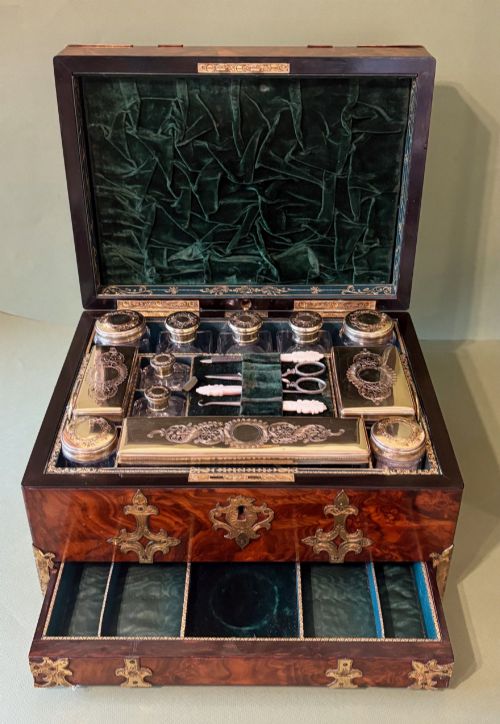
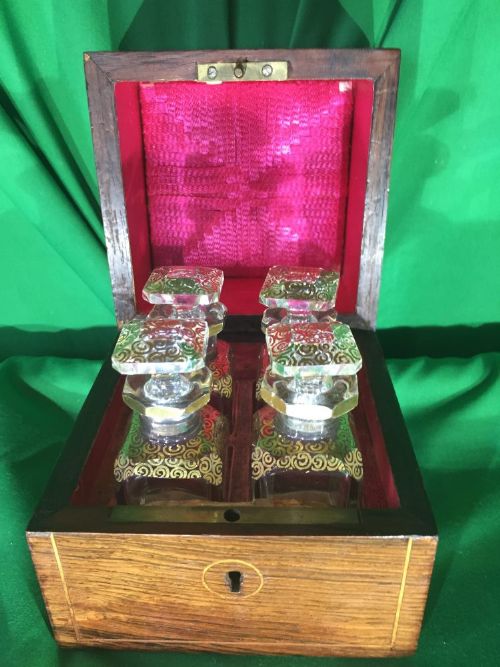
An antique perfume casket is a dedicated container designed to house scent bottles, dressing items, or jewellery safely. When you search for this phrase, you find Victorian and nineteenth-century boxes configured specifically to hold glass bottles.
The pieces on this page appear in various forms, including scent bottle caskets, dressing cases, and combination boxes with tantalus fittings. Most examples hail from the Victorian period or mid-nineteenth-century France, reflecting European craftsmanship of the era.
Makers housed multiple cut glass or moulded bottles inside velvet or silk-lined interiors. These caskets served wealthy travellers and ladies sitting at their dressing tables.
How they were made
Carpenters constructed the carcasses from dense timbers like burr walnut, coromandel, rosewood, and fruitwood. They frequently mounted these wooden frames with brass, ormolu, or bronze fittings to reinforce the corners and hinges.
Caskets feature fitted internal trays lined with silk or velvet to cushion the glass scent bottles securely. Some exterior surfaces display embossed leather or inlaid pietra dura panels.
Antique Perfume Casket Retail Price Guide 2026
Typical asking prices for perfume casket among the pieces listed under this phrase on Sellingantiques today, from the lower quarter to the upper quarter. They describe what is for sale here now, not the wider market.
Listings feature nineteenth-century pieces constructed from coromandel, burr walnut, and fruitwood, lined with velvet and silk.
What varies in quality
The selection of cabinet timbers dictates the foundational grade of the piece, with dense exotic woods sitting above standard softwoods. Ormolu mounts and cast bronze details show varying degrees of chiselling crispness.
Interiors lined in heavy silk and fitted precisely to the bottles represent superior workshop output. The presence of matching cut glass scent bottles intact elevates the integrity of the casket.
Baccarat
The Antique Perfume Casket Glossary
- Casket
- A decorative box used for holding valuables, letters, or small precious items. In this context, it specifically refers to boxes fitted for scent bottles.
- Ormolu
- Gilded bronze applied as a mount or decorative accent on furniture and boxes. It provides a bright metallic contrast to dark woods.
- Pietra dura
- An artistic technique using cut and fitted polished coloured stones to create geometric or floral pictures. These panels appear set into the lids of certain caskets.
- Tantalus
- A locking wooden frame holding decanters or bottles visible yet secure from unauthorised access. Combination caskets sometimes utilise this mechanism.
- Coromandel
- A heavy, dark brown timber with contrasting black grain imported from Asia. Cabinetmakers favoured it for luxury nineteenth-century boxes.
Antique Perfume Casket: Frequently Asked Questions
What fits inside an antique perfume casket?
These caskets hold original glass scent bottles, stoppers, and sometimes small dressing instruments within fitted compartments. The interiors feature shaped velvet or silk platforms designed to keep the bottles upright during travel.
Many examples also incorporate lower drawers or compartments for jewellery and trinkets. The configuration depends entirely on whether the box served as a travelling set or a stationary dressing table piece.
How do I date a perfume casket?
Dating relies on timber choices, brass hardware styles, and internal lining materials. Nineteenth-century pieces often utilise coromandel or burr walnut alongside hand-cut glass bottles.
Stamped hinges, French bronze mounts, and specific nineteenth-century stylistic periods like Charles X or Napoleon III help narrow the decade of manufacture.
How should I clean the velvet lining?
Historic silk and velvet linings require gentle dry dusting with a soft artist's brush to remove accumulated debris. Moisture damages aged textiles and degrades the underlying wooden structure.
Avoid liquid cleaners entirely when maintaining the interior fabrics of nineteenth-century boxes. Professional textile conservators should handle severe degradation.
Were these caskets meant for travel?
Many nineteenth-century boxes functioned as travelling sets for wealthy individuals on extended journeys. Fitted leather handles and robust brass locks ensured the glass bottles survived carriage rides.
Other larger caskets remained stationary on domestic dressing tables as decorative storage for precious scents. The inclusion of heavy locking mechanisms points to the high value placed on perfumes.