
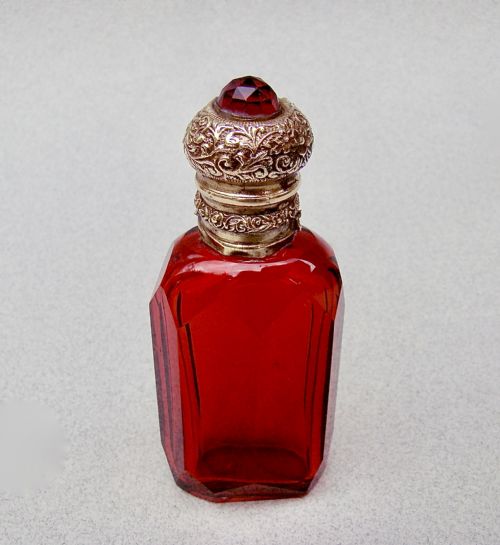
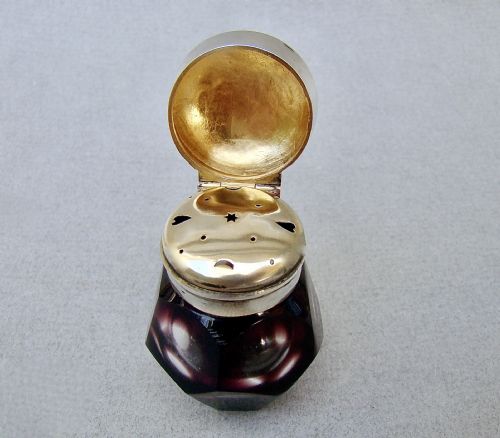
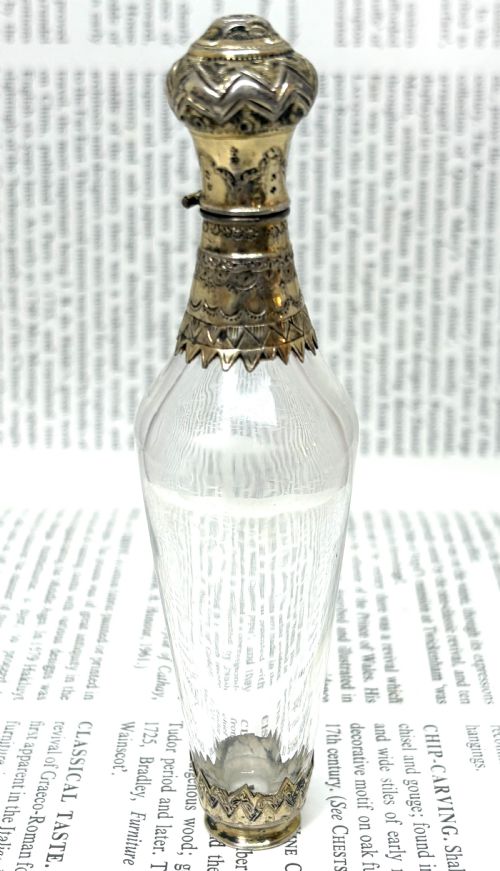


Gilt Glass Scent Bottle
A gilt glass scent bottle combines tinted or clear glass with precious metal mounts, offering a portable vessel for personal fragrance.
Gilt Glass Scent Bottle
A gilt glass scent bottle is a small receptacle designed to hold perfume, oils, or smelling salts. These objects range from single pocket flasks to double-ended versions incorporating a vinaigrette compartment.
The selections on this page centre on nineteenth-century European examples, particularly French and English productions. Makers utilised coloured glass bodies paired with silver gilt, ormulu, or brass hardware.
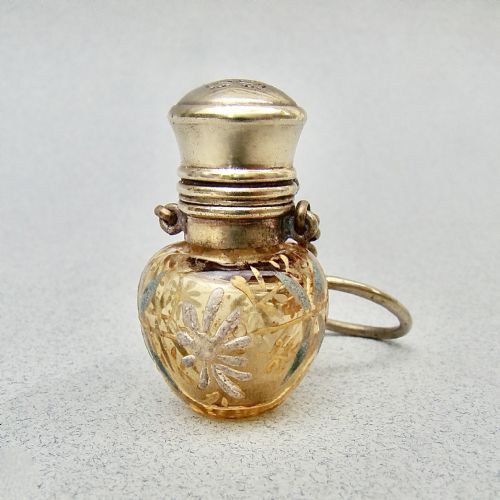
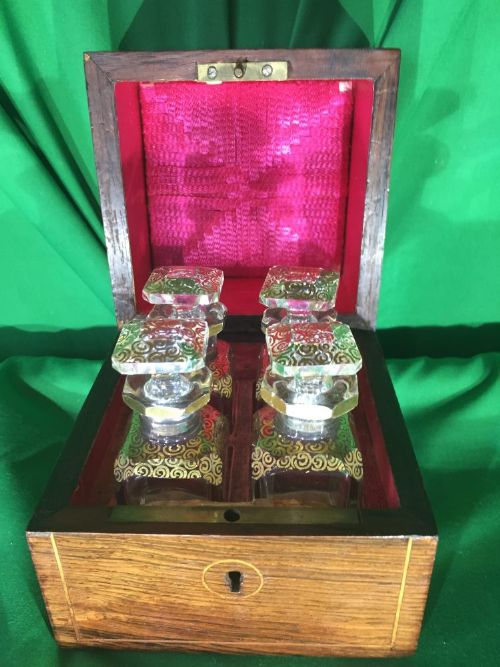
Many items survive inside fitted leather caskets or velvet-lined boxes alongside matching companions. Chatelaine variants feature small loops or chains intended for suspension from a belt.
Materials and Construction
Glassmakers employed techniques such as casing, cutting, and enamelling to produce coloured grounds in ruby, green, amethyst, and opaline hues. Overlay and lithyalin methods created layered or marbled optical effects.
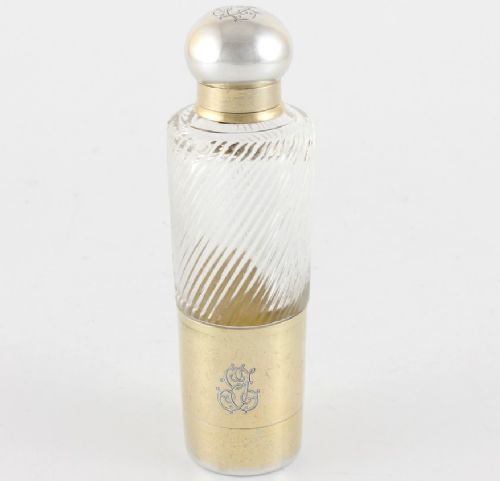
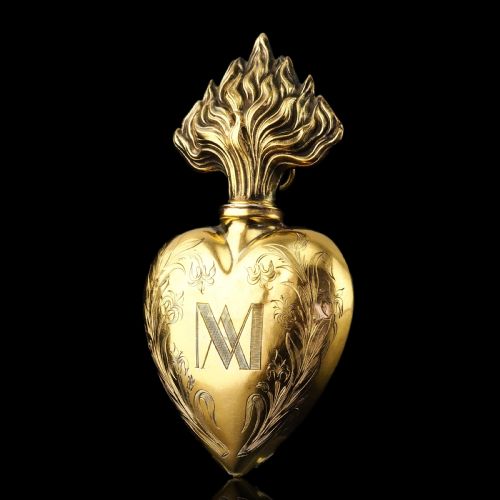
Metalworkers applied fire-gilding or sterling silver mounts to the collars, caps, and hinged lids. These metal fittings often received hand-engraved scrollwork or repoussé decoration to frame the glass body.
Gentlemen of the Victorian era carried locking cologne bottles to ensure their personal grooming supplies remained undisturbed.
Assessing Quality
The standard of execution depends heavily on the integration between the glass body and its metal mounts. Superior examples display precise alignment, tight closure of hinged lids, and substantial metal weight rather than thin plating.
Artistic complexity dictates upper tiers, where hand-painted gilt motifs, intricate enamel work, or specialised glass types like murrine distinguish workshop output. Original fitted presentation cases also elevate the completeness of a survival.
Sampson Mordan·Richard Comyns·George Brace·René Lalique·Moser·Tonnel Paris·Franchini and Bigaglia
The Gilt Glass Scent Bottle Glossary
- Vinaigrette
- A small container holding a perforated grille, originally used for sponges soaked in aromatic vinegar. These are frequently incorporated into the reverse end of nineteenth-century perfume flasks.
- Chatelaine
- A decorative belt hook from which utilitarian items hung, including keys, watch fobs, and miniature scent flasks. Surviving pieces retain small suspension loops.
- Opaline glass
- An opaque or translucent art glass popular during the nineteenth century, often tinted in pastel shades of blue, green, or pink. It provides a smooth ground for applied gilding.
- Silver gilt
- Sterling silver that has been coated with a thin layer of gold, providing a rich yellow lustre. This material resists tarnishing while offering the structural integrity of silver.
- Lithyalin glass
- A type of opaque, marbled glass developed in Bohemia that imitates hardstones like jasper and agate. It is frequently encountered with polished facets and gilt highlights.
Gilt Glass Scent Bottle: Frequently Asked Questions
How do I clean a vintage glass perfume flask?
Cleaning requires gentle rinsing with lukewarm water and mild soap, avoiding harsh abrasives that might damage applied gilding or enamel. The interior can be cleared using a specialised bottle brush.
Submerging mounted pieces in liquid should be avoided to protect antique adhesives and velvet linings.
What is uranium glass?
Uranium glass incorporates trace amounts of uranium oxide as a colouring agent, resulting in vibrant green or yellow hues that glow under ultraviolet light. This material was widely used in nineteenth-century decorative wares.
The radiation levels present in these historical items are extremely low and considered safe for display purposes.
Why do some bottles have fitted boxes?
Fitted cases and caskets protected delicate glass bodies and fragile metal mounts during travel or storage on a vanity table. Lined interiors of silk or velvet kept multiple companion bottles secure.
Complete sets retained within their original leather or wood boxes command particular interest from collectors.