

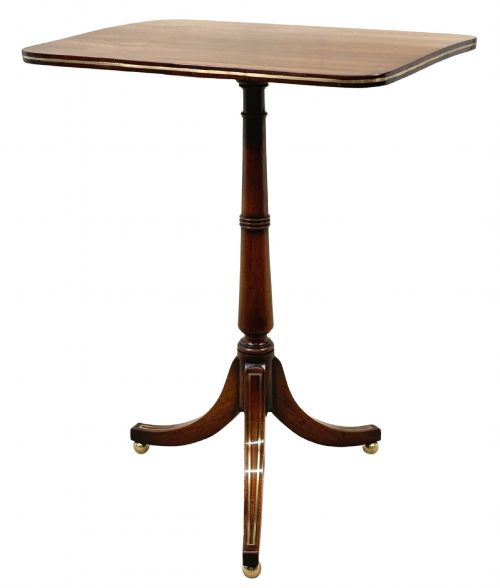


Rosewood Tripod Stand
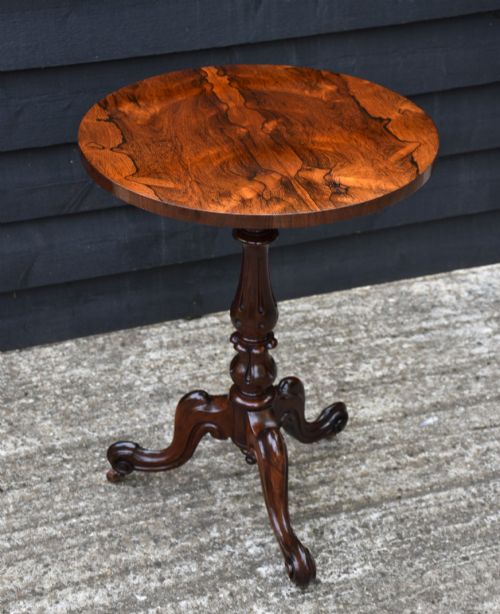
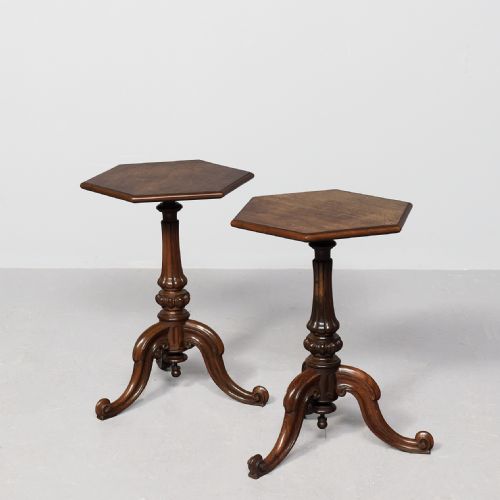
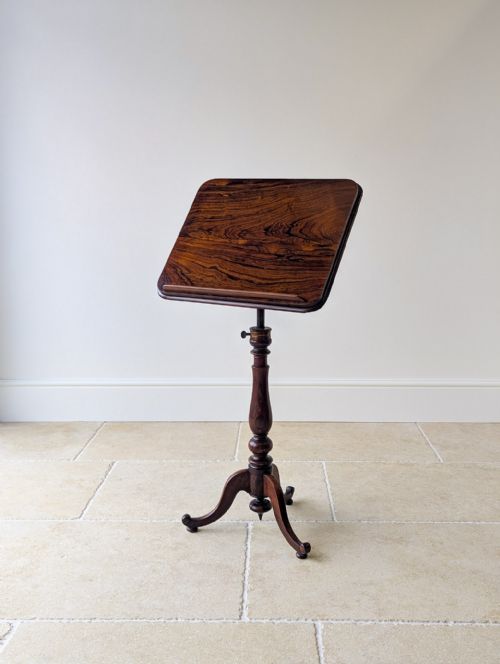
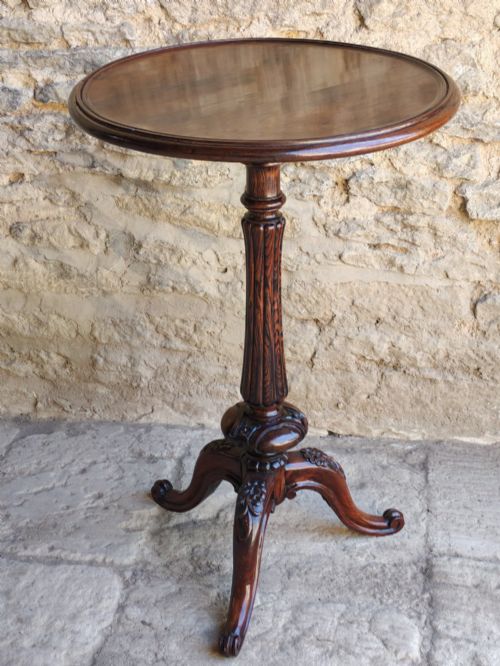
A rosewood tripod stand brings rich dark timber and steady three-legged support to a room, functioning as a wine table, reading stand or lamp table.
Rosewood Tripod Stand
When you search for a rosewood tripod stand, you encounter a variety of small support furniture designed for specific domestic tasks during the Georgian, Regency, William IV and Victorian periods.
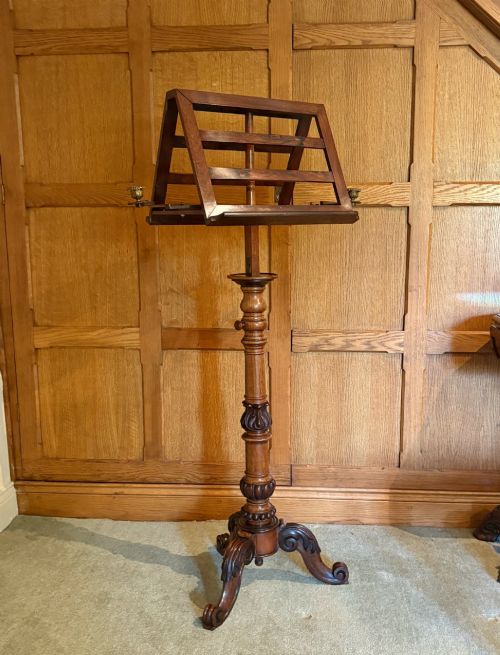
The pieces on this page are most commonly occasional wine tables, reading stands, music stands, sewing tables and pole screens resting upon three-legged pedestals.
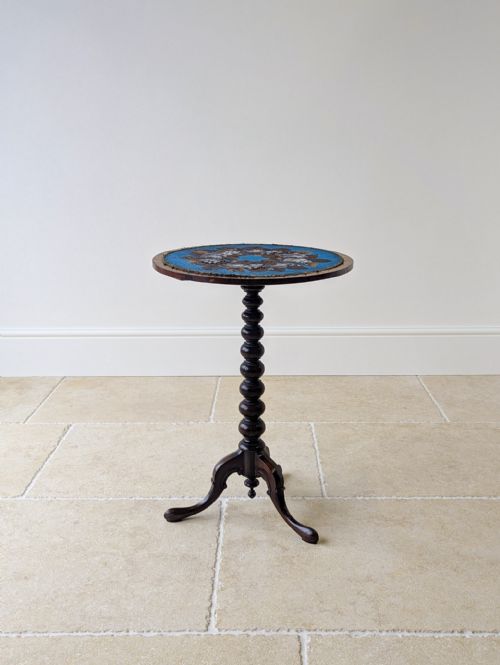
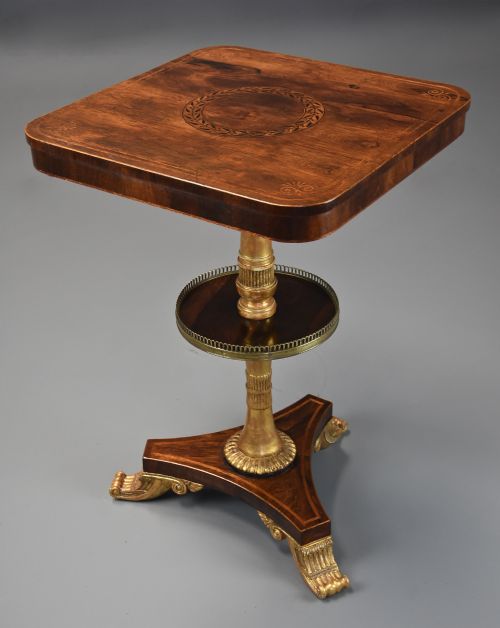
Makers shaped these items from rich dense timber, often combining rosewood with brass inlay, marble inserts or embroidered textile panels.
Materials and construction methods
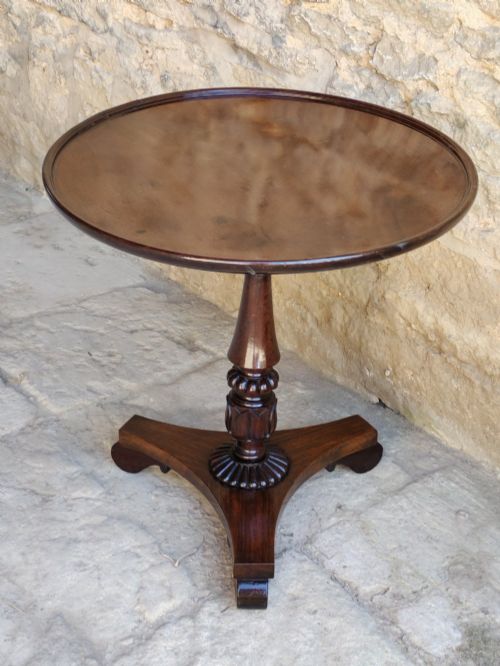
Cabinetmakers utilised heavy solid rosewood and figured veneers applied to secondary hardwoods, building stable three-legged bases that supported circular, dishtop or galleried surfaces.
Decoration relied on precision brass stringing or inlay, intricate turned columns like barley twists, and carved tripod bases terminating in scroll or pad feet.
Functional additions such as adjustable reading ratchets, needlework tapestry panels, and fitted interiors transformed simple stands into multi-purpose furnishings.
Listings span the 1800s, Regency, William IV, and Victorian periods, incorporating brass, marble, and textile elements.
Evaluating craftsmanship and design
The division between standard production and the top of the range rests on the selection of timber figures, the crispness of carved details, and the integration of brass or marble elements.
Superior examples demonstrate meticulous proportion in the turning of the central pillar and the spread of the tripod legs, ensuring absolute stability without visual clumsiness.
The presence of documented maker details or complex mechanical adjustments for reading and music elevates a piece beyond basic domestic utility.
Gillow·George Bullock
The Rosewood Tripod Stand Glossary
- Tripod table
- A small standalone table supported by a central pillar resting on three legs. This configuration became immensely popular during the Georgian and Regency eras for portability and flexibility.
- Pole screen
- An adjustable vertical screen mounted on a pole and tripod base, designed to shield a person's face from the direct heat of an open fire. They frequently featured embroidered needlework or tapestry panels.
- Brass stringing
- Fine inlaid lines of brass set into the surface of the timber to create geometric borders or decorative motifs. Regency cabinetmakers favoured this technique to highlight the dark grain of rosewood.
- Teapoy
- A small box or chest mounted on a central pillar and tripod base, originally used for storing and locking away precious loose tea leaves. Many included internal caddies and mixing bowls.
- Wine table
- A compact occasional table with a small top, intended to hold a single glass and bottle of wine beside a chair. They often feature dishtops to prevent items from sliding off.
Rosewood Tripod Stand: Frequently Asked Questions
What is a rosewood tripod stand used for?
These versatile stands served multiple roles in historic drawing rooms and parlours, acting as surfaces for drinks, books, sewing equipment or lamps.
Collectors today utilise them as compact side tables or display pedestals in smaller spaces where larger furniture would overwhelm the room.
How do I date a rosewood stand?
Dating relies on observing the stylistic shifts from clean classical Regency lines and brass inlay towards the heavier, more heavily carved forms of the William IV and Victorian periods.
Examining the construction methods, turning styles and timber selection provides further clues to place a piece within the nineteenth century.
Are pole screens still practical?
While modern central heating renders the original fire-shielding function obsolete, antique pole screens make striking decorative accents in a room.
The embroidered textile panels bring historic colour and texture to interior walls and empty corners.
What is Gonçalo Alves timber?
Gonçalo Alves is an exotic dense hardwood often associated with high-end nineteenth-century cabinetmaking, frequently resembling rosewood in its rich contrasting grain.
It was selected for luxury stands and reading desks due to its durability and dramatic visual pattern.