





Rosewood Table Brass Castors
These rosewood table brass castors selections bring rich dark timber and mobile elegance straight into your sitting room.

Rosewood Table Brass Castors
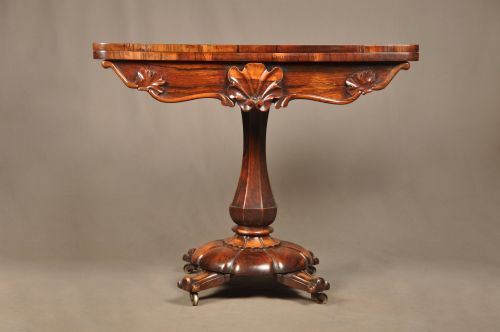
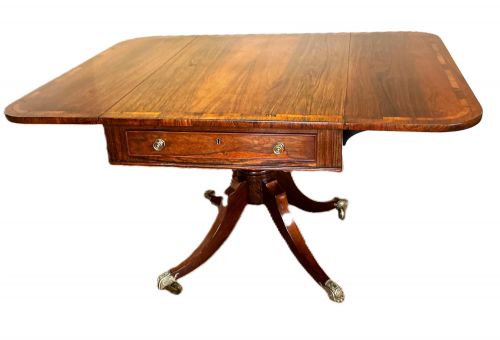
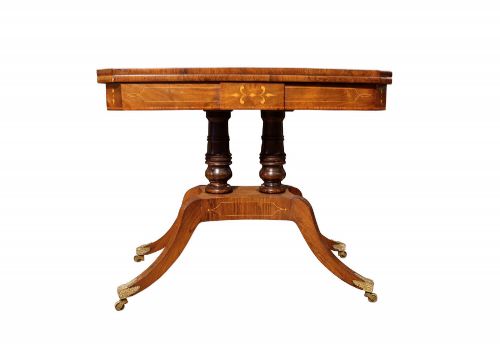
A rosewood table brass castors search reveals solid timber furniture dominated by the Regency and 19th Century periods, featuring deep reddish-brown grains and gleaming metal feet. You will encounter numerous card tables, sofa tables, and games tables designed for formal reception rooms.
The selection frequently includes drop-flap library tables, work tables, and occasional lamp tables originating from Georgian through to Victorian eras. These pieces rely on metal castors for effortless movement across period carpets and floorboards.
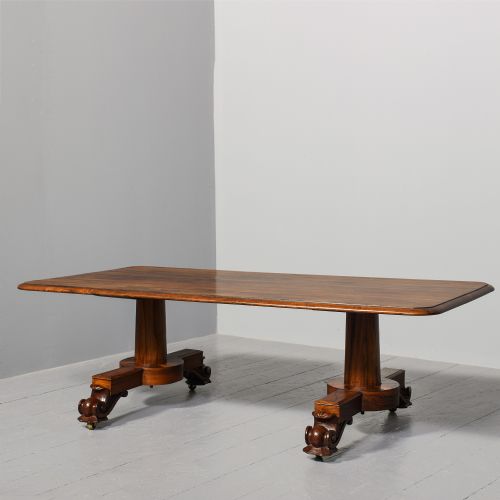
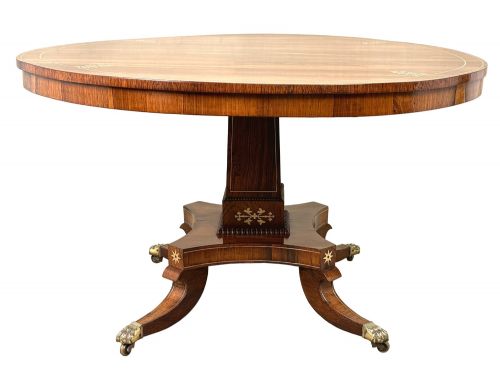
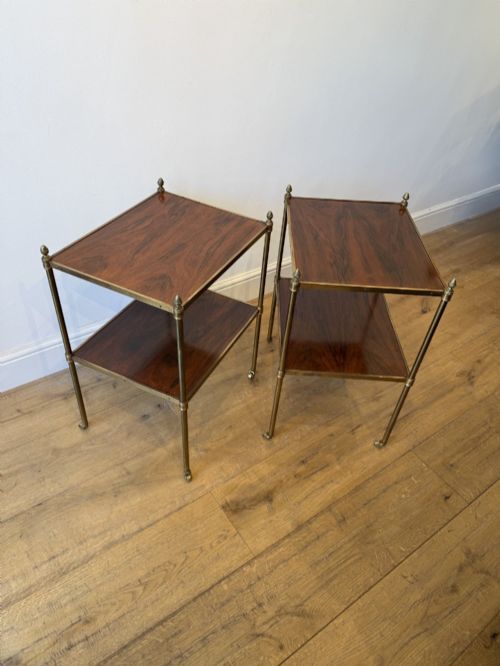
Makers often applied boxwood and satinwood inlay or gilt brass mounts to enhance the dark rosewood surfaces. The forms range from circular centre tables to multi-tiered étagères and extensive three-pedestal dining tables.
Construction and Materials
Cabinet makers utilised dense rosewood timbers, sometimes combined with secondary woods like mahogany, finished with contrasting boxwood and satinwood inlay. Selected items incorporate leather or fabric surfaces tailored for writing and card playing.
Structural mobility relies upon solid brass castors fitted to the base of pedestal columns or tapering legs. Metal sabots often protect the lower timber extremities while complementing the bright wheel mountings.
Materials across the selection extend beyond rosewood to include mahogany, satinwood, boxwood, and contrasting goncalo alves.
Judging Quality
The sophistication of the timber figure and the precision of brass inlay define the upper tier of these pieces. Grain selection on table tops and fold-over leaves displays deliberate pattern matching across the joints.
Originality of the metal hardware and stability of the folding mechanisms indicate superior workshop execution. Tables retaining their authentic brass castors demonstrate better overall preservation.
Gillows·Mallett
The Rosewood Table Brass Castors Glossary
- Card table
- A folding table designed for evening games, featuring a hinged top that opens to reveal a baize-lined surface. These often pivot on a central column above a platform base.
- Sofa table
- A rectangular occasional table traditionally placed alongside a sofa, fitted with drop leaves at either end. They typically include small drawers beneath the top.
- Brass castor
- A small swiveling wheel assembly fixed to furniture legs to permit easy repositioning. They are frequently cast in brass and mounted on ceramic or metal sockets.
- Étagère
- A set of open shelves for displaying small ornaments and books. Multi-tiered versions provide vertical storage within limited floor space.
- Sabot
- A protective metal sleeve fitted to the foot of a furniture leg. They coordinate visually with the accompanying castors.
Rosewood Table Brass Castors: Frequently Asked Questions
What is a rosewood sofa table used for?
Sofa tables served primarily as versatile side surfaces in formal drawing rooms during the Regency period. Their drop leaves allowed them to expand when needed for writing or serving.
Today, they function effectively behind sofas or as compact desks in modern interiors. Their narrow depth makes them adaptable for hallways and smaller living spaces.
How do I identify a Regency rosewood table?
Regency tables are characterised by classical Neoclassical proportions, dark figured rosewood veneers, and often brass inlay. Look for architectural elements such as pillar pedestals and brass paw feet.
Many examples feature rectangular or circular tops with subtle stringing in contrasting timbers like boxwood. The presence of original brass castors is a strong indicator of this period.
Are card tables sturdy enough for daily use?
Fold-over card tables rely on hinged leaves that swing out to provide support for the open top. While built for entertaining, the pivoting mechanism requires gentle handling.
When opened properly, they offer a stable surface for occasional dining or display. Avoid placing excessive weight on the extended corners of the unsupported leaf.
How should I care for antique rosewood?
Rosewood benefits from regular dusting with a soft, dry cloth to prevent grit accumulation on the polished surface. Keep the timber away from direct sunlight and heat sources to avoid veneer splitting.
Application of traditional wax polish maintains the natural sheen of the wood without building up heavy residues. Check the brass castors periodically to ensure they move freely.