

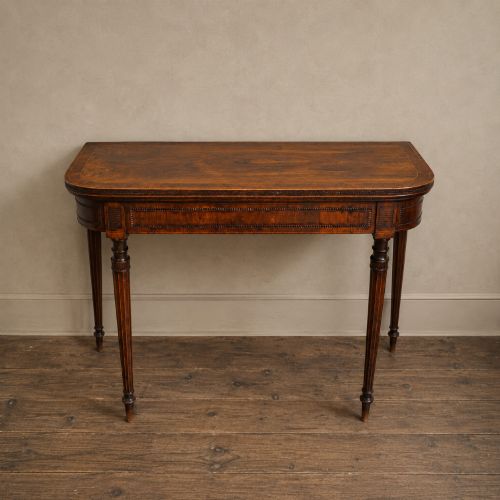
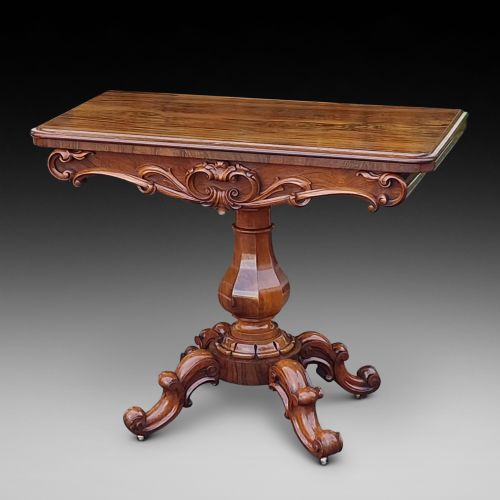
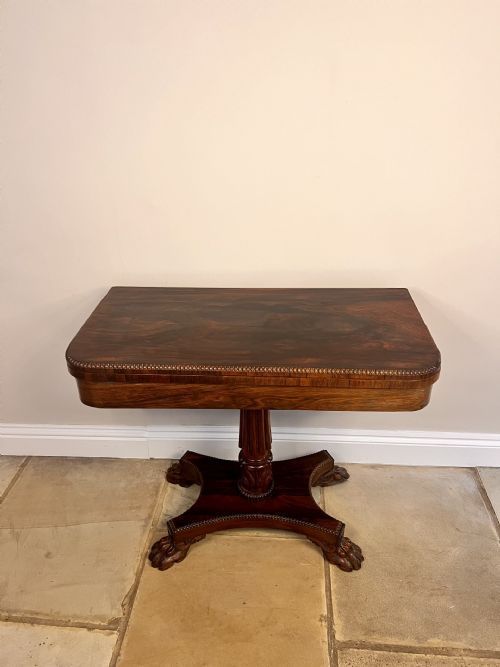


Rosewood Swivel Card Table
A rosewood swivel card table is a clever folding piece designed for parlour gaming, turning from a compact console into a baize-lined surface with a simple twist.
Rosewood Swivel Card Table
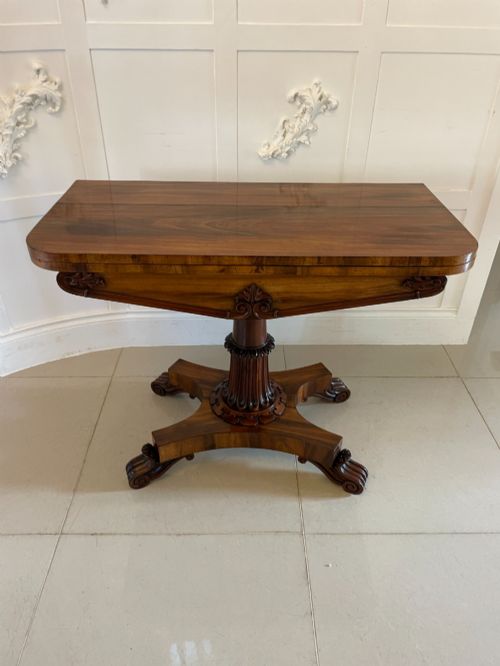
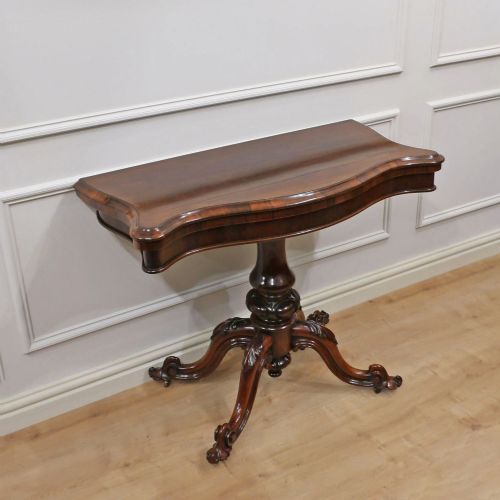
A rosewood swivel card table brings together timber frames and folding mechanisms that reveal a playing surface when opened and rotated. These examples span the Regency, William IV, and Victorian periods, stretching from the late Georgian era towards nineteen hundred.
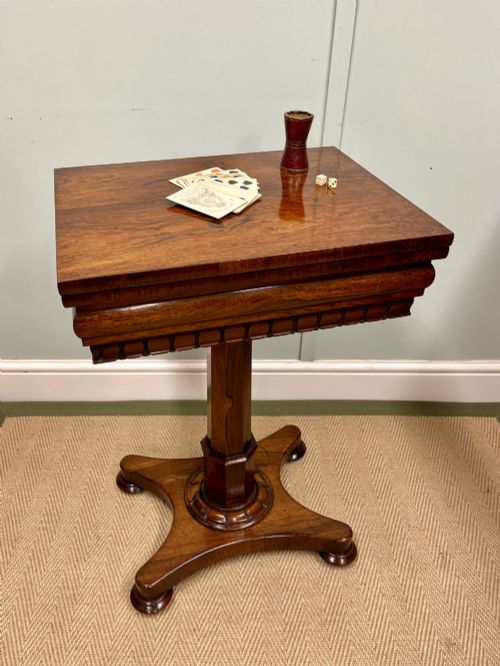
Most pieces met on this page operate as card tables, games tables, or tea tables, often featuring a fold-over top supported by a pedestal or pillar base. The design serves dual purposes in a drawing room, functioning as a console against a wall before opening for evening entertainment.
Origins cluster around the nineteenth century, including specific dates such as eighteen hundred, eighteen fifteen, eighteen twenty, eighteen thirty, eighteen thirty-five, and eighteen fifty. The prevalent styles encompass Regency, Grand Regency, George IV, William IV, and Early Victorian.
Materials and construction
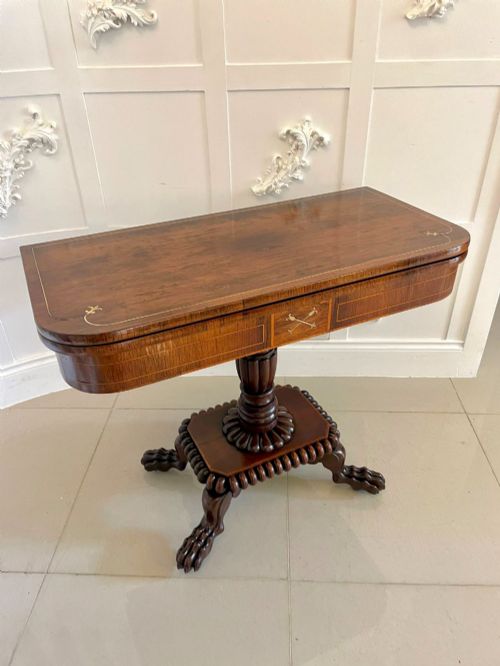
Makers utilised rosewood as the primary timber, often selecting figured varieties or incorporating burr yew crossbanding to frame the top. Secondary details include boxwood stringing, brass inlay, and leather inserts alongside traditional baize for the playing surface.
The construction relies on a clever swivel hinge that allows the folded top to rotate ninety degrees before dropping flat onto the base. Pedestal supports, carved columns, and plinth bases provide the necessary stability to bear the weight of the pivoting top.
Listings feature rosewood card tables spanning the Regency, William IV, and Victorian periods, incorporating brass inlay, baize, and mahogany.
Judging execution
Quality rests upon the selection of the timber veneer and the crispness of any carved decoration on the pedestal or pillar. Pieces showing figured rosewood grain and precise brass inlay demonstrate a higher level of cabinet-making skill.
The smoothness of the swivel action and the tightness of the joints when the table stands open indicate the original maker's precision. A well-balanced frame remains stable on its pedestal without wobbling when the heavy top is turned.
Gillows·T & G Seddon
The Rosewood Swivel Card Table Glossary
- Rosewood
- A dense, heavily figured timber prized for its dark grain and rich colour during the nineteenth century. Cabinet makers selected it for high-status tables and decorative furniture.
- Baize
- A woolen felt fabric used to line the interior playing surface of card and games tables. It provides a soft, durable texture for handling cards.
- Crossbanding
- A strip of veneer applied to the border of a tabletop with the grain running perpendicular to the main centre panel. This technique frames the primary wood.
- Swivel top
- A hinged table top that pivots on its base to reveal a hidden compartment or to support the opened leaf. It allows the console to double in surface area.
- Pedestal
- A central column supporting the table body above a platform base or feet. It replaces traditional four-leg designs in many Regency and Victorian examples.
Rosewood Swivel Card Table: Frequently Asked Questions
How do I open a swivel card table?
Lift the top leaf slightly to clear any internal locking pins, then rotate the entire upper section ninety degrees on its central pivot. Once turned, the leaf unfolds flat to rest securely upon the turned or carved base.
Ensure the supporting gateleg or pivot mechanism takes the full weight of the open leaf before placing any items on the baize surface. Closing the table reverses the process by folding the leaves together and twisting the top back into its console position.
What were these tables originally used for?
These tables served as versatile furniture for entertaining guests with card games, chess, and backgammon during the evening. When closed, they functioned as side tables or console tables against drawing room walls.
The hidden space beneath the pivoting top often stored cards, counters, and gaming pieces close to hand. They allowed households to maximise space in formal rooms by combining display utility with entertainment.
How do I care for nineteenth-century rosewood?
Keep the timber away from direct sunlight and strong heat sources to prevent the rosewood veneer from drying out or splitting. Dust regularly with a soft, dry cloth and avoid modern aerosol polishes that leave silicone residue.
Apply a traditional beeswax sparingly if the timber appears dry, buffing it gently to maintain the natural sheen. Protect the baize surface from moisture and sharp objects to preserve the fabric.
How can I tell a Regency table from a Victorian one?
Regency tables typically display classical restraint, featuring brass inlay, rosewood grain, and pedestal bases with restrained brass paw feet or reeded columns. They date from the early nineteenth century and lean towards architectural proportion.
Victorian examples often introduce heavier carved ornamentation, scroll feet, and elaborate mouldings around the frieze. The timber selection remains rosewood, but the carving style reflects mid-nineteenth-century taste.