



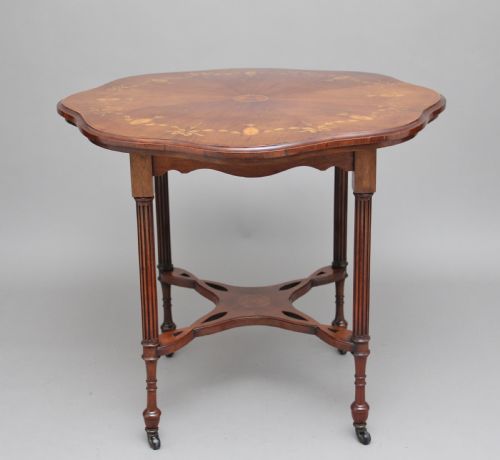
Rosewood Marquetry Centre Table
A rosewood marquetry centre table sits proudly in a room, drawing the eye with its intricate floral patterns and rich timber tones.
Rosewood Marquetry Centre Table
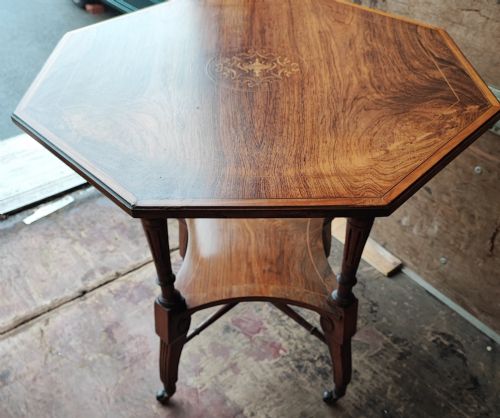
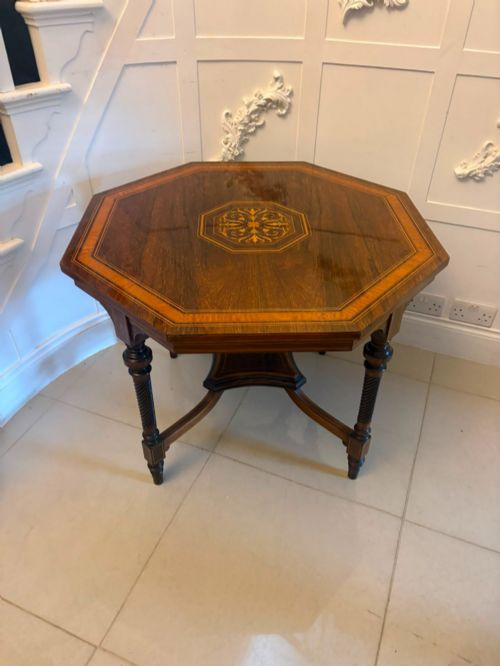
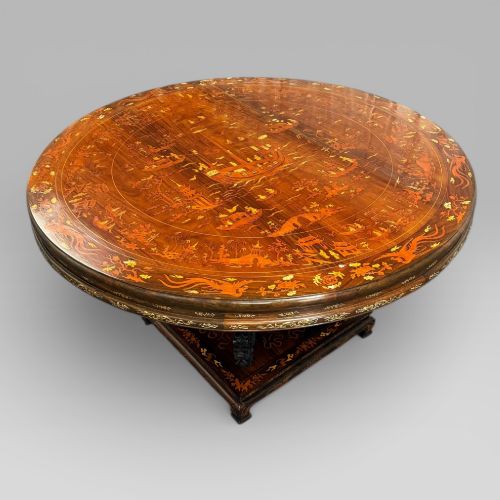
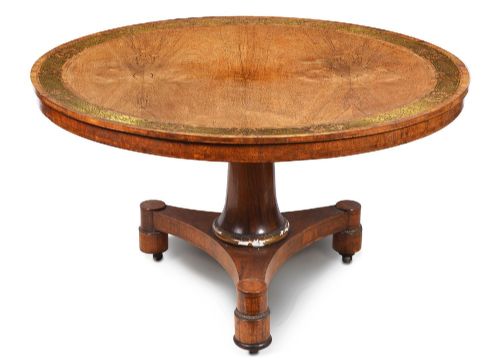
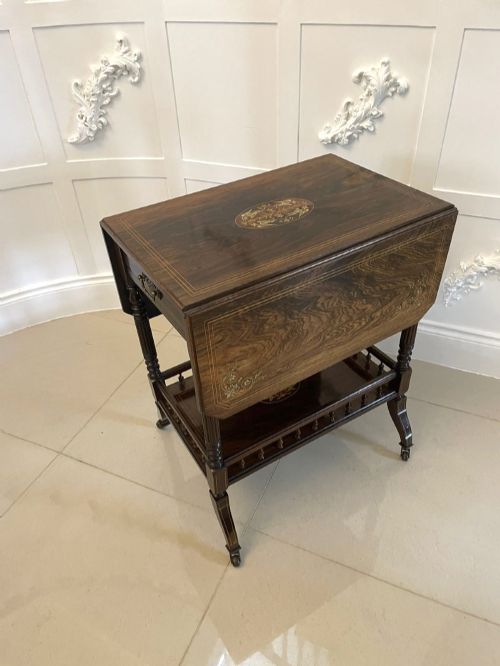
A rosewood marquetry centre table is a freestanding piece designed to be viewed from all sides, commonly found in 19th Century, Regency, and Edwardian incarnations. These tables appear in various forms on this page, including octagonal tops, drop-leaf designs, and writing desks.
The most frequent examples derive from Victorian and French workshops, utilising rich rosewood grounds embellished with detailed floral and geometric inlays. They serve primarily as focal points in large rooms, traditionally placed in the middle of a space rather than against a wall.
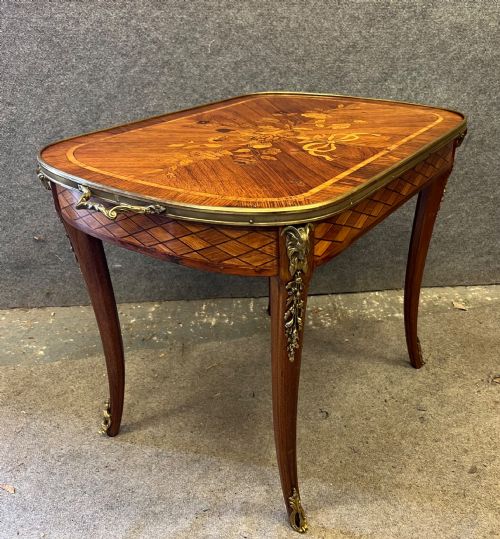
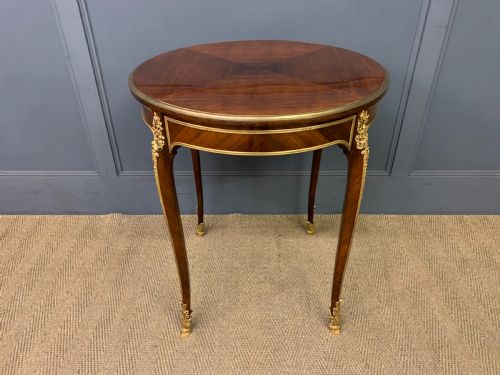
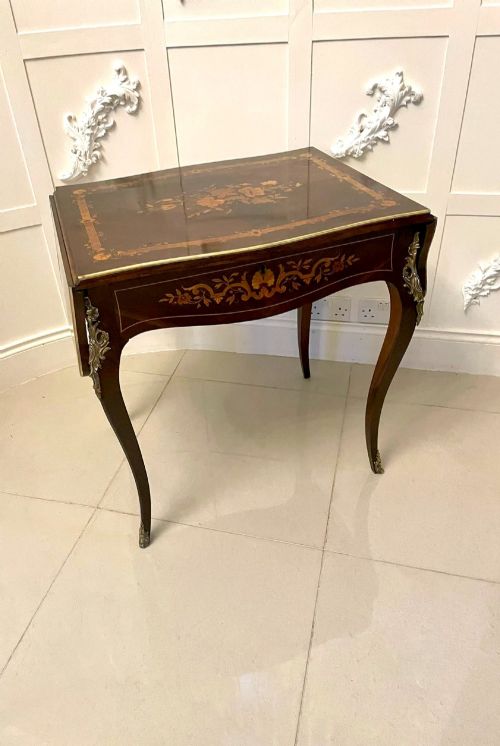
Makers often drew inspiration from Louis XV styles, incorporating curvaceous cabriole legs and mounts of ormolu or gilt-bronze. Alongside these French-influenced pieces, English Regency examples showcase contrasting brass inlay embedded directly into the dark timber grain.
Materials and construction
Cabinetmakers built these tables using dense rosewood as a primary ground, often layering lighter contrasting timbers such as satinwood, fruitwood, boxwood, and kingwood into the surface. These contrasting woods form the elaborate pictorial and floral marquetry panels seen across the tabletops.
Many examples augment the timber structure with cast brass, ormolu, or gilt-bronze mounts fixed to the corners, legs, and apron. Inside the top construction, parquetry layouts demonstrate precise geometric cutting alongside the organic curves of the floral inlay.
Rosewood Marquetry Centre Table Retail Price Guide 2026
Typical asking prices for rosewood marquetry centre table among the pieces listed under this phrase on Sellingantiques today, from the lower quarter to the upper quarter. They describe what is for sale here now, not the wider market.
The archive records 19th Century, Regency, and Edwardian periods, encompassing styles from Louis XV Revival to Qing Chinese Export.
Assessing quality and execution
The distinction between standard and exceptional pieces rests upon the crispness of the marquetry cutter's saw and the selection of timber veneers. Superior tables display seamless integration of contrasting woods like satinwood and boxwood without visible filler or gaps.
Mounts of ormolu or gilt-bronze separate basic production from masterwork execution through their weight, chiselling depth, and secure attachment to the rosewood body. Furthermore, the framing and stability of freestanding structures dictate whether a table maintains its rigidity over centuries of use.
Edwards & Roberts·Ince & Mayhew·George Smith
The Rosewood Marquetry Centre Table Glossary
- Marquetry
- Decorative veneer work forming pictures or patterns on a wooden surface. Craftsmen cut thin sheets of contrasting timber together to create interlocking pictorial designs.
- Parquetry
- Geometric wood inlay forming repeating patterns such as cubes or stripes. This technique relies on straight lines rather than the curved floral motifs of marquetry.
- Ormolu
- Gilded bronze mounts applied to furniture for decorative effect. The metal is cast and chased before receiving a layer of gold amalgam.
- Freestanding
- Finished on all four sides to allow placement anywhere in a room. These pieces do not require a wall to anchor their visual arrangement.
- Bureau Plat
- A flat-topped writing table finished on all sides with drawers in the frieze. This French form frequently incorporates elaborate marquetry and bronze mounts.
Rosewood Marquetry Centre Table: Frequently Asked Questions
Where do I put a centre table?
These tables are designed to stand free in the middle of a room, allowing access from all sides. They function well in large entrance halls or principal reception spaces.
Avoid placing them flat against a wall, as their finished backs and symmetrical inlays are meant to be seen in the round.
How do I clean rosewood surfaces?
Dust the timber regularly with a soft, dry cloth to prevent grit from scratching the polished surface. Keep the table away from direct sunlight and heat sources to protect the natural oils in the wood.
Apply a microcrystalline wax sparingly once or twice a year if the polish appears dry, buffing it gently with a clean cloth.
What is the difference between marquetry and parquetry?
Marquetry employs curved, varied veneers to create pictorial scenes, flowers, and organic scrolls. It relies on the subtle tones of different woods like fruitwood and boxwood.
Parquetry uses geometric shapes arranged in repeating grids, chequers, or cubes. Both techniques appear across the tabletops found in this selection.
How do I date a Regency piece?
Regency pieces often feature dark rosewood paired with inlaid brass lines and restrained classical proportions. They typically date from the early decades of the nineteenth century.
Later Victorian revivals imitated these styles but usually incorporated heavier carving or denser floral marquetry rather than strict brass stringing.