



Rosewood Ladies Desk
A rosewood ladies desk is a refined, compact writing surface scaled for private correspondence and most commonly met in Victorian and Edwardian iterations.
Rosewood Ladies Desk
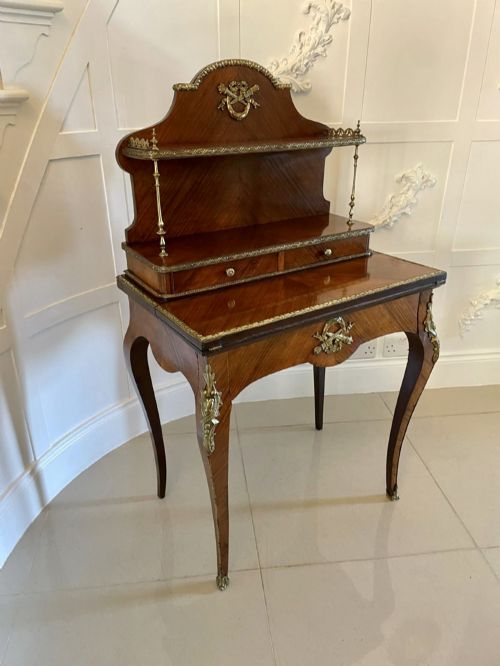
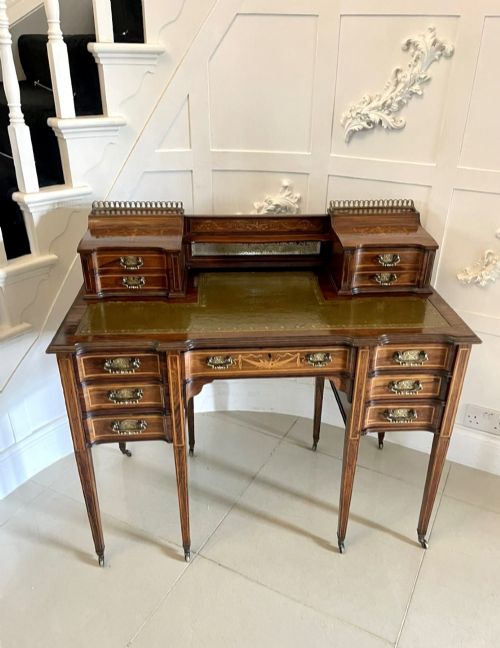
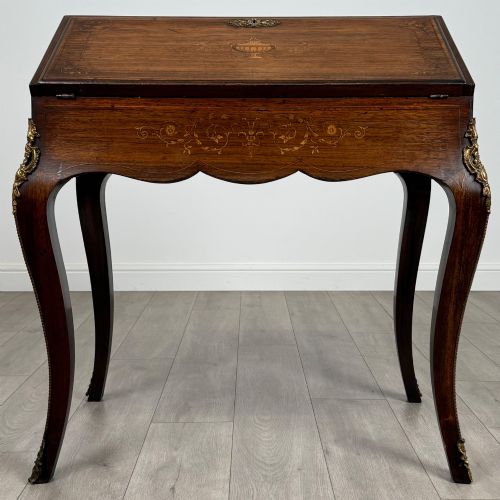
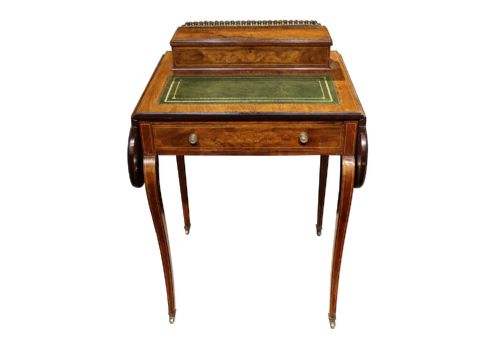
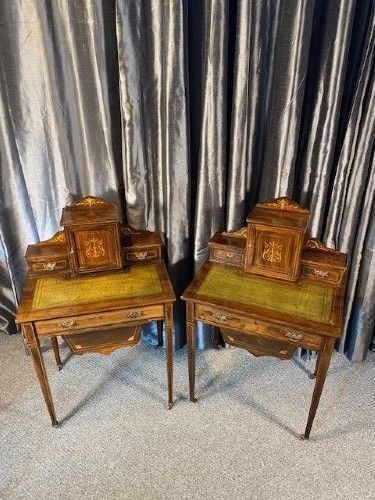
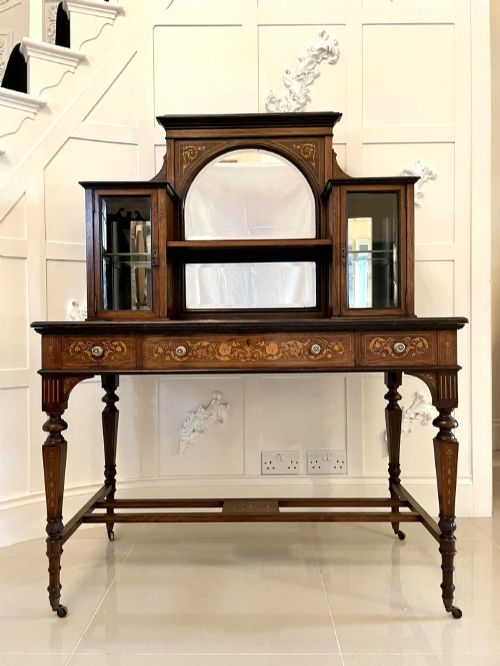
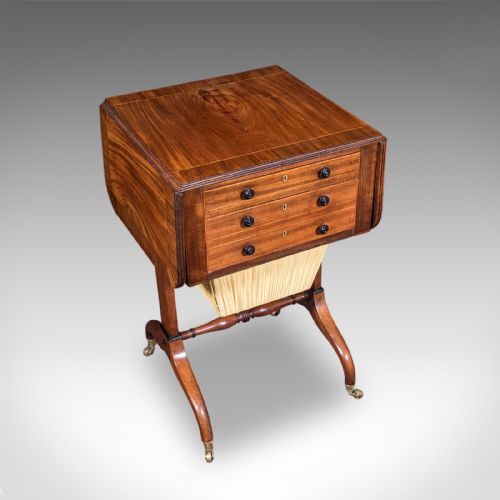
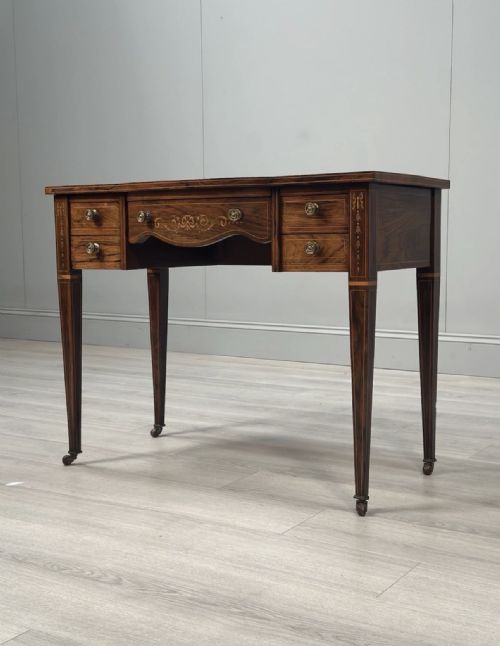
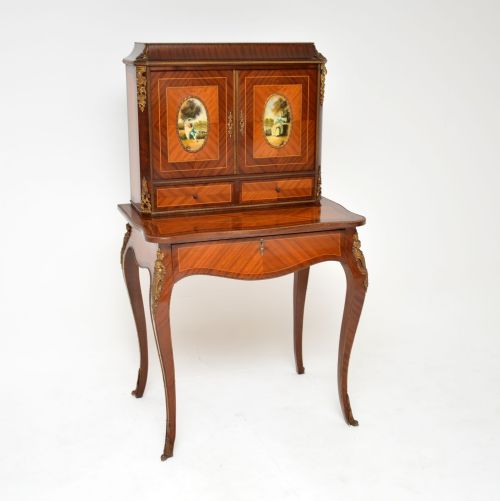
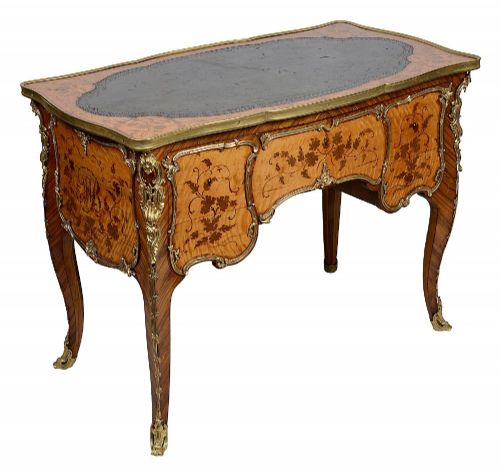
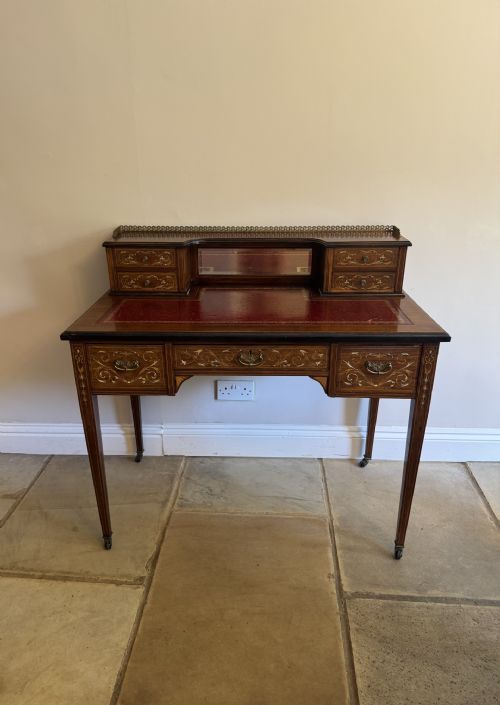
A rosewood ladies desk encompasses delicate forms designed for writing, correspondence, and light study, appearing frequently as nineteenth-century Victorian and Edwardian examples. The listings show these pieces taking the shape of small writing tables, bureau de dame variants, and fitted bonheur du jour cabinets.
Makers adapted these compact desks for domestic parlours and boudoirs, often incorporating small drawers, leather-lined writing surfaces, and superstructure compartments. The selection ranges from kidney-shaped writing tables to inlaid drop-leaf and cylinder models originating in English and French workshops.
Materials and Construction
Makers utilised dense, richly figured rosewood as the primary timber, frequently pairing it with contrasting satinwood, boxwood, and kingwood veneers for intricate marquetry and floral inlay. Brass mounts, ormolu details, and fitted leather inserts complete the construction of these decorative writing pieces.
Cabinetmakers employed fine dovetailing for internal drawers and precise joinery to support the curved outlines of kidney-shaped tables and the superstructures of bureau de dame cabinets.
Several desks include hidden secret drawers tucked behind miniature panels, designed for keeping private letters entirely out of sight.
Distinctions in Quality
The standard of a rosewood ladies desk rests upon the precision of its marquetry, the harmony of its timber grains, and the crispness of its brass or ormolu mounts. Finer examples display meticulous hand-cut stringing and well-figured veneer choices across both primary surfaces and internal compartments.
Structural integrity and the quality of secondary timbers inside drawers separate standard commercial output from pieces produced by notable makers and workshops.
Maple & Co.·John MaClean·Edwards and Roberts·Jas Shoolbred·Ray & Miles of Liverpool
The Rosewood Ladies Desk Glossary
- Bonheur du jour
- A small, light writing desk featuring a raised superstructure of drawers and pigeonholes above the main writing surface. This French form gained popularity during the nineteenth century in rosewood and marquetry.
- Marquetry
- Decorative patterns formed by inserting thin slices of various coloured woods and materials into a veneered surface. Makers used satinwood and boxwood inlay to create floral motifs on rosewood desks.
- Ormolu
- Gilded bronze mounts applied to furniture for decorative enrichment. These metallic accents frequently adorn the corners and legs of French-influenced writing desks.
- Escritoire
- A writing cabinet featuring a drop-down writing flap that conceals internal compartments. These pieces provide enclosed storage for stationery and correspondence.
- Poudreuse
- A multi-functional vanity and writing table containing folding compartments and mirrors. Examples in the records combine these dressing elements with writing surfaces.
Rosewood Ladies Desk: Frequently Asked Questions
What is a bonheur du jour?
A bonheur du jour is a small, light ladies desk featuring a raised cabinet or tier of small drawers and pigeonholes on top of the main writing surface.
These pieces were designed for intimate correspondence in private sitting rooms rather than heavy administrative work.
How do I date a rosewood ladies desk?
Dating relies on observing stylistic markers, construction methods, and prevailing design revivals such as Sheraton or Louis XV influences. Victorian and Edwardian examples typically display distinct inlay patterns and hardware styles associated with those decades.
Secondary timbers inside the drawers and the style of dovetailing also offer clear clues to the period of manufacture.
Where were these desks used in the home?
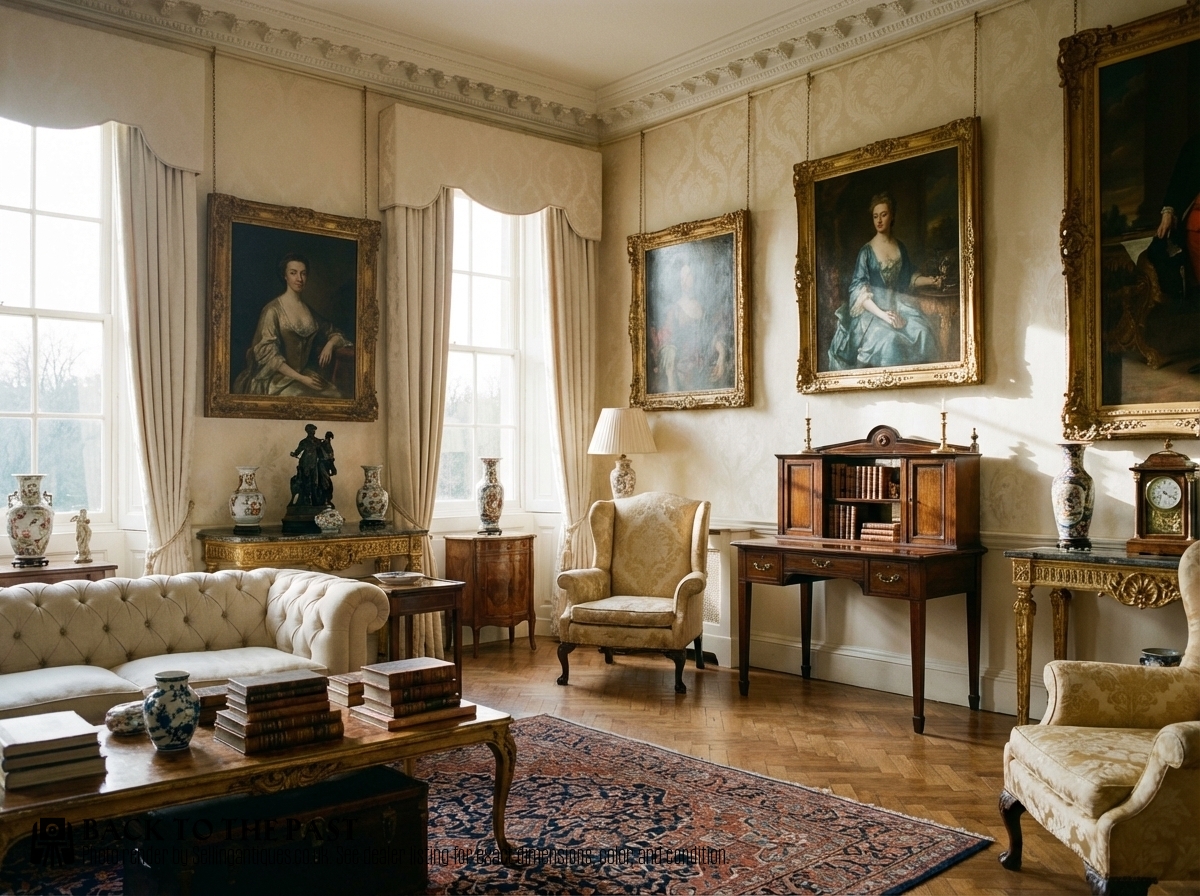
These compact writing surfaces were traditionally kept in bedrooms, private boudoirs, and drawing rooms for managing personal correspondence and keeping small keepsakes.
Their smaller scale allowed them to sit comfortably against walls or freestanding in domestic spaces without dominating the room.
How do I care for rosewood surfaces?
Maintenance involves keeping the timber away from direct sunlight and extreme humidity changes to protect the delicate rosewood veneers and inlaid stringing. Gentle dusting with a soft cloth preserves the polished finish without building up heavy waxes.
Leather writing inserts benefit from occasional conditioning specific to historical leather goods to prevent cracking.