
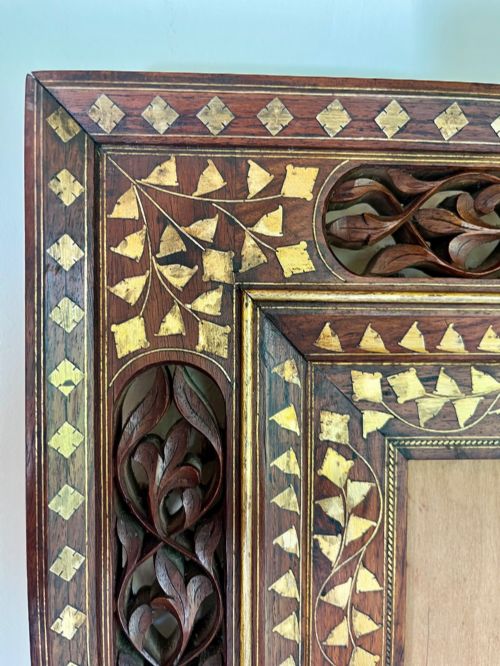


Rosewood Inlay Wall Mirror
These rosewood inlay wall mirror pieces bring warmth and intricate grain to a room, offering both reflection and decorative craft.
Rosewood Inlay Wall Mirror
A rosewood inlay wall mirror combines dense, richly coloured timber with contrasting decorative work designed to hang directly on a room's vertical surfaces. The items gathered here span the Victorian, Edwardian, and late nineteenth centuries, capturing a period when domestic interiors favoured deeply toned woods paired with lighter botanical or geometric details.
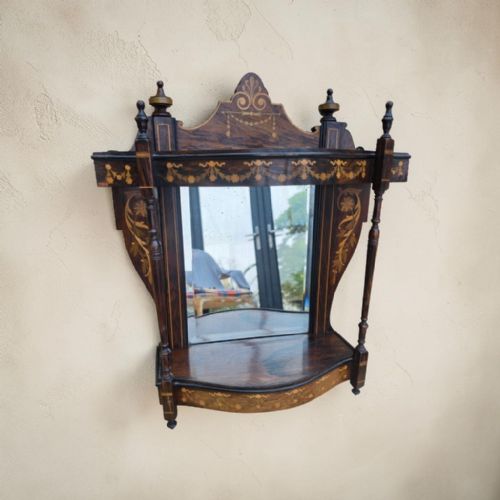
The selection ranges from compact bedroom and hall mirrors fitted with small shelves to larger overmantel pieces intended for placement above a fireplace. Alongside standard wall mirrors, related forms such as mercury barometers and wall shelves occasionally appear, reflecting the broader scope of domestic woodwork from these eras.
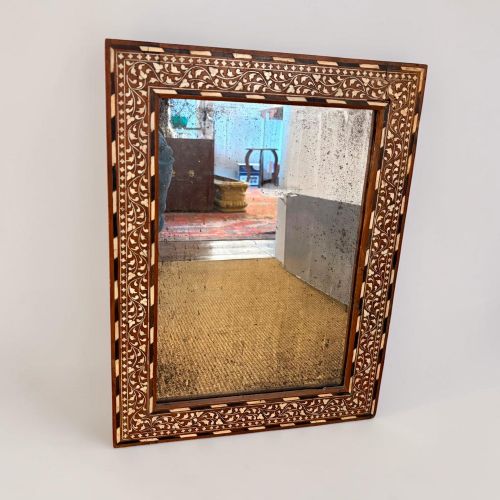
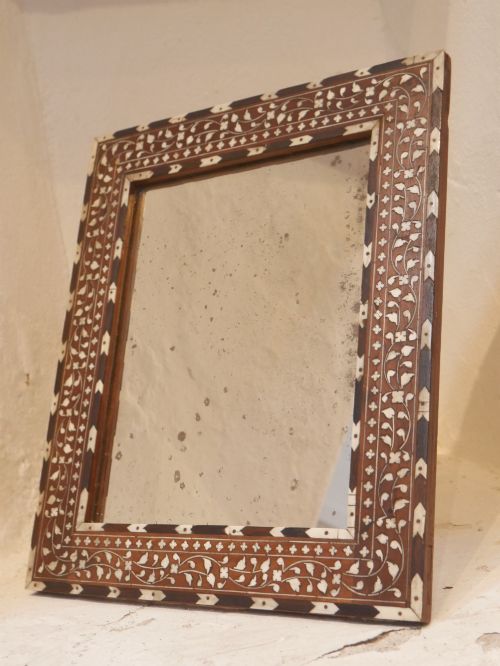
Makers and workshops from diverse regions contributed to this tradition, including Anglo-Indian production alongside British cabinet makers. Buyers most frequently encounter pieces featuring boxwood inlay, marquetry, or bone elements set into the dark rosewood and hardwood bodies.
How they were made
Cabinet makers utilised dense timbers like rosewood and mahogany as the primary structural body, often incorporating secondary hardwoods. These dark foundations provided a stable canvas for decorative work.
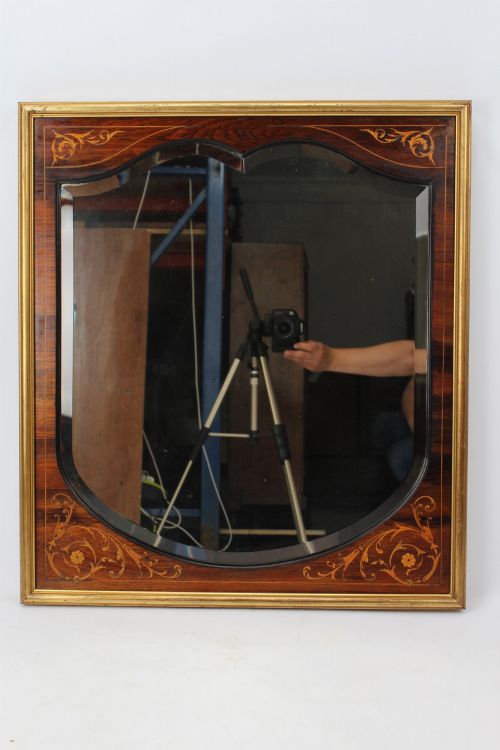
Craftsmen applied intricate boxwood inlay, marquetry, and bone elements directly into the timber surfaces to create contrasting geometric or floral patterns. Brass components and glass mirrors were then fitted into the finished frames.
The listings span from 1880 through the Edwardian era, featuring rosewood, mahogany, and brass.
What varies in quality
The precision and complexity of the inlay work distinguish finer examples from simpler production. Crisp execution in boxwood or bone details indicates superior workshop skill.
Proportion and scale play a role in the distinction between pieces, particularly when comparing compact hall mirrors to grander overmantel variants. The harmony between the dark rosewood grain and the lighter inlaid elements determines the visual balance of the object.
The Rosewood Inlay Wall Mirror Glossary
- Rosewood
- A dense, heavily grained timber with dark brown and reddish hues used extensively in fine cabinet making. Its natural oils and deep colouration make it highly prized for polished furniture and frames.
- Marquetry
- The art of applying decorative pieces of veneer to a structure to form intricate patterns or pictures. Craftsmen cut contrasting woods and materials to fit precisely into the surface design.
- Overmantel mirror
- A large wall mirror specifically scaled to hang on the wall above a fireplace mantelpiece. These pieces often incorporate shelving or elaborate framing to anchor the interior scheme of a room.
- Boxwood inlay
- The technique of embedding small sections of pale boxwood into a darker wood background. This creates sharp visual contrast through light lines and decorative motifs.
Rosewood Inlay Wall Mirror: Frequently Asked Questions
Where should I hang a rosewood inlay wall mirror?
These mirrors suit hallways, bedrooms, or living spaces where the warm timber tones can complement surrounding furniture. Placing them opposite a light source helps brighten the room while displaying the grain.
Larger overmantel versions naturally anchor the space above a fireplace, whereas smaller variants with shelves work well in compact areas for daily use.
How do I clean the wooden frame safely?
Dust the rosewood surface regularly with a soft, dry cloth to prevent buildup in the inlaid crevices. Avoid harsh chemical cleaners or excess moisture that could damage the delicate boxwood or bone elements.
Occasional application of appropriate furniture wax helps nourish the timber and maintain the natural lustre of the dark grain without harming the marquetry.
What is the difference between Victorian and Edwardian mirrors?
Victorian pieces tend to feature heavier proportions, denser ornamentation, and deep colour palettes that reflect the tastes of the nineteenth century. They often include rich marquetry and substantial gilt or brass accents.
Edwardian examples generally lean towards lighter designs, cleaner lines, and more restrained inlay work. This shift mirrors the broader transition in domestic interior design towards brighter, less cluttered spaces.
Did Anglo-Indian workshops influence these designs?
Anglo-Indian pieces brought distinct regional carving techniques and materials, such as bone inlay, into British domestic interiors. Workshops in places like Hoshiarpur produced intricate frames that circulated widely among collectors.
These items introduced complex geometric patterns and dense botanical motifs that differed from standard British cabinet making of the period.