




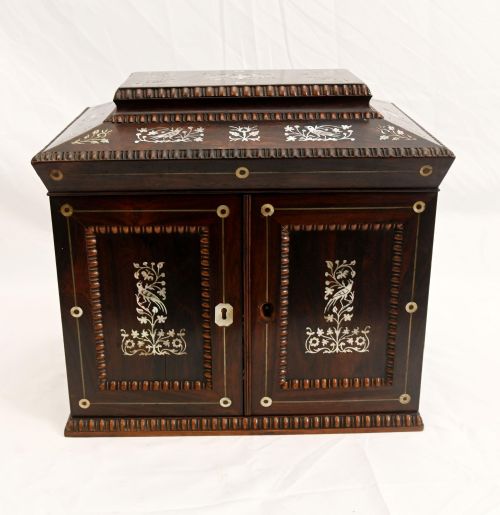


Rosewood Inlay Chest
A rosewood inlay chest brings together rich timber and precise contrasting work, holding small valuables or sitting as a neat bedside cabinet.
Rosewood Inlay Chest
When you search for a rosewood inlay chest, you encounter a variety of compact containers and small furniture designed for specific domestic uses. The selection spans tea caddies, jewellery boxes, trinket keepers, writing boxes, bedside cabinets, and taller chests of drawers. These pieces emerge predominantly from the Regency and Victorian eras, alongside continental and Chinese workshops.
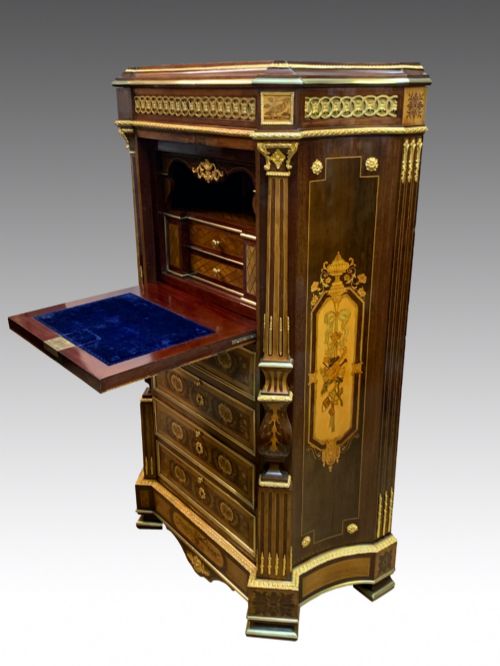
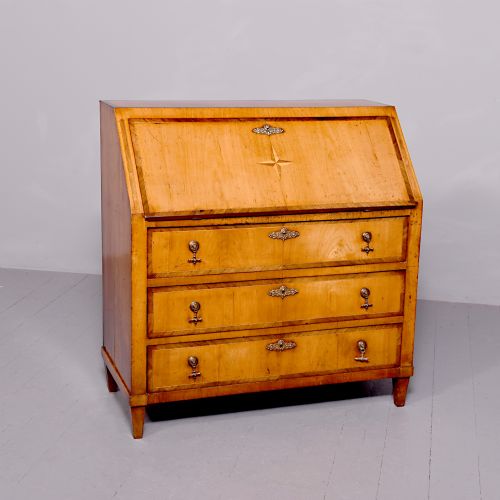
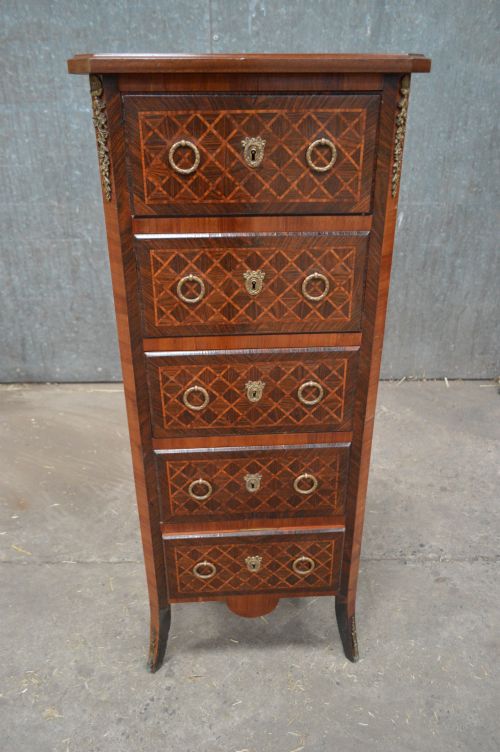
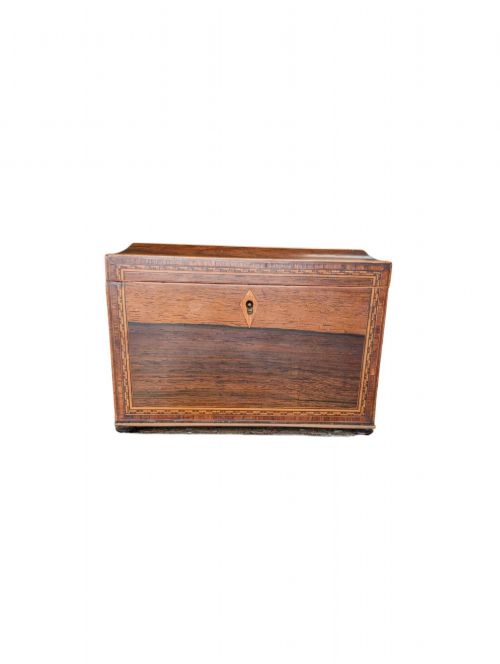
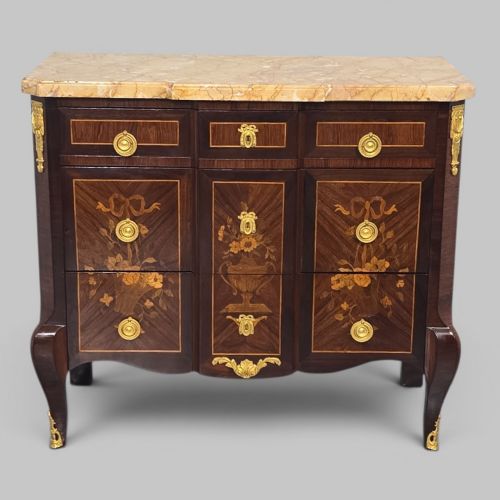
Tabletop containers such as sarcophagus tea caddies and fitted jewellery boxes are the most common variants you meet on this page. Alongside these smaller lidded boxes, the listings include bedside cabinets, commodes, and narrow chests of drawers. Rosewood remains the unifying timber across these diverse forms, often accented with lighter woods and metal details.
Materials and technique
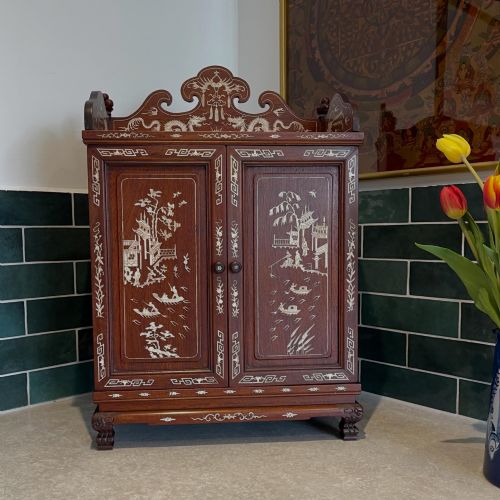
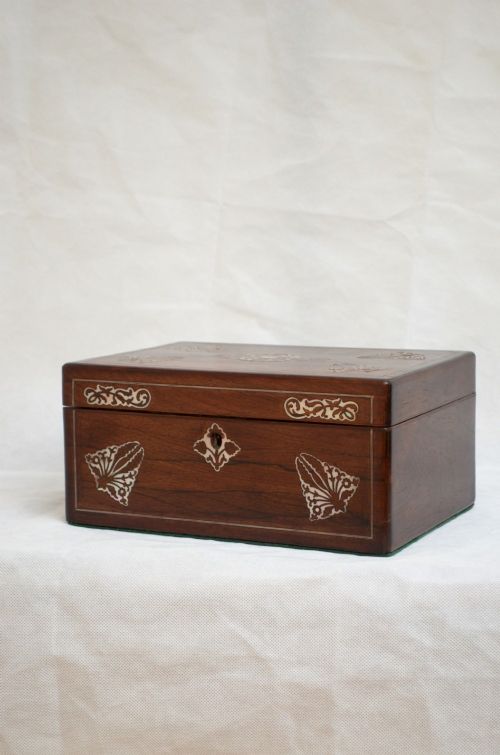
Craftsmen built these pieces using dense rosewood as a dark ground, applying contrasting details in boxwood, satinwood, and walnut. Metal elements such as brass appear as fine stringing, escutcheons, and handles. Mother of pearl is also set directly into the timber surfaces on specific boxes and cabinets.
Surface decoration relies on parquetry, marquetry, and specialised Tunbridge Ware micro-mosaic techniques. Wood veneers are cut and fitted to form geometric patterns or pictorial views. French polishing or wax finishes seal the timber, highlighting the natural grain beneath the inlaid motifs.
The listings feature pieces from the Georgian, Regency, and Victorian periods, alongside specific 1920s examples.
Assessing the work
Quality rests upon the precision of the inlay work and the stability of the underlying timber construction. Tighter joints and flush surfaces where different woods meet indicate superior cabinet-making. The crispness of the geometric lines or pictorial scenes shows the maker's skill.
The integrity of internal fittings also separates standard items from finer examples. Original velvet linings, fitted trays, working locks with matching keys, and intact marble tops on commodes elevate a piece. Uniform fading of the rosewood grain demonstrates how well the object survived its environment.
Henry Hollamby·Maison Krieger
The Rosewood Inlay Chest Glossary
- Parquetry
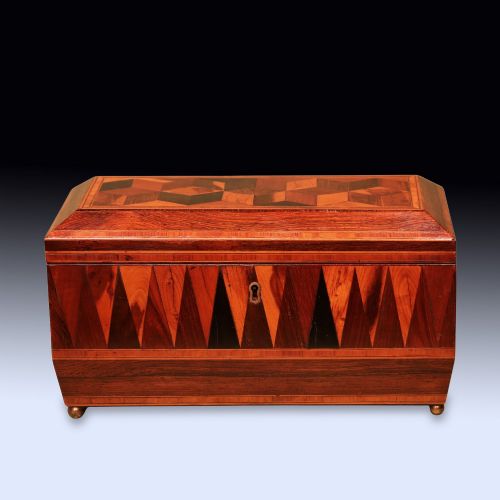
- A geometric mosaic of wood veneer arranged in repeating patterns. This technique frequently decorates the lids of Regency tea caddies and campaign boxes.
- Marquetry
- Formed by assembling various wood veneers to create pictorial scenes or scrolling foliage. It appears on French commodes and Victorian cabinets.
- Tunbridge Ware
- A type of woodworking consisting of tiny wood blocks assembled to form mosaic pictures. It is characteristic of specialised 19th-century English boxes.
- Sarcophagus form
- A box shape featuring a domed lid and sloping sides, resembling a classical stone coffin. This silhouette is typical of Regency tea caddies.
- Huanghuali
- A fragrant, richly figured Chinese hardwood used in elite writing boxes and table cabinets. It possesses a distinct natural lustre.
Rosewood Inlay Chest: Frequently Asked Questions
What is a rosewood inlay chest used for?
These pieces served practical storage roles in domestic interiors. Smaller lidded boxes held loose leaf tea, jewellery, writing implements, or small trinkets.
Larger furniture items functioned as bedside cabinets or compact chests of drawers for personal belongings. Their enclosed compartments protected delicate items from dust and light.
How do I identify a Regency period piece?
Regency examples often feature classical architectural proportions combined with fine brass inlay lines. Sarcophagus shapes, lion mask handles, and dark rosewood timber are common markers of this era.
Craftsmen during this period focused on crisp geometric parquetry and restrained classical mounts. The internal fittings typically include lidded canisters in tea caddies or partitioned trays in work boxes.
What is Tunbridge Ware?
Tunbridge Ware refers to woodware decorated with mosaics made from thousands of tiny tinted wood prisms. Craftsmen glued these blocks together to create detailed floral or architectural motifs.
This specialist technique originated in Kent and appears frequently on Victorian tea caddies and trinket boxes. The mosaic panels are usually framed by rosewood borders.
Are these pieces French or English?
Origin varies depending on the specific form and decorative style of the item. English pieces often favour brass stringing, sarcophagus tea caddy shapes, and Tunbridge Ware mosaics.
French items more commonly exhibit elaborate floral marquetry, gilt ormolu mounts, and marble tops on commodes. Chinese workshops also contributed distinct forms utilising huanghuali wood.