


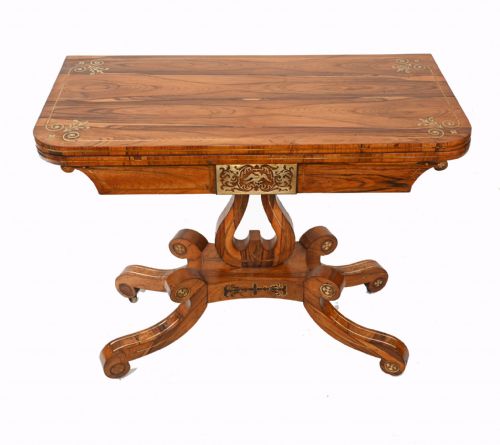
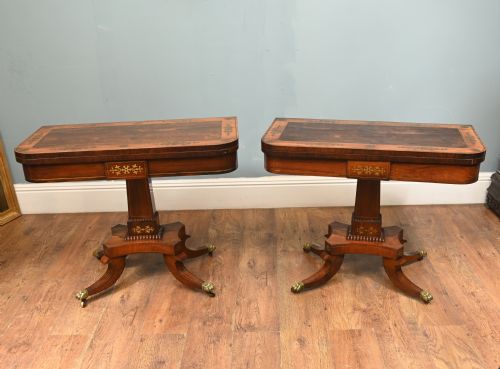
Rosewood Inlaid Games Table
A rosewood inlaid games table offers a versatile surface for play and display, combining rich timber with delicate craftsmanship.
Rosewood Inlaid Games Table
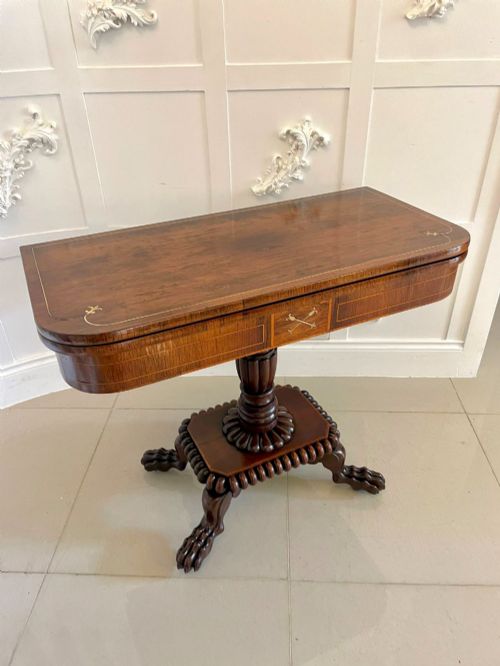
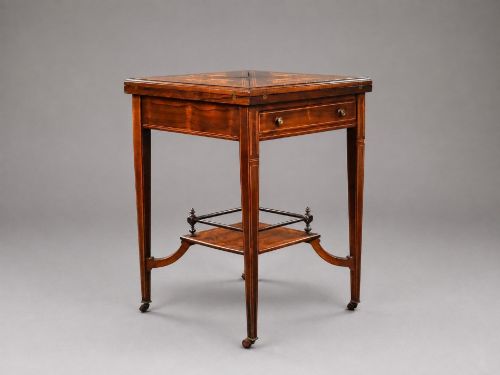
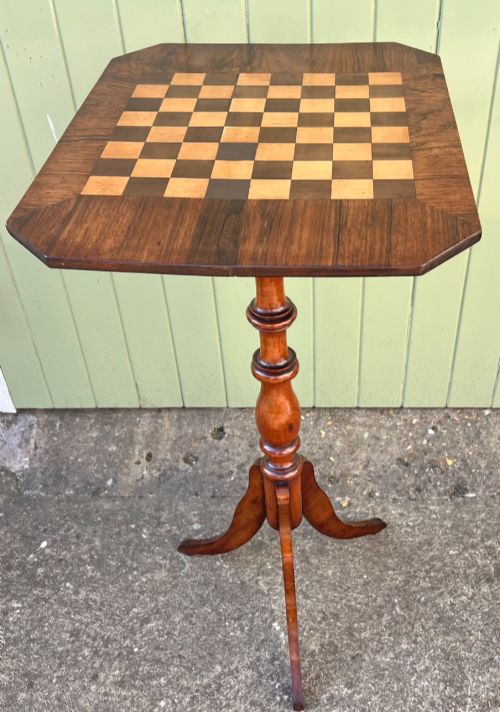
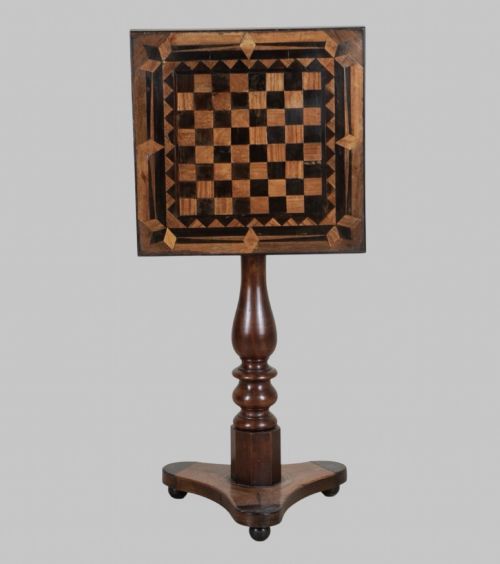
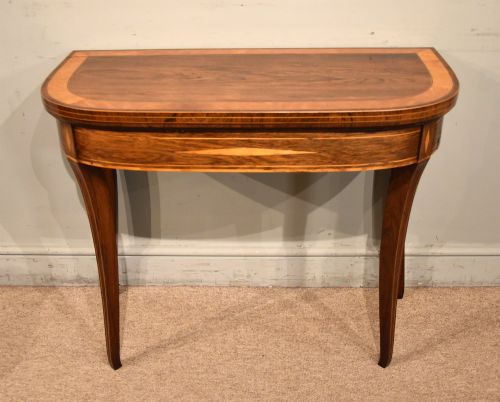
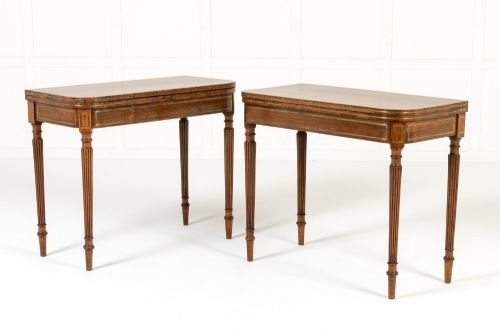
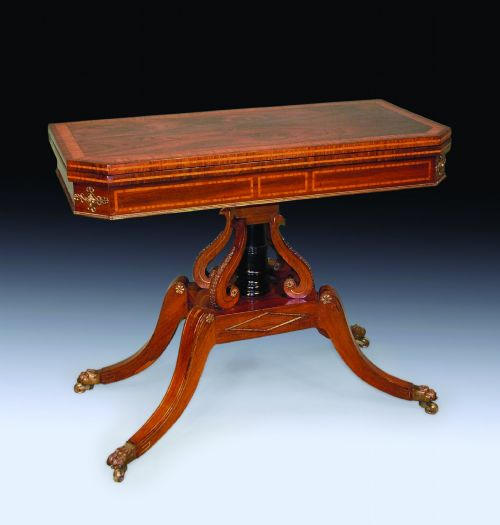
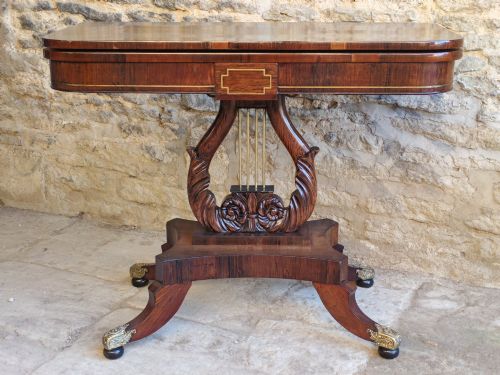
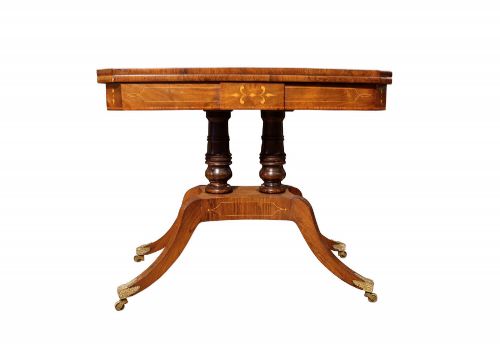
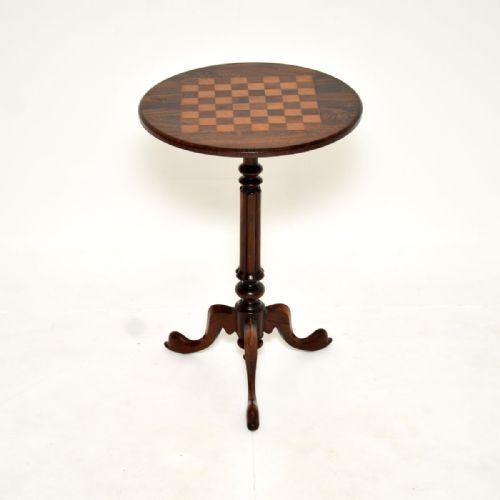
A rosewood inlaid games table brings together functional play surfaces and sophisticated cabinet-making from the Georgian, Regency, Victorian, and Edwardian periods. Buyers encounter various formats on this page, including fold-over card tables, chess tables, and clever envelope tables that open to reveal baize-lined playing surfaces.
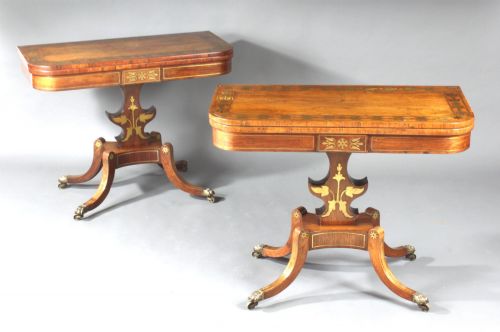
Many examples date from the Regency era, often featuring brass inlay and pedestal bases with castors, while later Victorian and Edwardian iterations introduce marquetry and multi-functional designs combined with work boxes or sewing compartments.
Materials and construction
Craftsmen built these tables using dense rosewood as the primary timber, valued for its deep grain and dark coloration, frequently contrasted with lighter satinwood, boxwood, and maple for intricate stringing and floral motifs.
Brass inlay and Ormolu mounts appear regularly across Regency pieces, routed directly into the timber surface and secured with engraving, while later envelope tables utilise pivot mechanisms to rotate and unfold the leaves smoothly.
Listings feature brass inlaid rosewood card tables alongside occasional tables, tea tables, and multi-functional games boards spanning the Georgian to Edwardian periods.
Evaluating craftsmanship
Quality rests in the precision of the timber matching and the crispness of the inlay work, where superior pieces exhibit seamless joints between the contrasting woods without gaps or filler.
The sophistication of the mechanical elements, such as heavy brass castors, stable pedestal scroll bases, and well-balanced fold-over hinges, distinguishes standard utilitarian furniture from master-workshop production.
George Bullock·Maple & Co.·George Oakley·Gillows
The Rosewood Inlaid Games Table Glossary
- Envelope table
- A square card table with four triangular flaps that rotate and fold open simultaneously to form a larger surface. This clever mechanism became popular during the late Victorian and Edwardian periods.
- Stringing
- Thin lines of contrasting wood inlay used to outline borders and geometric panels on table tops. It adds definition and highlights the grain of the primary rosewood timber.
- Marquetry
- Decorative patterns formed by fitting together small pieces of various coloured veneers into the wood surface. It often depicts floral or scroll motifs on later Victorian examples.
- Ormolu
- Gilded bronze mounts and accents applied to the corners, friezes, or pedestals of Regency tables. This technique provides metallic contrast to the dark rosewood.
- Turn-over top
- A hinged table top that folds flat to double the surface area when opened for play. The unsupported leaf often rests on a rotating or swing-out frame.
Rosewood Inlaid Games Table: Frequently Asked Questions
How do I care for a rosewood table top?
Keep timber surfaces away from direct sunlight and heat sources to prevent the rosewood from fading and the veneer from lifting over time. Regular dusting with a dry, soft cloth maintains the natural polish without needing heavy chemical waxes.
Avoid placing damp glasses or unpadded items directly onto the polished wood or baize playing surface. Using coasters and protective covers during use will preserve the delicate brass inlay and stringing.
What is a fold-over card table?
A fold-over card table uses a hinged top that doubles in area when opened, supported by a swing-out rear leg or a rotating frieze. When closed against the wall, it functions as a compact console or side table.
Inside the folded leaves, manufacturers often lined the surface with green or red baize for playing card games. Regency examples frequently incorporated recessed corners for candlesticks.
How do I distinguish Regency from Victorian styles?
Regency tables, typically produced in the early nineteenth century, favour architectural symmetry, bold brass inlay, and carved pedestal bases with lion paw feet or brass castors. The aesthetic draws heavily on classical Greco-Roman motifs.
Victorian and Edwardian pieces, emerging later in the century, often embrace revival styles like Louis XV or incorporate complex marquetry and multi-functional designs like combined work tables. The timber grain tends to be paired with lighter satinwood or exotic veneers.