
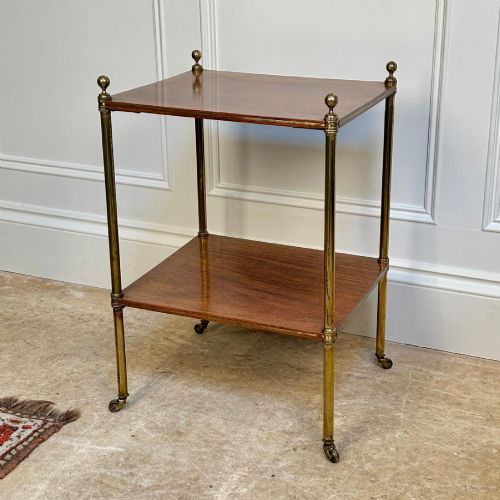

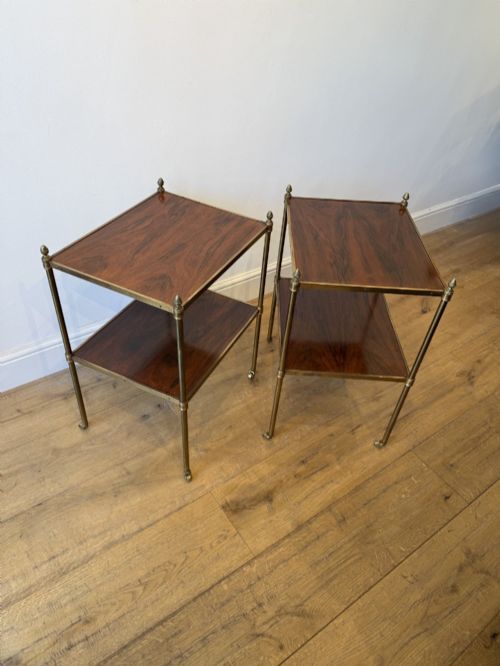


Rosewood Etagere Table
A rosewood etagere table offers tiered display surfaces and rich timber grain, bringing both elegance and practical shelving to a room.
Rosewood Etagere Table
A rosewood etagere table combines multiple open display tiers with a portable or fixed occasional table form, designed for decorative objects and small ornaments. You will most frequently encounter nineteenth century and Victorian multi-tier examples featuring polished rosewood surfaces.
The objects span varied configurations including two, three, and four tier structures, alongside related whatnot and dumb waiter forms. These pieces frequently appear with inlaid decoration or brass mounts, reflecting Regency, Victorian, and Edwardian aesthetic preferences.
Makers such as Edwards & Roberts and attributed workshops like Mallett produced pieces within this category, often incorporating satinwood or marquetry details. The selection ranges from compact occasional pieces to taller side console variants.
How They Were Made
Cabinet makers utilised solid rosewood and applied veneers over secondary timbers, often embellishing surfaces with satinwood, bone, and ebony inlay. Marquetry decoration added floral or geometric motifs to the tops and shelves of French style pieces.
Structural elements incorporated brass mounts, ormolu, and mirror glass panels to enhance the reflective quality of the tiers. Turned uprights and delicate supports carried the weight of multiple stacked platforms securely.
Object forms on this site range from two tier console tables and occasional trays to four tier what-nots.
What Varies in Quality
The distinction between standard production and top quality pieces rests upon the precision of the marquetry inlay and the choice of timbers. Superior examples display crisp brass mounts, finely figured rosewood grain, and balanced proportions across multiple tiers.
Attribution to documented makers like Edwards & Roberts elevates an item through superior joinery and refined secondary woods such as satinwood. Condition of the polish and integrity of the inlaid details further determine the standing of each piece.
Edwards & Roberts·Mallett·Donald Ross
The Rosewood Etagere Table Glossary
- Whatnot
- A tiered shelving unit used for storing or displaying books, ornaments, or china. This form appears frequently alongside etageres in nineteenth century interiors.
- Marquetry
- Decorative inlay work where small pieces of varied woods, bone, or shell are fitted into a veneer to form patterns. It frequently decorates the top shelves of French style tables.
- Ormolu
- Gilded bronze mounts applied to furniture for decorative effect. These metallic accents appear on nineteenth century pieces influenced by French design.
- Regency
- An English design period spanning the early nineteenth century characterised by classical restraint and refined proportions. Pieces from this era often employ dark rosewood.
Rosewood Etagere Table: Frequently Asked Questions
What is a rosewood etagere table?
A rosewood etagere table is a multi-tiered piece of furniture designed for displaying decorative objects while serving as an occasional table. These pieces feature stacked platforms supported by slender uprights.
They emerged strongly in the nineteenth century, utilising rich rosewood timbers alongside inlaid details and brass mounts to suit formal reception rooms.
How were these tables used?
These tables served as display surfaces for porcelain, small silver, and decorative ornaments in nineteenth century drawing rooms. Their tiered construction allowed owners to showcase collections without cluttering main furniture.
Some variants functioned as occasional tray tables or dumb waiters, offering moveable surfaces for entertaining guests or holding books.
How do I identify a Victorian example?
Victorian examples often feature substantial rosewood construction with three or four tiers, sometimes incorporating mirror glass or carved supports. The joinery reflects mid to late nineteenth century cabinet making standards.
Stylistic influences from French Rococo Revival or Neoclassical Revival frequently appear alongside marquetry inlay and brass gallery rails.
Where should I place an etagere?
An etagere suits corners, spaces beside seating, or blank wall sections where vertical display space is needed. Its open shelves maintain a sense of light in a room.
Care should be taken to keep rosewood surfaces away from direct sunlight and excessive heat sources to protect the polished timber and veneer.