





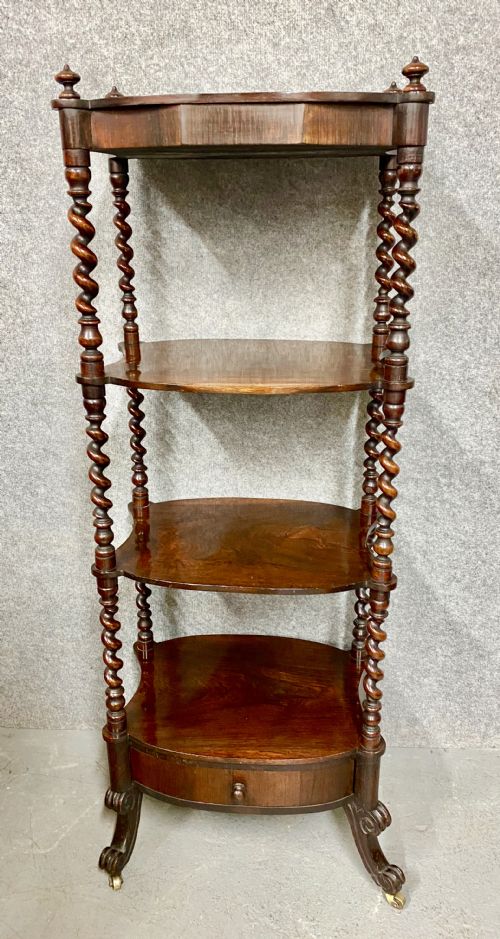
Rosewood Drawer Stand
A rosewood drawer stand brings rich grain and compartmented storage to a room, most often appearing here as a Canterbury or a tiered etagere with an integrated drawer.
Rosewood Drawer Stand
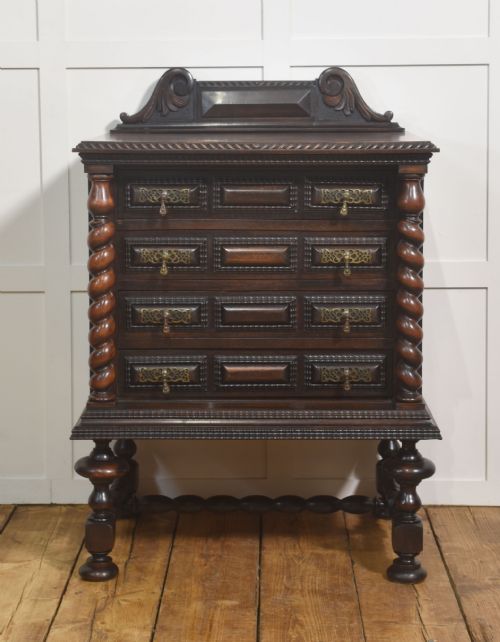
When you search for a rosewood drawer stand, you encounter pieces primarily catalogued as canterburys, whatnots, etageres, and chests on stands. These items date from the Georgian, Regency, William IV, and Victorian periods, spanning the nineteenth century.
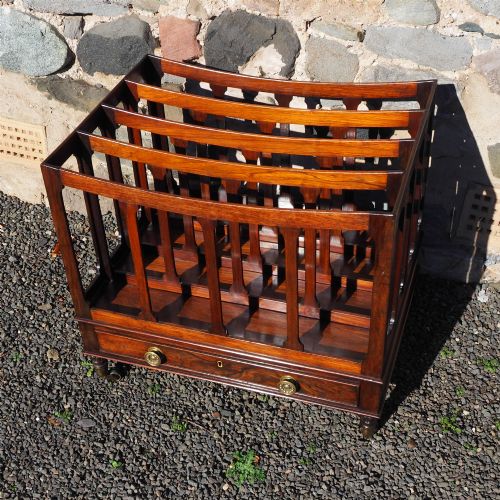
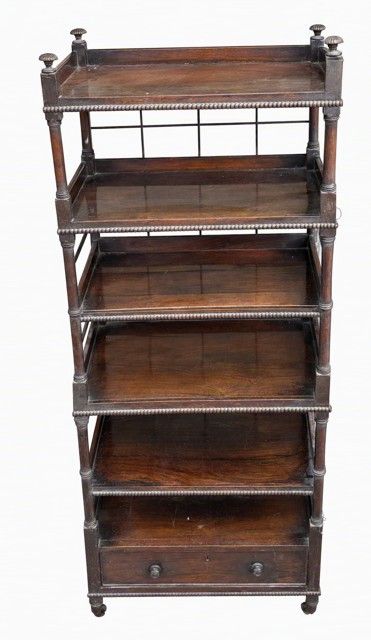
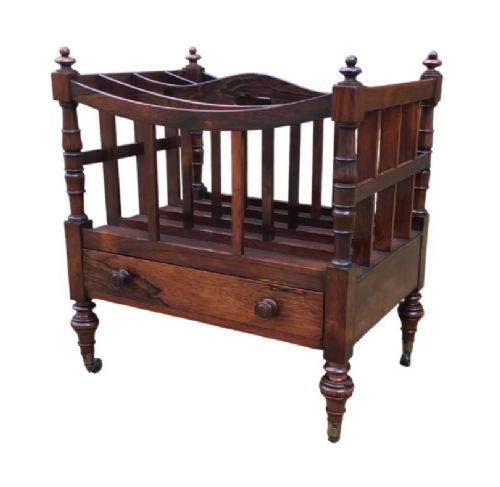
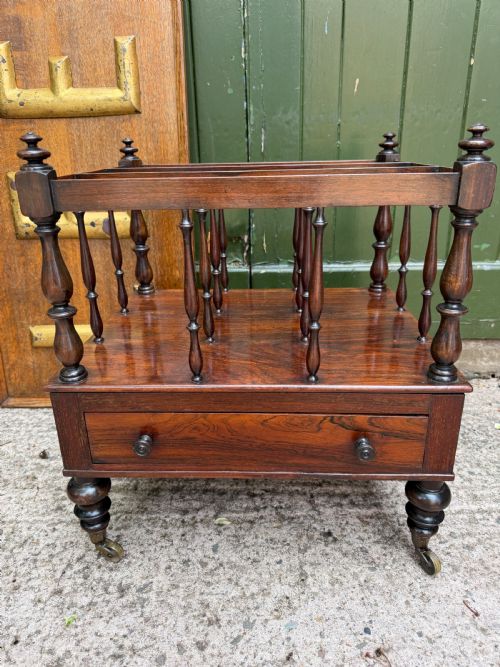
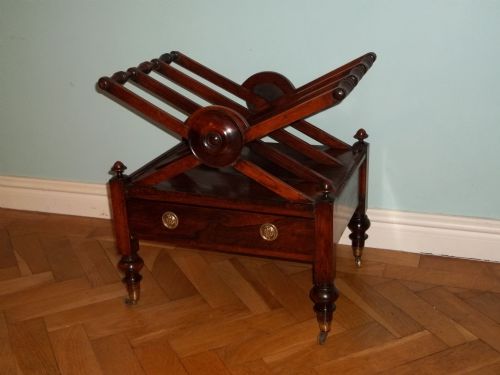
Canterburys form the largest share of these pieces, featuring slatted divisions for holding newspapers, sheet music, or magazines, paired with a low drawer underneath. Tiered etageres and cabinets on stands also appear, offering open shelving combined with enclosed drawer storage.
Originating largely from English workshops, the selection also includes Portuguese colonial examples. The combination of dense rosewood timber and functional lower drawers unites these varied nineteenth-century forms.
Materials and construction
Cabinetmakers built these pieces using solid and veneered rosewood, valued for its deep colour and pronounced grain figures. Workshops frequently combined this timber with brass details, such as casters, handles, and inlaid stringing.
Structural elements incorporated secondary woods like mahogany. Additional materials occasionally appear in decorative accents, including ceramic, bone, tortoiseshell, leather, and glass, particularly on related writing tables and desk stands.
Rosewood Drawer Stand Retail Price Guide 2026
Typical asking prices for rosewood drawer stand among the pieces listed under this phrase on Sellingantiques today, from the lower quarter to the upper quarter. They describe what is for sale here now, not the wider market.
At least one nineteenth-century canterbury maker added carved Prince of Wales feathers to ensure your sheet music rested beneath royal approval.
Evaluating quality and execution
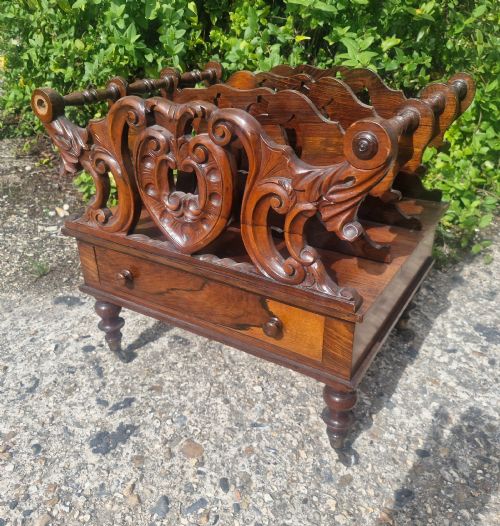
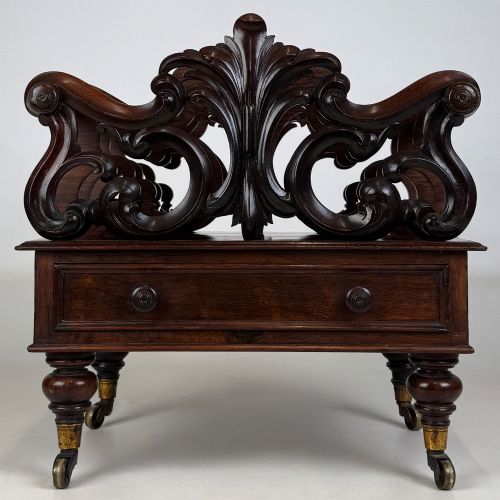
Quality shows in the crispness of the carving and the selection of the rosewood veneers. Finer examples display symmetrical grain patterns across large surfaces and sharply defined decorative motifs, such as foliate carving or the Prince of Wales feathers.
Construction standards distinguish standard workshop pieces from superior productions. Robust joinery in the drawer frames and refined turning on the supporting legs separate utilitarian items from those made for prominent country houses.
Samson and Son London
The Rosewood Drawer Stand Glossary
- Etagere
- A set of open shelves supported by pillars or columns, designed for displaying small objects. They frequently incorporate a drawer in the base section.
- Whatnot
- A multi-tiered stand used for storage or display in nineteenth-century interiors. They share a close relation to etageres and are often found with fitted drawers.
- Regency
- A stylistic period spanning the early nineteenth century characterised by classical restraint and polished timber surfaces. Pieces from this era often feature precise brass inlay.
- William IV
- A transitional design phase bridging late Regency and early Victorian aesthetics. Furniture from this period typically exhibits heavier proportions and bold carved details.
Rosewood Drawer Stand: Frequently Asked Questions
What is a rosewood drawer stand used for?
These pieces served practical storage roles in nineteenth-century sitting rooms and parlours. The upper sections held sheet music, books, or decorative objects, while the integrated drawer stored smaller loose items.
Today, they function well in modern interiors for organising magazines, holding bedside reading materials, or displaying ornaments. The compact footprint allows them to fit easily beside seating or against empty wall spaces.
How do I tell a Regency canterbury from a Victorian one?
Regency pieces, dating from the early nineteenth century, tend to show cleaner classical lines and often incorporate delicate brass inlay or restrained turning. They reflect the influence of design manuals from the period.
Victorian examples, produced later in the century, frequently feature heavier proportions and more elaborate carved decoration, such as foliate motifs. Examining the turning style and carving depth helps clarify the period of manufacture.
Are all these stands made of solid rosewood?
Cabinetmakers during the nineteenth century typically applied rosewood veneers over a secondary timber core, such as mahogany or pine. This technique prevented warping while showcasing the rich grain of the exotic wood.
Solid rosewood was occasionally used for turned legs, carrying handles, or structural slats. Both solid and veneered constructions were standard practice for quality furniture of this era.
How should I care for rosewood furniture?
Rosewood benefits from a stable environment away from direct sunlight and rapid temperature fluctuations, which can dry out the timber. Dusting with a soft, dry cloth prevents surface build-up.
Occasional application of quality furniture wax helps maintain the lustre of the finish. Avoid using silicone-based polishes or placing damp items directly onto the wood surface.