


Rosewood Dining Set
A rosewood dining set brings architectural presence and rich grain to a room through matched groups of antique seating.
Rosewood Dining Set
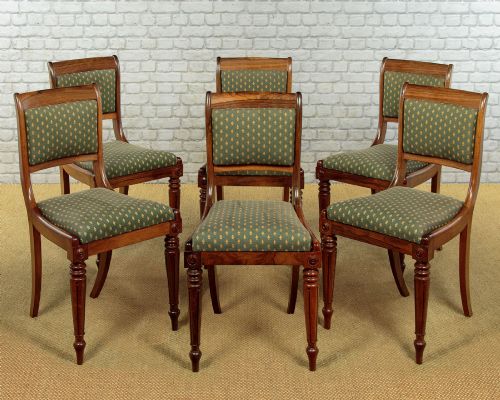
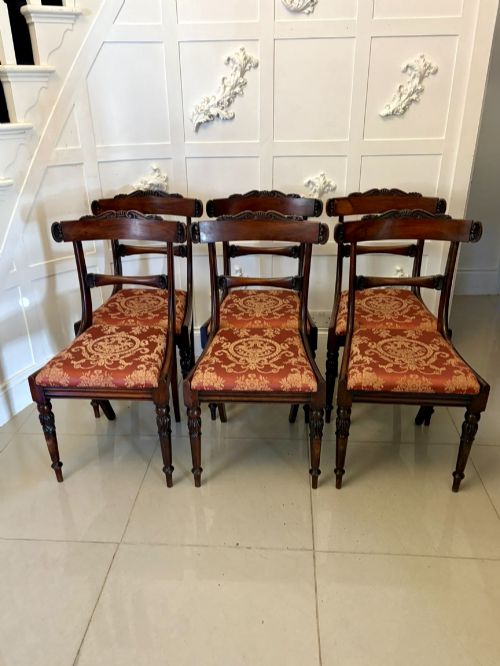
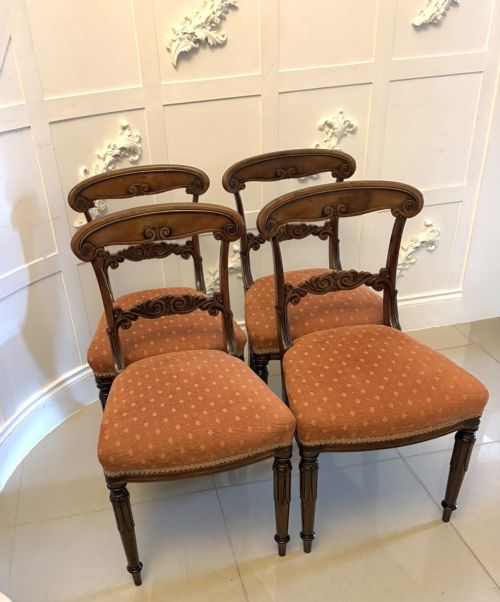
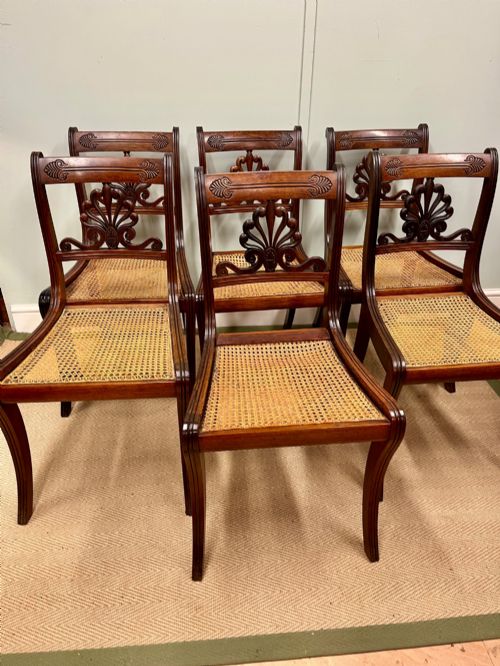
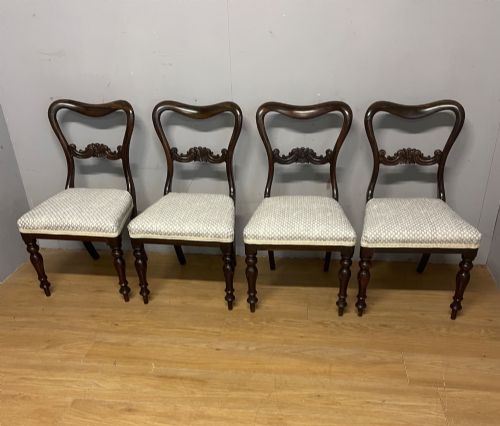
A rosewood dining set consists of matched seating designed for formal dining rooms, appearing most frequently in Regency and Victorian styles on this platform.
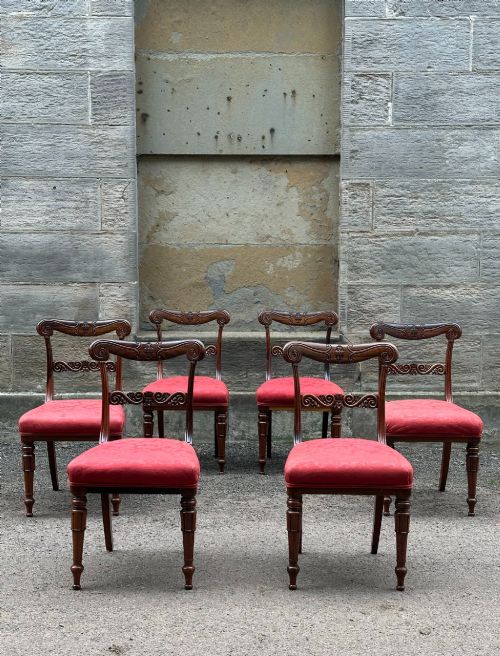
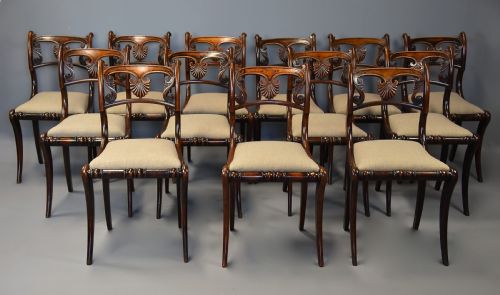
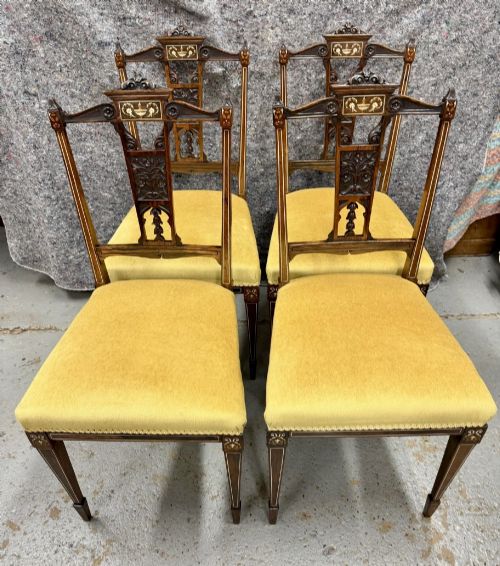
Buyers encounter sets ranging from four to thirteen pieces, typically comprising side chairs with solid timber frames or balloon backs.
The materials span genuine rosewood alongside simulated versions from the early nineteenth century through to Edwardian interpretations.
Materials and construction
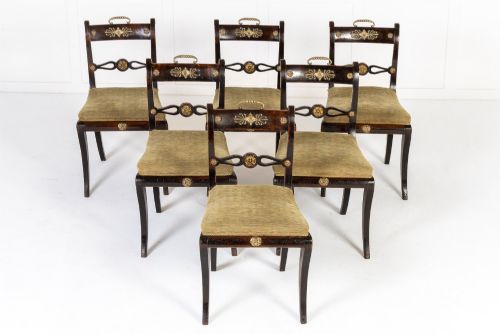
Cabinetmakers utilised dense tropical rosewood, sometimes substituting native hardwoods finished as simulated rosewood to satisfy period demand.
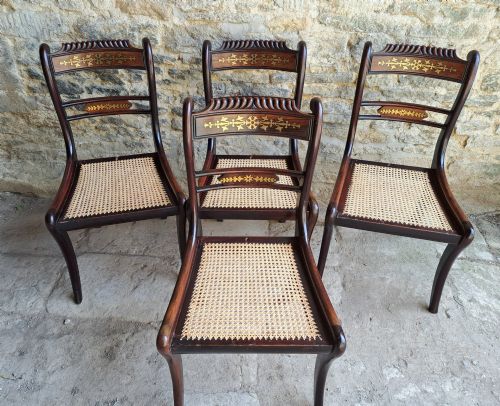
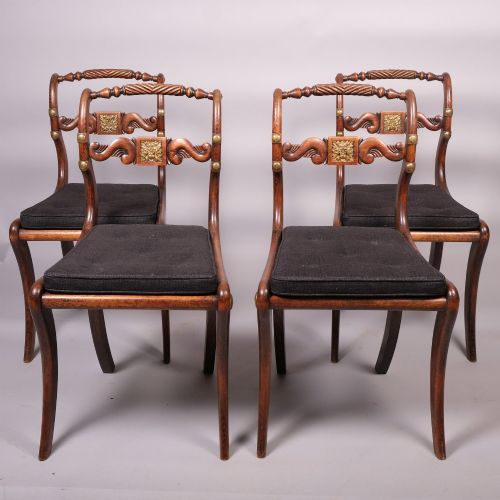
Decoration relied upon brass inlay, marquetry, and carved scrollwork integrated directly into the structural frames.
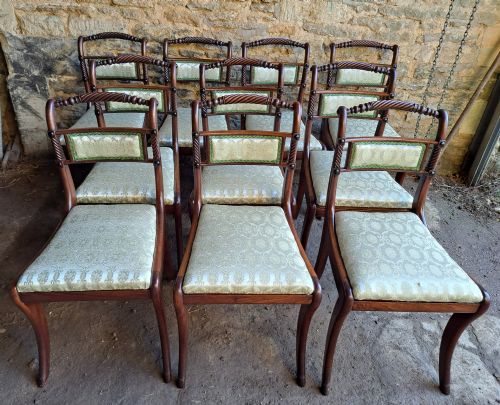
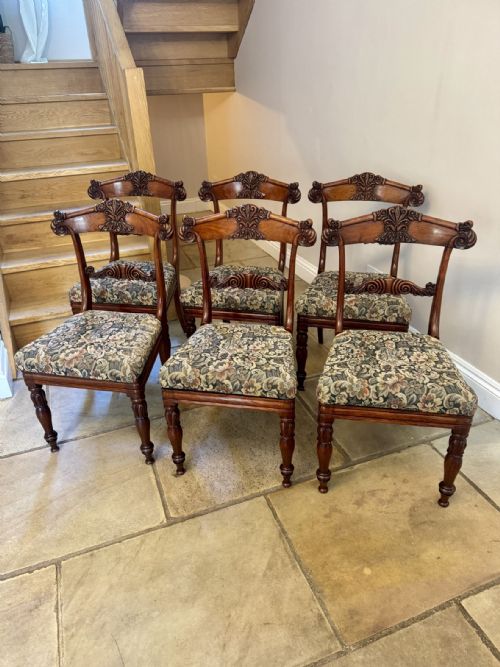
Seats featured drop-in pads or upholstery upholstered in fabric, needlepoint, velvet, and cane.
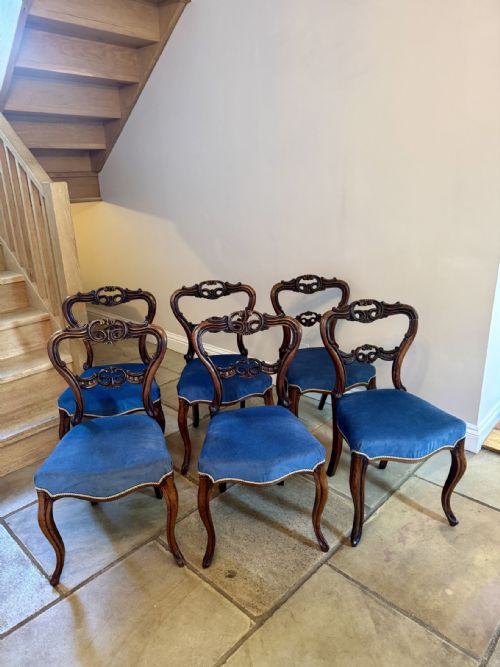
Duck egg blue needlepoint seats occasionally pop up to brighten up sombre Victorian rosewood frames.
Markers of distinction
Quality rests upon the crispness of carved details and the visual continuity of the timber grain across the entire set.
Larger sets of ten or twelve pieces demand greater uniformity in construction than smaller quartets.
The integration of precision brass inlay or delicate marquetry elevates the execution beyond standard production.
The Rosewood Dining Set Glossary
- Rosewood
- A dense, heavily figured dark timber valued for its rich grain and polished lustre. It forms the primary structural and decorative medium for these sets.
- Balloon back
- A chair back shaped like a rounded oval resembling an inflated balloon, common in Victorian examples. This design provides ergonomic support while displaying the timber grain.
- Simulated rosewood
- Timber painted or grained to imitate genuine rosewood, frequently utilised during the Regency period. This technique offered an opulent appearance at a different scale of production.
- Marquetry
- Inlaid patterns formed from pieces of contrasting wood veneer fitted into the primary surface. It appears on later nineteenth-century and Edwardian pieces.
Rosewood Dining Set: Frequently Asked Questions
How do I care for antique rosewood chairs?
Keep wooden surfaces away from direct sunlight and heat sources to prevent the timber from drying out. Dust regularly with a dry cloth and apply appropriate wax sparingly.
Upholstered seats require gentle vacuuming with a soft brush attachment. Protect the fabric from sharp objects and spills to preserve original needlepoint and velvet.
Are these sets suitable for daily use?
Most antique chairs remain sturdy enough for regular seating if the joints are secure. Solid timber construction provides inherent durability.
Heavier use benefits from periodic checks of the frame stability. Avoid dragging chairs across floors to protect the legs and feet.
How do I distinguish Regency from Victorian sets?
Regency chairs generally feature clean architectural lines, sabre legs, and frequent brass inlay. The aesthetic draws inspiration from classical antiquity.
Victorian chairs introduce curved balloon backs, richer carving, and balloon-shaped profiles. Upholstery treatments also shift toward needlepoint and denser padding.
What is a harlequin dining set?
A harlequin set brings together chairs that match in period, timber, and general silhouette without originating from a single workshop batch. This approach allowed larger groupings to be formed.
Collectors appreciate these sets for their historic charm and unified visual rhythm around a dining table. Minor variations between individual chairs highlight their handmade origins.