



Rosewood Correspondence Box
A rosewood correspondence box is a desk accessory built to keep letters tidy, combining rich grain with brass or mother-of-pearl.
Rosewood Correspondence Box
A rosewood correspondence box is a desk accessory built to keep letters tidy, appearing in forms from simple stationary caskets to complex writing slopes and novelty mail boxes. You are most likely to meet Victorian and Georgian examples on this page, alongside Campaign and French Napoleon III styles.
The objects serve as functional storage for letters and writing equipment, often featuring compartments labelled for answered and unanswered post. They span the nineteenth century, including pieces from around eighteen sixty and nineteen hundred.
Makers utilised rich timbers and decorative inlays to create desk furniture that sat proudly in a study or drawing room. The selection ranges from plain utilitarian boxes to elaborate caskets decorated with ormolu and bone inlay.
How they were made
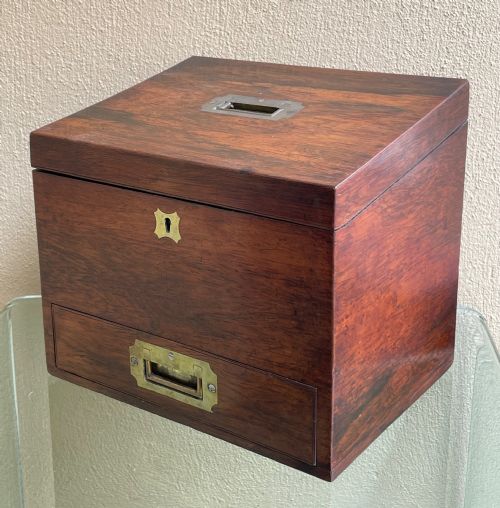
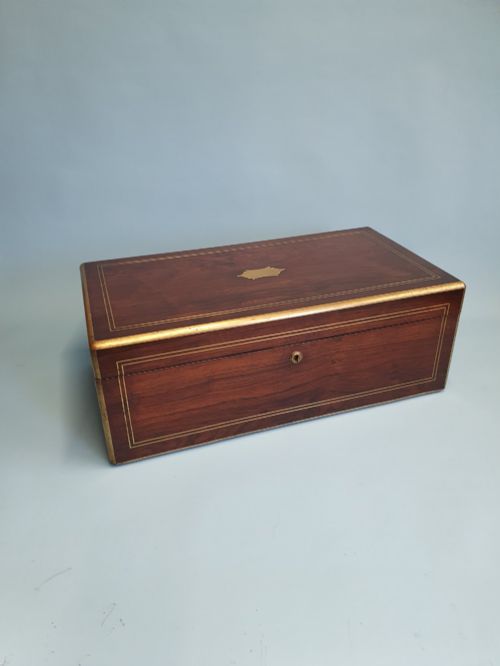
Carpenters constructed these boxes primarily in rosewood, frequently incorporating mahogany as a secondary timber and utilising brass for structural corners and escutcheons. Fine examples feature intricate mother-of-pearl or bone inlay set flush into the dark wood grain.
French pieces often showcase marquetry and ormolu mounts, while Campaign versions utilise inset brass handles and robust reinforcement for travel. Interiors reveal secret drawers and fitted compartments designed to hold stationery and writing implements securely.
Rosewood Correspondence Box Retail Price Guide 2026
Typical asking prices for rosewood correspondence box among the pieces listed under this phrase on Sellingantiques today, from the lower quarter to the upper quarter. They describe what is for sale here now, not the wider market.
Listings feature rosewood, mahogany, brass, mother-of-pearl, and ormolu across Georgian, Regency, and Victorian periods.
What varies in quality
The standard of a rosewood correspondence box depends upon the precision of its inlays and the complexity of its internal fittings. Superior pieces demonstrate meticulous execution in secret drawers, brass stringing, and well-fitted writing slopes.
Simpler boxes rely solely on the natural warmth of the timber grain, whereas top-tier examples integrate ormolu mounts, bone inlay, and specialised letter compartments such as answered and unanswered slots.
The Rosewood Correspondence Box Glossary
- Correspondence box
- A desk accessory designed specifically to hold letters, stationery, and writing materials. These boxes often feature labelled compartments for sorting mail.
- Writing slope
- A desk box with a hinged slanted lid that opens to provide a writing surface and internal storage. Many include secret drawers and pen trays.
- Ormolu
- Gilded bronze applied as decorative mounts on furniture and boxes, popular in French nineteenth-century pieces. It provides a bright metallic contrast to dark rosewood.
- Marquetry
- The art of applying pieces of veneer to a structure to form decorative patterns and pictures. It appears on sophisticated nineteenth-century caskets.
- Campaign
- Style of portable furniture designed for travel, characterised by inset brass handles and reinforced corners. These boxes were built to withstand journeys.
Rosewood Correspondence Box: Frequently Asked Questions
What is a rosewood correspondence box?
A rosewood correspondence box is a nineteenth-century desk accessory designed to hold letters, stationery, and writing equipment.
These pieces range from simple letter boxes to elaborate caskets with fitted interiors and brass inlays.
How were correspondence boxes used?
They were kept on desks or tables in studies and drawing rooms to organise incoming and outgoing mail.
Many featured specialised compartments to keep answered and unanswered letters separate before the invention of modern filing.
How do I date a rosewood box?
Dating relies on stylistic clues, timber choice, and construction methods characteristic of the Georgian, Regency, and Victorian periods.
Earlier pieces often feature clean Regency brass inlay, while later Victorian versions include complex stationary caskets and novelty letter boxes.
What styles of correspondence box exist?
The selection includes traditional British writing slopes, French Napoleon III marquetry caskets, and robust Campaign boxes.
Anglo-Indian and colonial examples also appear, showcasing distinctive local decorative techniques and exotic woods.