


Rosewood Cabinet with Brass
These rosewood cabinet with brass pieces combine dense tropical timbers with bright metal inlay, offering practical storage grounded in Regency and nineteenth century tradition.
Rosewood Cabinet with Brass
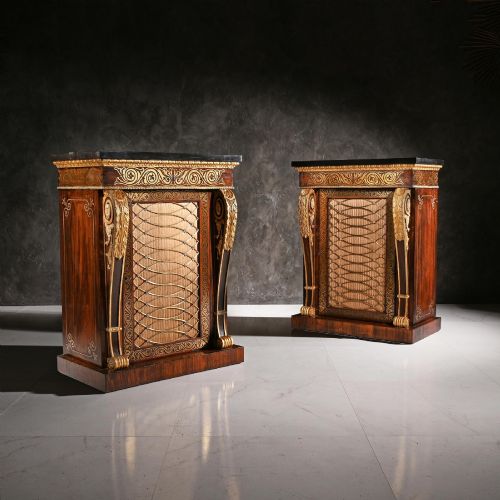
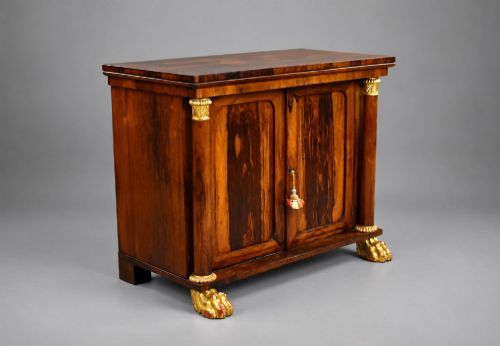
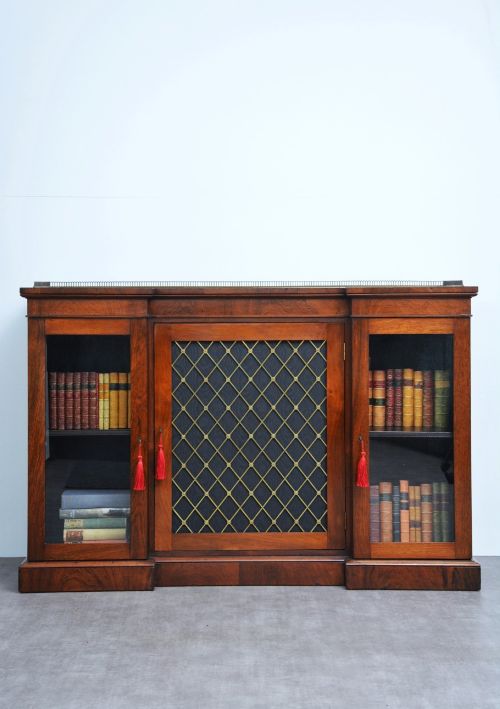
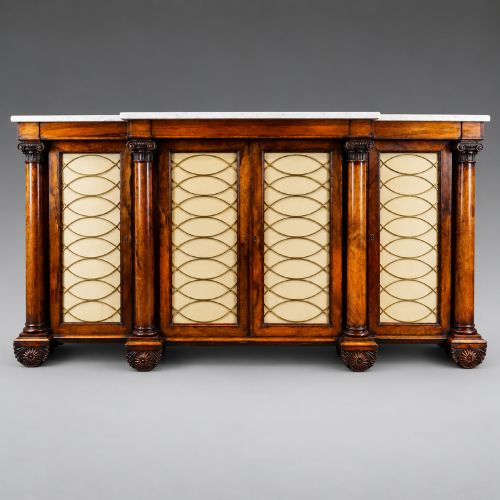
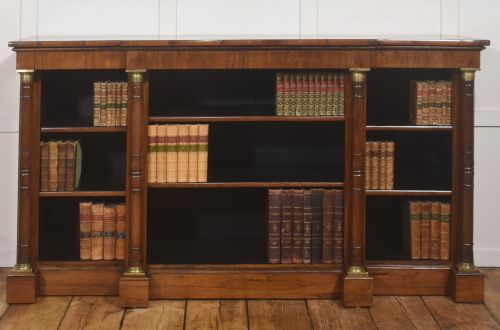
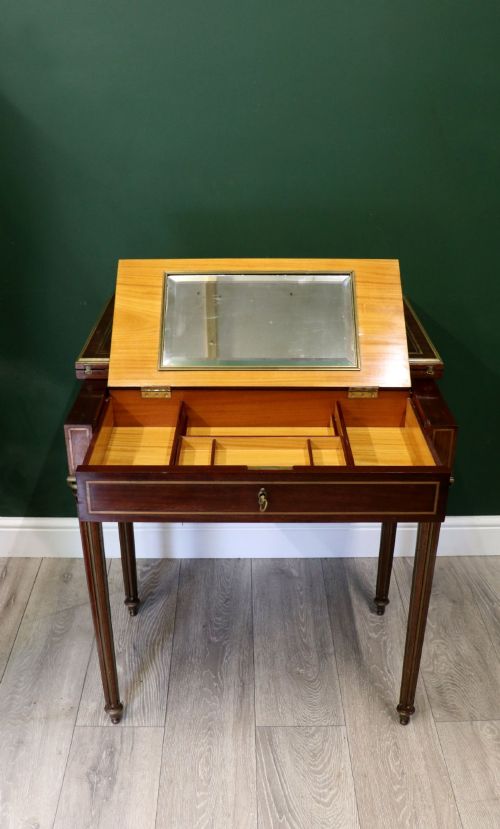
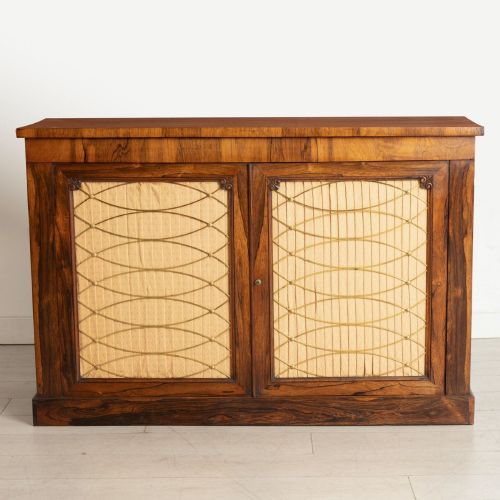
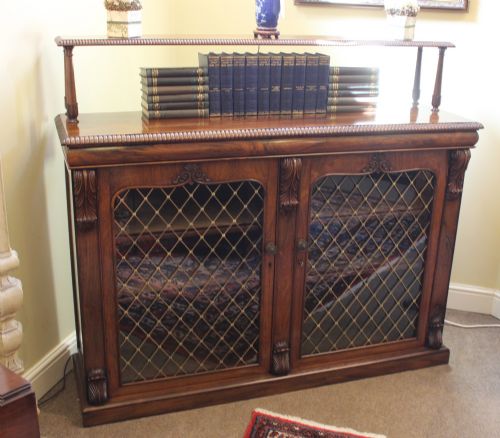
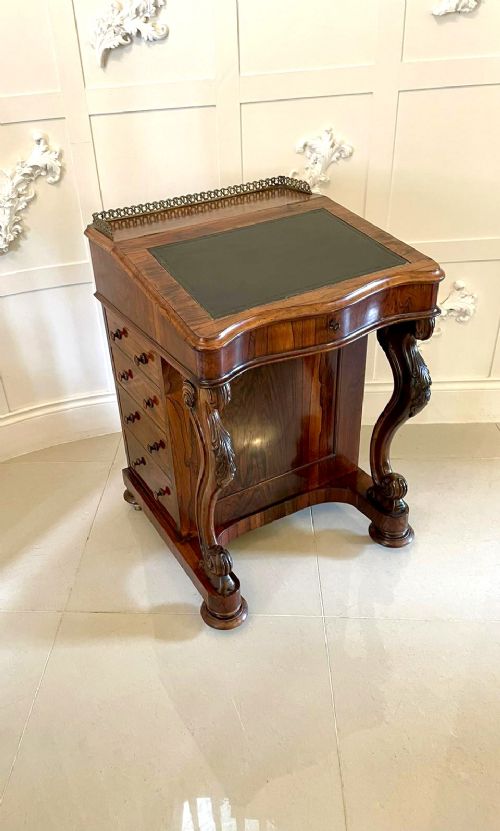
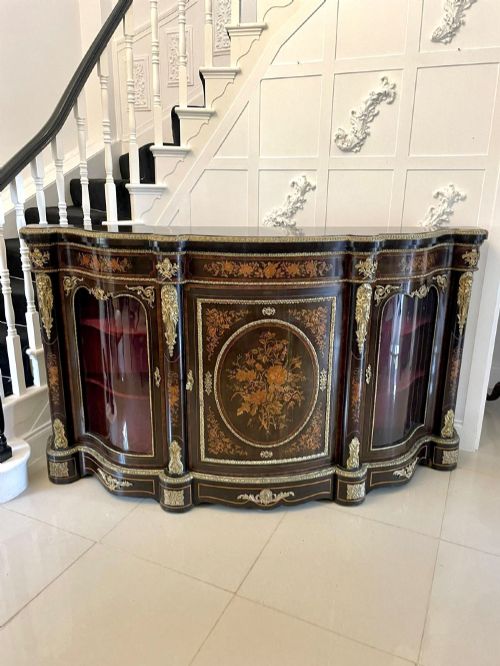
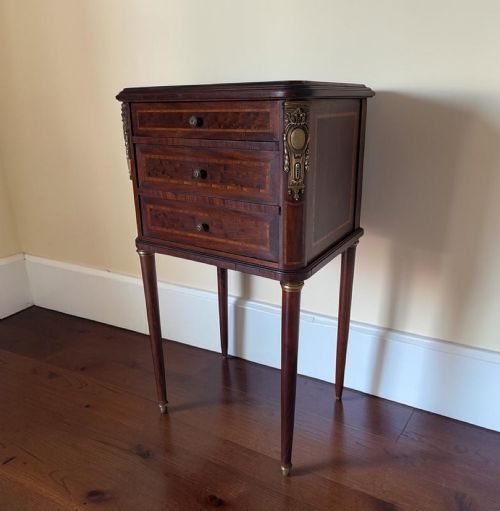
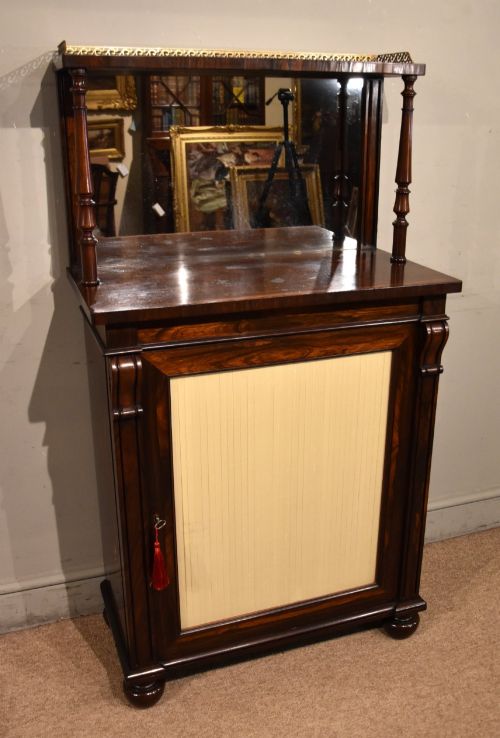
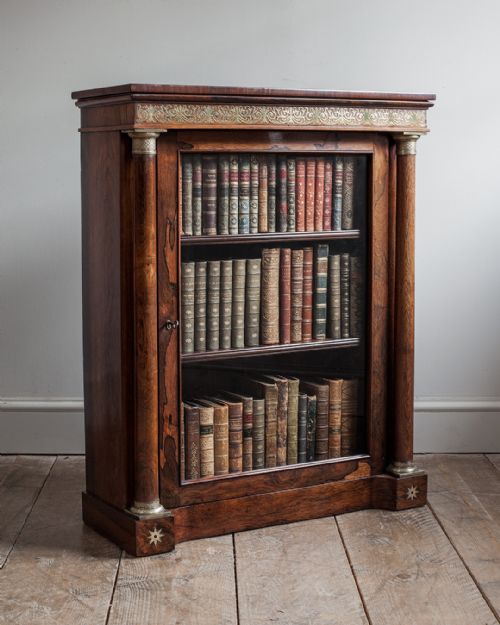
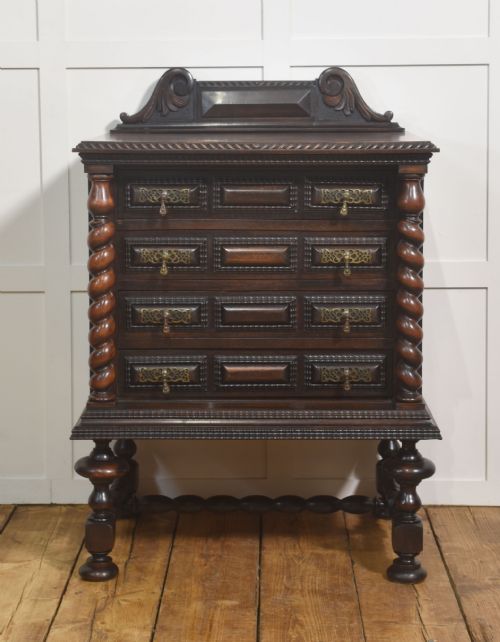
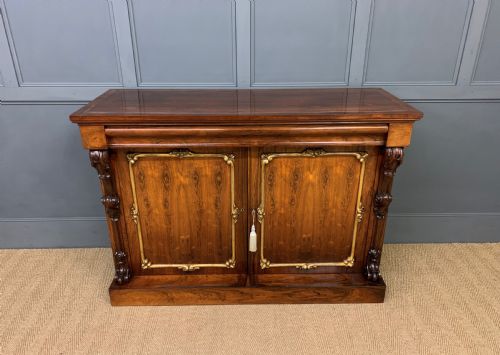
A rosewood cabinet with brass most frequently appears on this page in the form of a Regency or nineteenth century chiffonier, side cabinet, or Davenport. These foundational pieces range from compact bedside cupboards and sliding top desks to grand breakfront side cabinets and secretaires fitted with marble tops. Buyers seeking this phrase typically encounter dark timber bodies accented with metallic stringing, grilles, or handles.
The regional origins and period styles span from Georgian and Regency eras through to William IV and French revival designs such as Louis XVI and Louis XV. Pieces may include specific functional elements like pleated chiffon panels, mirror glass, leather dummy books, or secret drawers housed within the carcase. Each form balances display capabilities with concealed compartment storage.
The overarching aesthetic relies upon the contrast between deeply figured rosewood and polished brass components. Whether configured as an open bookcase, a chiffonier with a marble top, or a tall secretaire cabinet, the core identity remains rooted in early nineteenth century craftsmanship. These diverse configurations provide both surface display space and internal organisation.
Assessing quality in rosewood and brass
Quality manifests in the crispness of the brass inlay and the precision with which metal meets timber across complex curves and flat planes. Finer examples exhibit richly figured rosewood veneers selected for natural grain movement and depth of colour.
Rosewood Cabinet with Brass Retail Price Guide 2026
Typical asking prices for rosewood cabinet with brass among the pieces listed under this phrase on Sellingantiques today, from the lower quarter to the upper quarter. They describe what is for sale here now, not the wider market.
Listings feature brass inlaid chiffoniers and side cabinets spanning the Regency, William IV, and Victorian periods, alongside French revival pieces.
John McLean
The Rosewood Cabinet with Brass Glossary
- Chiffonier
- A low cabinet developed during the Regency period, typically featuring open or shelved storage enclosed by doors beneath a raised superstructure. It frequently incorporates brass gallery rails or mirror backs.
- Davenport
- A compact desk form featuring a sloping hinged writing surface above a pedestal of drawers. Examples often incorporate sliding top mechanisms and side storage drawers.
- Secretaire
- A cabinet incorporating a pull-down writing drawer or fall front that conceals a fitted interior of small drawers and pigeonholes. It combines cabinet storage with a functional writing desk surface.
- Breakfront
- A piece of furniture whose facade projects forward in the centre section. This architectural arrangement creates depth and visual rhythm across side cabinets and chiffoniers.
- Parcel Gilt
- Partially gilded decoration applied to highlight specific carved details, mouldings, or structural elements. It provides a bright contrast against dark rosewood surfaces.
Rosewood Cabinet with Brass: Frequently Asked Questions
What is a brass inlaid chiffonier?
A brass inlaid chiffonier is a low nineteenth century cabinet designed for the living room or parlour, featuring enclosed lower storage and distinctive metallic stringing.
These pieces often display symmetrical brass patterns embedded directly into the dark rosewood veneer across the door panels and frieze.
How do I care for rosewood furniture?
Rosewood requires stable indoor humidity away from direct sunlight and heat sources to prevent timber movement and veneer drying. Regular dusting with a dry, soft cloth maintains the finish without needing heavy polishes.
Brass elements can be dusted gently, avoiding harsh chemical cleaners that might stain the surrounding timber grain.
Where were these cabinets placed originally?
These cabinets stood principally in drawing rooms, dining rooms, and libraries to hold books, serving items, or correspondence. Surface tops accommodated decorative objects, lamps, or small clocks.
Lower cupboards concealed household papers and dining accessories while keeping the main room tidy.
How do I identify a Regency period piece?
Regency pieces dating from the early nineteenth century often feature classical architectural motifs, formal symmetry, and precise brass inlay work. Proportions tend to remain restrained, with dark tropical timbers dominating the exterior.
Construction details on the interior, such as secondary softwood drawer linings and hand cut dovetails, corroborate the period of manufacture.