
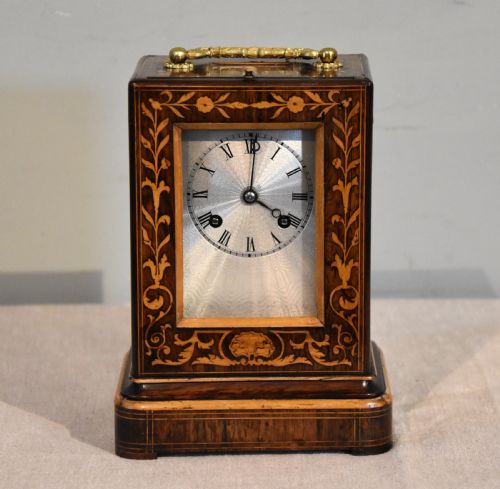
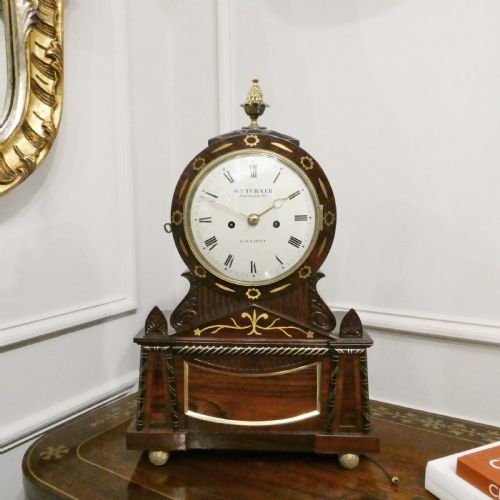


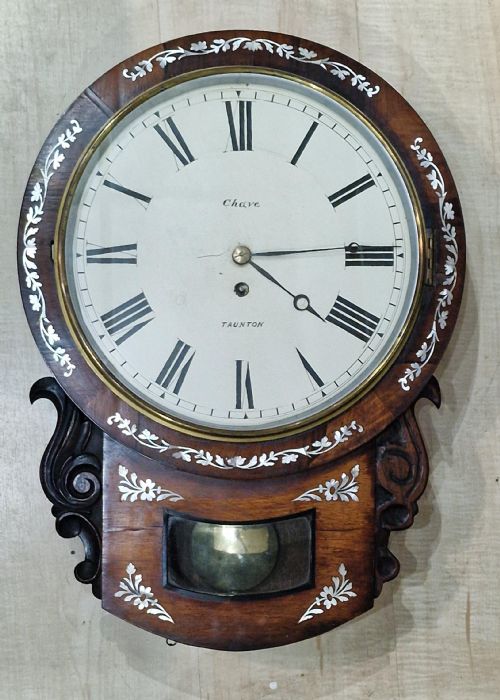


Rosewood Brass Inlaid Clock
These rosewood brass inlaid clock pieces combine dark exotic timber with bright metalwork, offering both functional timekeeping and striking nineteenth-century domestic ornamentation.
Rosewood Brass Inlaid Clock
A rosewood brass inlaid clock typically takes the form of a mantel clock, bracket clock, or wall clock produced during the nineteenth century. These items span various aesthetic movements, including Regency, Victorian, and French 19th Century designs.
The most common formats met on this page are table and mantel clocks housed in richly figured rosewood cases. They often incorporate contrasting stringing, scrolling brass inlay, and enamel dials.
Originating primarily from English and French workshops, these timepieces range from compact library clocks to large fusee wall dials. They reflect the high standards of nineteenth-century horology and decorative cabinet making.
How They Were Made
Cabinet makers constructed the foundational cases using dense rosewood, frequently selecting veneers to highlight the natural grain patterns of the timber. They embedded delicate brass strips and motifs into channels cut directly into the wood surface.
Horologists fitted mechanical movements, such as fusee and spring-driven mechanisms, alongside enamel, glass, and silvered metal dials. Ormolu mounts and mother-of-pearl accents frequently supplemented the brass detailing on French and English models.
The selection includes bracket clocks, wall-mounted dial clocks, and portico mantel pieces driven by mechanical movements.
What Varies in Quality
The refinement of the brass inlay separates standard production pieces from finer examples. Precision in cutting the timber and seating the metal flush dictates the visual harmony of the case.
Movement complexity also sets pieces apart, ranging from simple time-only mechanisms to those with bell striking trains, calendar functions, or auxiliary barometers. The hand-painted numerals on enamel dials and the crispness of cast ormolu mounts further distinguish higher-tier items.
Turner of London·George Orpwood·Samuel Chave Taunton·Seller of Reading·S Simpson Southampton·Halliday and Rich Bridgwater·Henry Marc·Paul Garnier·Ganthony of London·Kleyser of London·Walker and Hall·Plumbly and Tupman London·Savory and Fils A Paris·Malecot of Paris
The Rosewood Brass Inlaid Clock Glossary
- Fusee
- A conical pulley used in spring-driven clocks to maintain equal power as the mainspring unwinds. This mechanism improves timekeeping accuracy across the duration of the wind.
- Ormolu
- Gilt bronze applied to furniture and clock cases for decorative effect. The technique involves treating bronze with an amalgam of gold and mercury.
- Bracket clock
- A portable timekeeper originally designed to sit on a wall bracket or table. These spring-driven pieces often feature elaborate handles and striking movements.
- Marquetry
- The art of applying pieces of veneer to a structure to form decorative patterns. Craftsmen utilise various coloured woods and metals to create complex pictorial designs.
- Portico clock
- A monumental clock style shaped like a classical temple with supporting columns. They gained popularity during the nineteenth century in French domestic interiors.
Rosewood Brass Inlaid Clock: Frequently Asked Questions
How do I wind a fusee clock?
Winding requires a dedicated key inserted into the dial arbor, turned gently clockwise until resistance indicates a full spring. Care must be taken not to overwind antique mechanisms.
Most fusee movements require attention once a week. Keeping the key in a consistent place near the clock prevents loss.
Where should I place a rosewood clock?
These timepieces suit stable surfaces away from direct sunlight and moisture fluctuations. Mantelpieces and sturdy library tables provide ideal support.
Avoid exterior walls for wall-mounted versions where dampness or heavy vibrations might affect the delicate mechanical balance.
How do I identify a Regency period clock?
Regency pieces often display classical architectural influences, crisp brass inlay, and conservative proportions. The use of rosewood and mahogany dominates this era.
Examining the interior movement and construction methods helps confirm the production window alongside exterior stylistic cues.
Why does my clock gain or lose time?
Temperature changes, old lubricants, and settling foundations can alter the pendulum length or balance wheel speed. Small adjustments to the regulation nut usually restore accuracy.
Professional servicing every few years ensures the mechanical parts remain clean and properly aligned for reliable daily operation.