

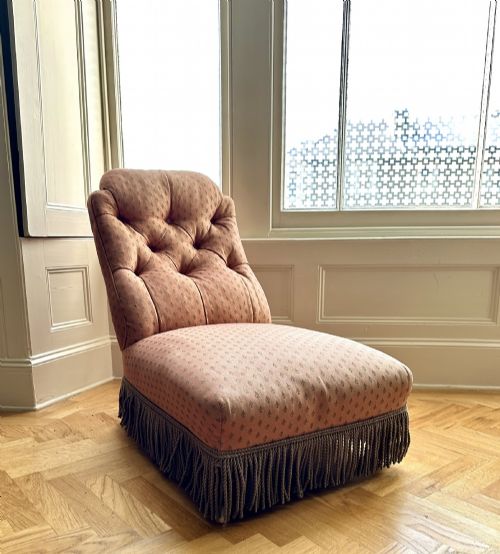


Rose Pink Easy Chair
A rose pink easy chair brings softness and period character to a room, offering deep-seated comfort rooted in Victorian and Edwardian craftsmanship.
Rose Pink Easy Chair
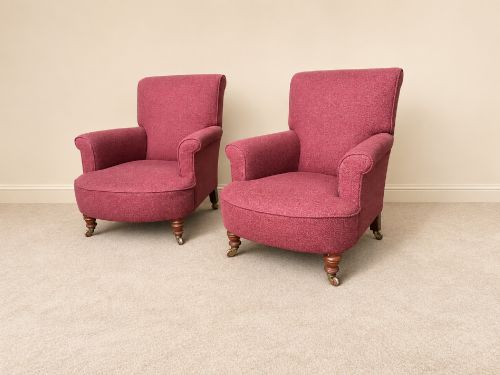
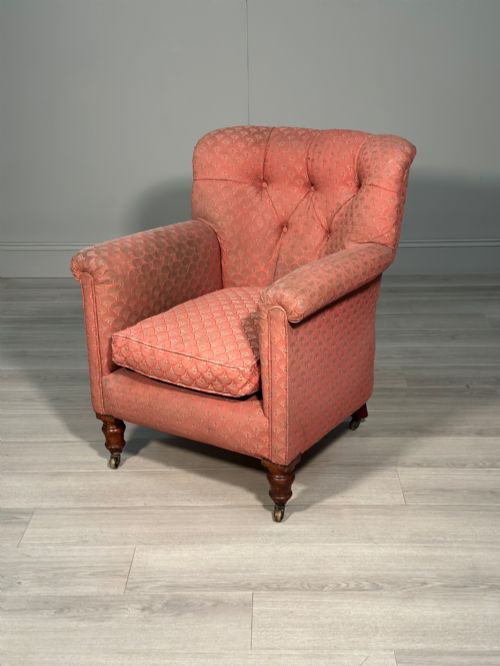
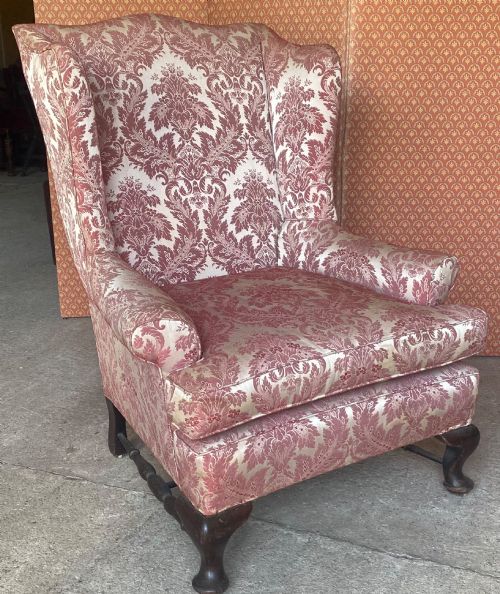
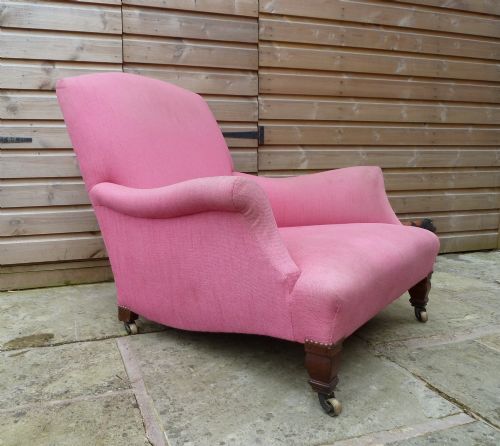
A rose pink easy chair encompasses upholstered armchairs and slipper chairs spanning the Victorian and Edwardian eras, alongside later revivals. Buyers searching for a rose pink easy chair will encounter button-backed drawing room seats, wingbacks, and low slipper chairs upholstered in velvet, damask, or textile.
The selections on this page range from nineteenth-century English country house armchairs to early twentieth-century fireside seating. Most examples draw upon Georgian, George III, Chippendale, and Queen Anne revival styles, reflecting the enduring popularity of classic silhouettes paired with softer upholstery.
Wooden frames visible on these chairs typically employ mahogany, walnut, or general hardwood, occasionally finished with brass details or fringe trims. The form centres on domestic comfort, from high-backed fireside chairs to low open armchairs designed for nineteenth-century drawing rooms.
How they were made
Construction relies upon sturdy timber frames built from mahogany, walnut, or hardwood, which provide the structural integrity for these upholstered seats. Joinery techniques from the nineteenth and early twentieth centuries ensure durability, supporting deep padding and sprung interiors.
Textiles play a defining role, utilising velvet, damask, and woven fabrics in pink and red tones. Traditional upholstery methods incorporate button backing, fringe additions, and exposed wooden framing in styles ranging from Victorian to Queen Anne revival.
Rose Pink Easy Chair Retail Price Guide 2026
Typical asking prices for rose pink easy chair among the pieces listed under this phrase on Sellingantiques today, from the lower quarter to the upper quarter. They describe what is for sale here now, not the wider market.
Listings feature frames built from mahogany, walnut, and hardwood, paired with velvet, damask, and textile upholstery across nineteenth and early twentieth-century periods.
What varies in quality
The distinction between standard and superior examples rests upon the integrity of the wooden frame and the precision of the revival style employed. Pieces reflecting careful adherence to George III, Chippendale, or Queen Anne proportions demonstrate greater design fidelity than generic interpretations.
Upholstery choices and material selection also set pieces apart, with rich velvet and damask fabrics elevating the presence of the chair. The crispness of button-tufting and the finish on exposed mahogany or walnut frames indicate the level of craftsmanship invested in the piece.
The Rose Pink Easy Chair Glossary
- Button back
- An upholstery method where deep buttons are pulled tight into the padding to create a uniform pattern of diamonds or squares. This technique is frequently seen on nineteenth-century drawing room armchairs.
- Wingback
- An armchair featuring protective side panels attached to the arms and rising to the back, designed to shield the sitter from draughts. These pieces often date from the Victorian and Edwardian periods.
- Slipper chair
- A low-seated upholstered chair originally designed for bedrooms to assist with putting on shoes. They appear in nineteenth-century selections, sometimes finished with fringe details.
- Damask
- A reversible figured fabric woven on a jacquard loom, commonly utilising silk, wool, or synthetic fibres. It provides a patterned textile finish for period upholstery.
- Fringe
- A decorative ornamental border of hanging threads or tassels applied to the base of upholstered seating. This detail appears on nineteenth-century slipper chairs and armchairs.
Rose Pink Easy Chair: Frequently Asked Questions
How do I identify a Victorian armchair?
Victorian armchairs are identified by heavy hardwood frames, button upholstery, and distinct period revival details. Mahogany and walnut timbers frequently form the visible structure of these nineteenth-century seats.
Such chairs often feature deep cushioning and sprung seats designed for formal drawing rooms. Their stylistic cues draw heavily from earlier Georgian and Queen Anne traditions interpreted through nineteenth-century manufacturing methods.
What is an Edwardian wingback armchair?
Edwardian wingback armchairs date from the early twentieth century and combine high protective side panels with deep upholstered seating. These pieces follow earlier Victorian comforts while reflecting lighter proportions.
They function well as fireside seating, offering enclosed warmth and support. The exposed woodwork on these chairs typically displays clean Edwardian turning or subtle revival shaping.
Where should I place a slipper chair?
Slipper chairs suit bedrooms, dressing rooms, or small reading corners due to their low seat height. Their compact proportions allow them to fit comfortably in restricted spaces without dominating a room.
Historically used for dressing, these chairs work effectively as accent pieces alongside larger armchairs. Their low profile provides a relaxed seating posture distinct from standard fireside chairs.
How do I care for velvet upholstery?
Velvet upholstery requires gentle brushing with the grain to maintain the pile and prevent flattening. Regular light vacuuming with a soft attachment removes surface dust before it settles into the fabric.
Avoid placing velvet chairs in direct sunlight to prevent the pink tones from fading over time. Professional cleaning is recommended for deeper maintenance of antique textile surfaces.