
Roll Front Cabinet
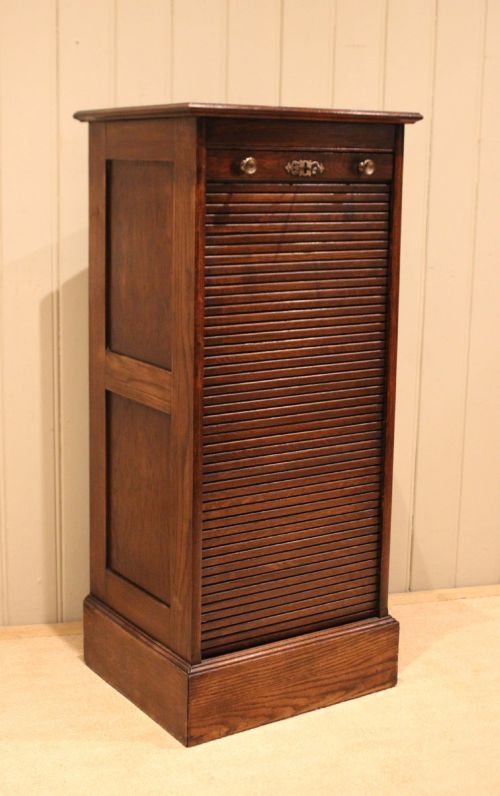
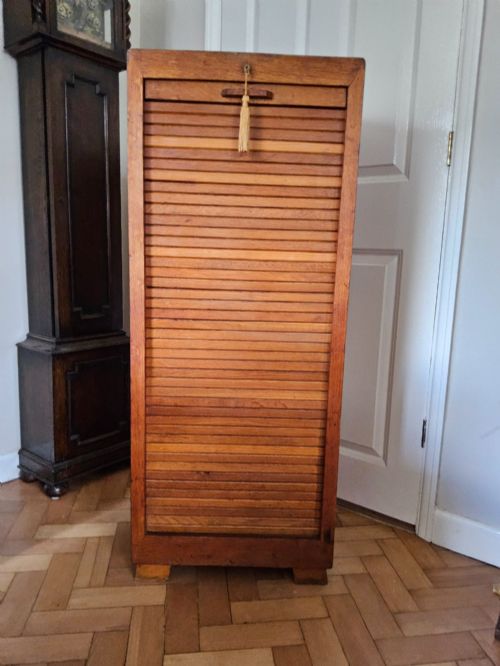
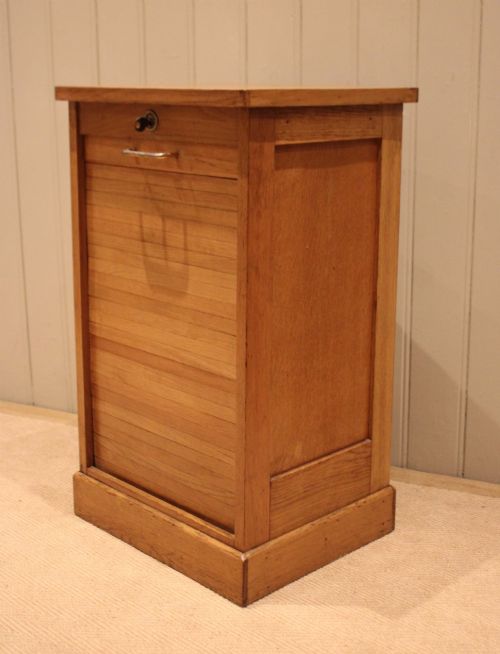
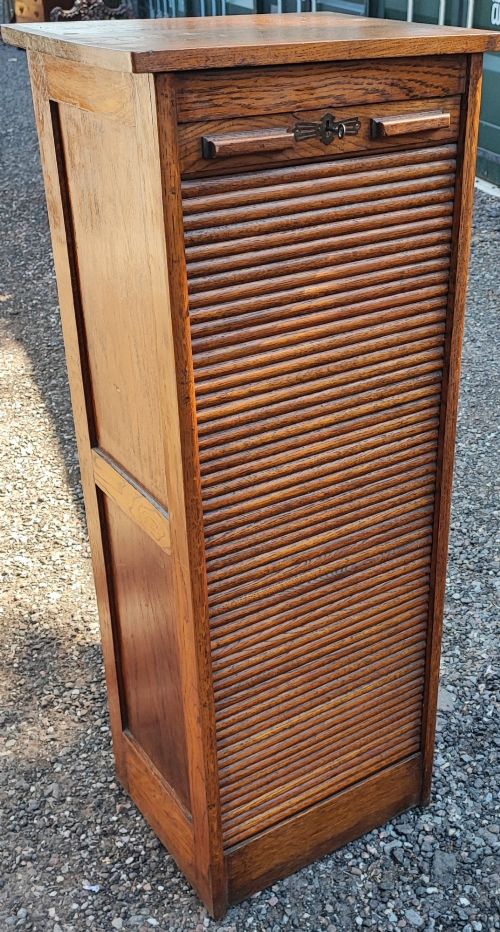
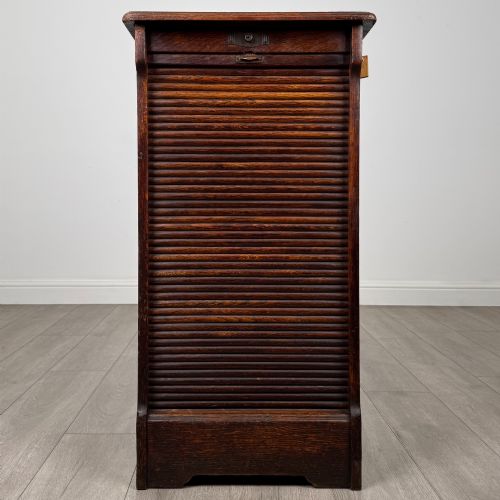
A roll front cabinet conceals its contents behind slender strips of wood that glide smoothly around a curve, offering both security and tidy workspace containment.
Roll Front Cabinet
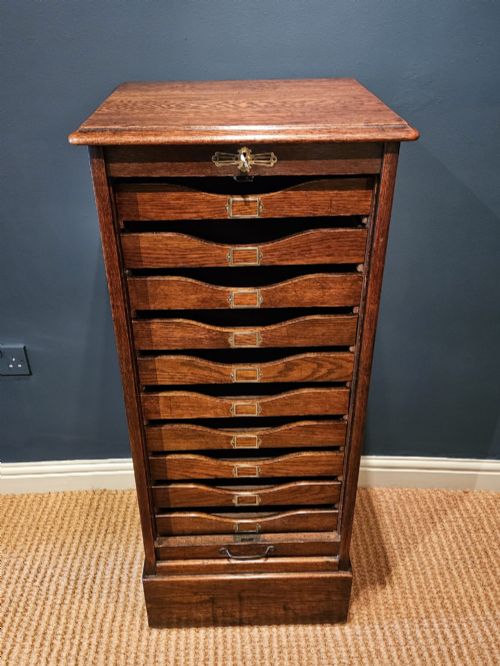
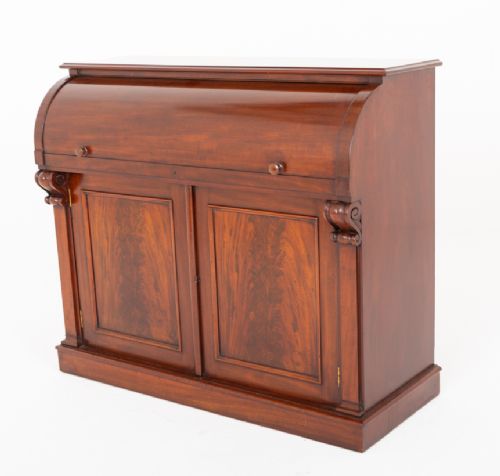
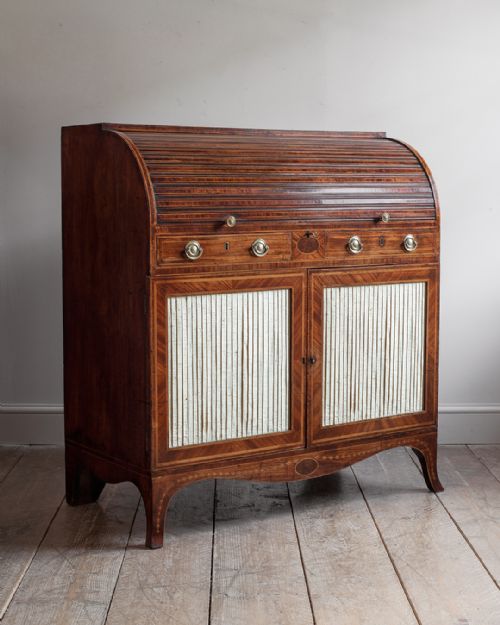
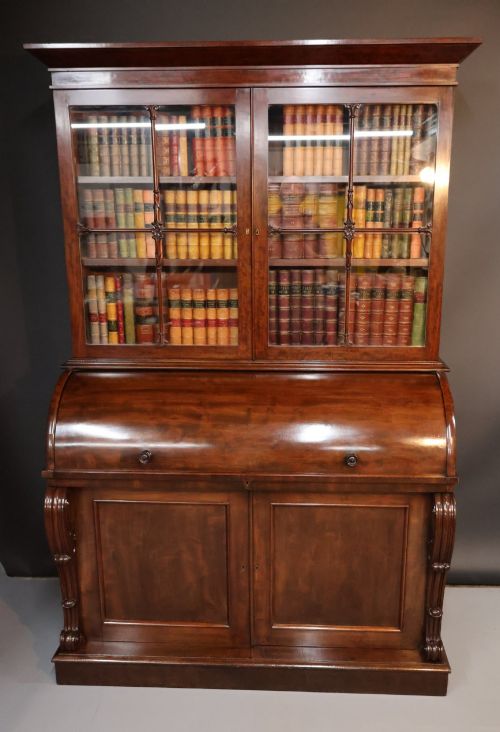
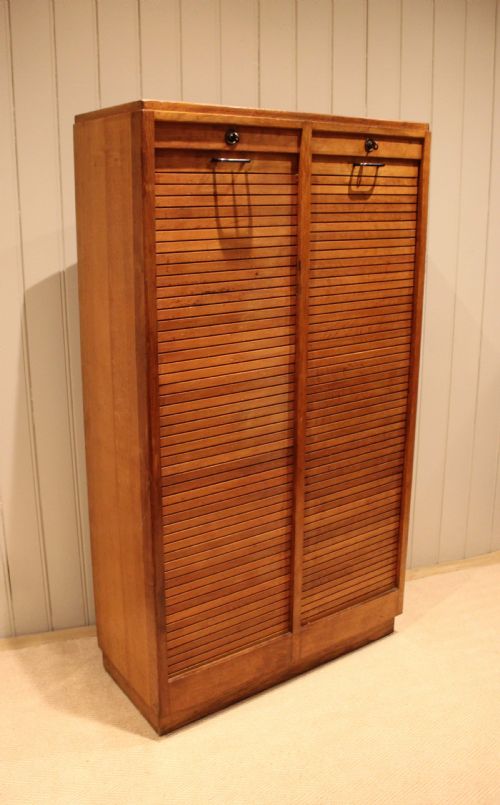
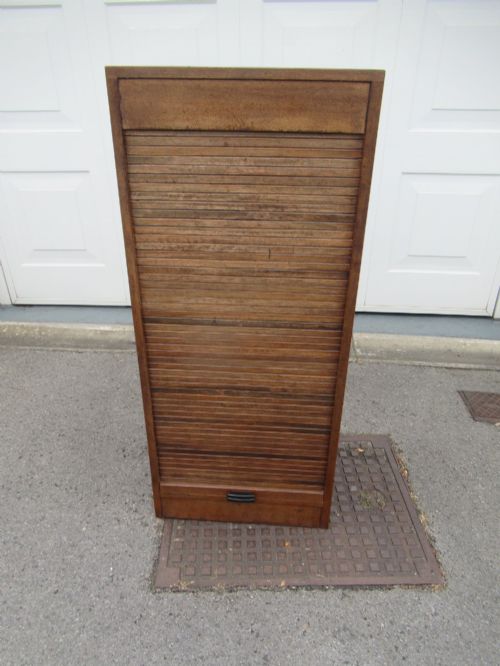
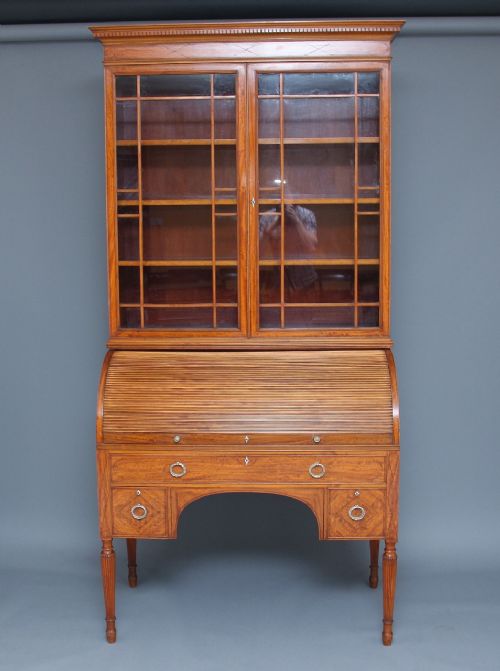
A roll front cabinet is primarily encountered as an office filing unit, a desk, or a bureau bookcase, designed for practical storage and workspace management. These pieces span from the eighteenth century through the Edwardian era and into the mid-twentieth century, reflecting changing demands for organised storage.
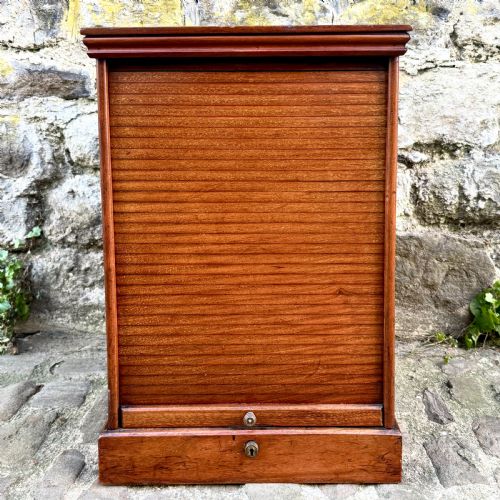
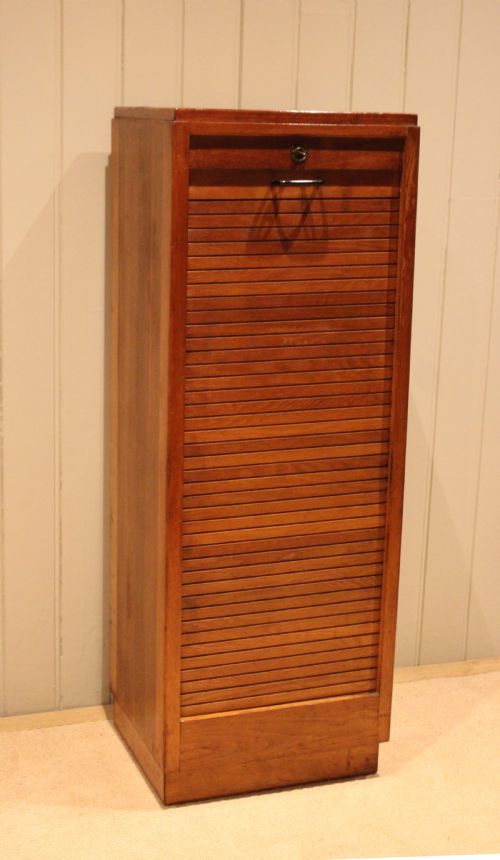
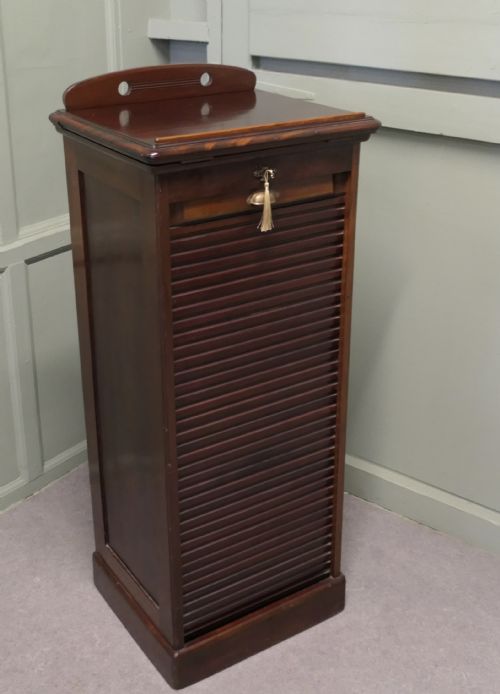
Oak and mahogany dominate the selection, often taking the form of vertical filing cabinets with multiple internal drawers or compartments. Buyers searching for a roll front cabinet will frequently find sturdy oak office furniture alongside more decorative mahogany and satinwood writing pieces.
What varies in quality
The smoothness of the tambour action distinguishes superior pieces, as a well-fitted curtain glides effortlessly without sagging or catching in its side channels. High-grade examples maintain tight tolerances between the wooden slats and the running tracks.
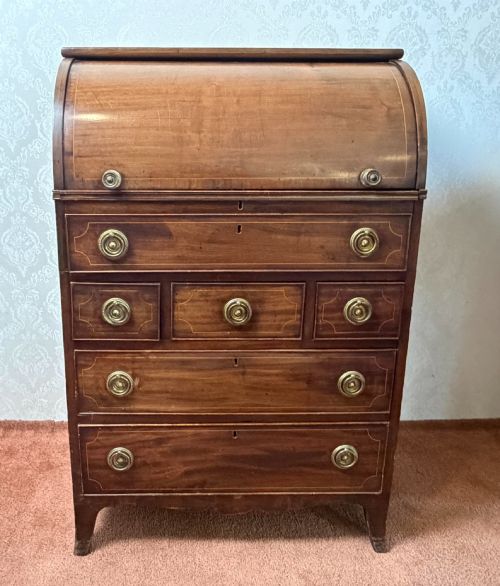
Timber selection and secondary detailing also separate standard utility items from finer reception or library furniture. Figured mahogany veneers, inlaid satinwood banding, and substantial brass hardware indicate a higher standard of manufacture.
Listings demonstrate that roll front cabinets and filing systems were predominantly constructed in oak during the early twentieth century.
Edwards & Roberts
The Roll Front Cabinet Glossary
- Tambour
- A flexible shutter made of narrow wooden slats attached to canvas, allowing a door to slide around a curved track. This ingenious construction hides paperwork whilst saving space in compact rooms.
- Cylinder desk
- A writing table featuring a curving solid or panelled roll top that retracts upwards to reveal a fitted interior with small drawers and pigeonholes. It provides a generous writing surface when open.
- Bonheur du jour
- A light lady's writing desk originating in France, often fitted with small drawers, shelves, or a cabinet on the upper section. These delicate pieces frequently employ fine satinwood or mahogany veneers.
- Marquetry
- Decorative veneer work arranged in pictorial or geometric patterns using contrasting coloured woods. Craftsmen cut various timbers to fit precisely into a design before gluing them to the carcass.
- Bureau bookcase
- A dual-purpose piece combining a sloping or roll-front writing compartment below with enclosed shelving above. It serves as both a workspace and a library display unit.
Roll Front Cabinet: Frequently Asked Questions
How does a tambour door work?
A tambour door is constructed from many narrow vertical strips of wood affixed to a sturdy canvas backing. This flexible arrangement allows the entire front curtain to slide smoothly around a curved groove within the cabinet frame.
When opened, the slats travel out of sight along the inner sides or back of the carcass. This mechanism removes the need for outward-swinging doors, making these cabinets ideal for tight spaces.
What is the difference between a cylinder desk and a roll front?
A cylinder desk typically uses a solid curved wooden shell that rotates on pivots or slides along a curved track to uncover the writing surface. Roll front cabinets use flexible tambour slats rather than a solid curved panel.
Cylinder desks are generally finer domestic furniture pieces in mahogany or satinwood, whereas roll front cabinets are more commonly utilitarian office filing units made of oak.
Where were these cabinets used?
These cabinets were primarily manufactured for commercial offices, legal practices, and studies to house ledgers, correspondence, and stationery securely. Larger variations served as central filing hubs or multi-drawer archive systems.
Domestic versions were also placed in libraries and reception rooms for managing personal paperwork and writing materials.
How do I care for the sliding mechanism?
Keep the running tracks clean and free from dust or debris to ensure the tambour curtain glides without resistance. Avoid using heavy liquid polishes inside the grooves, which can attract dirt and cause the fabric backing to stick.
Maintain stable humidity levels in the room to prevent the wooden slats from swelling or warping within their tracks.