

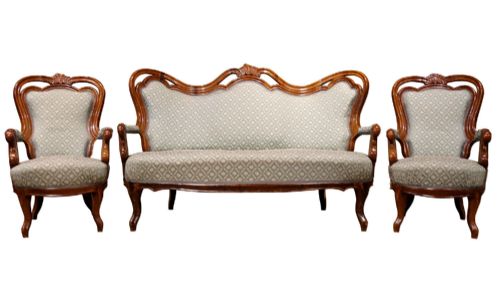


Rococo Walnut Canape
A rococo walnut canape brings sculptural timber curves and generous seating to a room, offering the unmistakable elegance of eighteenth-century French and Italian design.
Rococo Walnut Canape
A rococo walnut canape is a decorative settee or small sofa defined by the flowing lines of the Rococo Revival, Louis XV, and Italian Rococo styles. These pieces range from authentic eighteenth-century examples to nineteenth-century revival suites, often appearing as two-seater settees or larger salon groupings.
The physical form relies on exposed timber frames carved with organic motifs and supported by cabriole legs. Examples on this page stretch from seventeenth-century origins through nineteenth-century revival iterations up to the twentieth century, maintaining a consistent focus on comfortable upholstered seating.
Makers and craftsmen utilised walnut timber as the primary structural medium, yielding pieces that function as standalone sofas or components of larger seating suites. Buyers encounter both pale and bleached walnut finishes alongside traditional dark tones, each revealing distinct regional characteristics from French and Italian workshops.
Materials and construction
The primary structural material across these pieces is walnut, selected for its strength and suitability for intricate carving. Craftsmen shaped the solid timber frames by hand, integrating curved rails and organic flourishes directly into the structure.
Upholstery forms an essential component of the construction, utilising traditional textiles such as fabric, velvet, and linen secured with metal tacks. This combination of exposed carved woodwork and padded seating defines the traditional method of building a luxury salon sofa.
Rococo Walnut Canape Retail Price Guide 2026
Typical asking prices for rococo walnut canape among the pieces listed under this phrase on Sellingantiques today, from the lower quarter to the upper quarter. They describe what is for sale here now, not the wider market.
One particularly charming item is listed simply as a small carved end of bed two-seater sofa.
Assessing quality and craftsmanship
The distinction between standard and exceptional pieces rests upon the crispness and depth of the timber carving. Superior examples display fluid, hand-carved details along the crest rail and frame that integrate harmoniously with the structural curves of the settee.
The selection of the walnut timber itself dictates the visual merit of the piece, with finer grain patterns and harmonious colour elevation setting superior items apart. Additionally, the integrity of the frame construction and the quality of the textile upholstery contribute to the overall standard of the furniture.
The Rococo Walnut Canape Glossary
- Canape
- An upholstered sofa or settee, typically featuring an exposed wooden frame and decorative carved details.
- Rococo Revival
- A nineteenth-century design movement that reinterpreted the curving, ornate forms of the original eighteenth-century Rococo period.
- Louis XV Style
- A classic French aesthetic characterised by asymmetrical scrolling, cabriole legs, and naturalistic floral carvings.
- Cabriole leg
- A furniture leg that curves outward in a convex arc and tapers inward to a graceful foot, typical of period seating.
Rococo Walnut Canape: Frequently Asked Questions
What is a rococo walnut canape?
A rococo walnut canape is an antique upholstered sofa or settee built with a carved walnut frame. These pieces reflect the curving, ornate aesthetics of the Rococo Revival and Louis XV styles.
Originating in various periods from the eighteenth century onwards, they serve as both functional seating and decorative centrepieces in traditional interiors.
How were these sofas used originally?
These settees were designed for formal reception rooms, parlours, and salons within grand residences. They provided comfortable seating for entertaining guests and conversing.
In modern homes, they function well as statement seating in living rooms, bedrooms, or large hallways.
How do I style a canape today?
A canape works effectively as a focal point in a room, paired with complementary armchairs or placed against a plain wall to highlight its carved timber frame. The organic wood tones and traditional upholstery allow it to blend into classic or eclectic interiors.
Placing the settee where adequate lighting can showcase the carved details enhances its visual impact.
How can I tell the period of the sofa?
Dating relies on examining the construction methods, the style of the wood carving, and the characteristics of the walnut timber. Eighteenth-century pieces show distinct hand-tool marks and period-specific proportions.
Nineteenth-century revival pieces often exhibit heavier timber sections and machine assistance in the hidden structural elements while imitating earlier designs.