


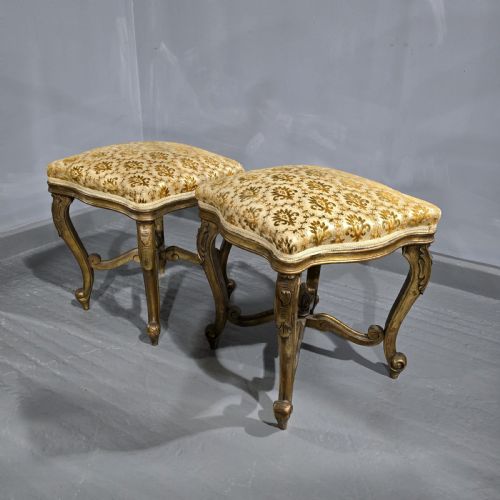

Rococo Upholstered Stool
These rococo upholstered stool examples bring flamboyant curves and rich textiles into a room, offering both decorative presence and practical seating.
Rococo Upholstered Stool
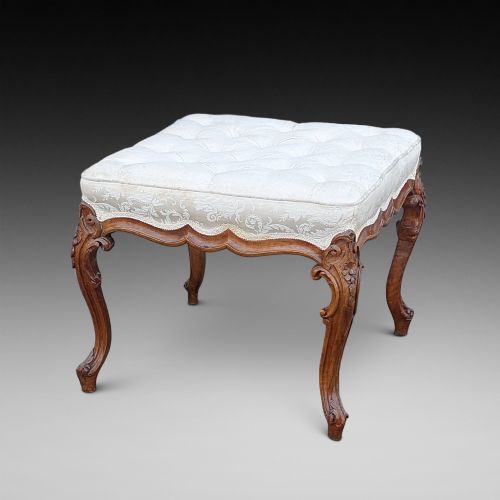
A rococo upholstered stool is a low seating form defined by exuberant curves, carved woodwork, and plush fabric coverings. When you search for this phrase, you encounter pieces intended for firesides, dressing tables, and formal salons.
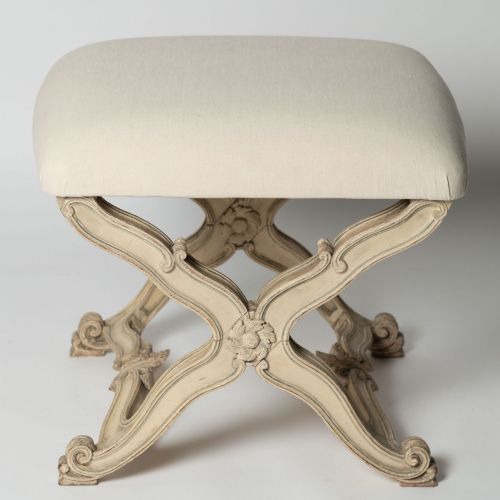
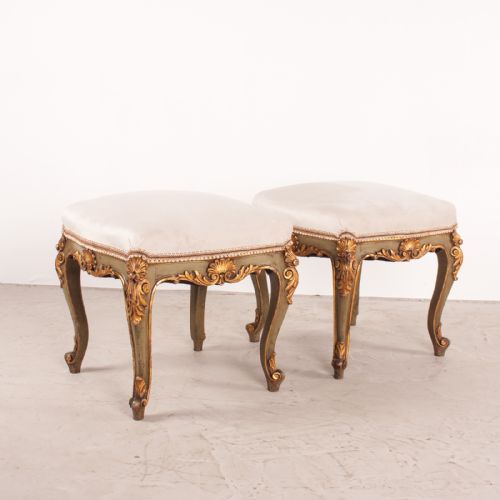
The pieces appearing here span the nineteenth century and the early twentieth century, heavily shaped by Victorian revivals of French styles. Walnut, mahogany, and rosewood form the structural foundations, often paired with elaborate giltwood or painted finishes.
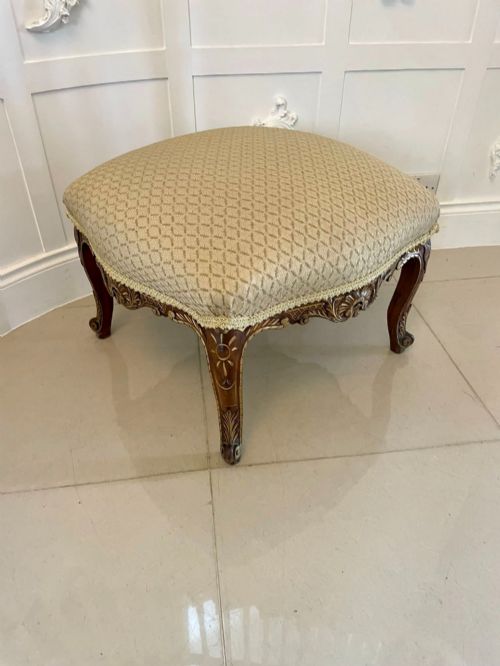
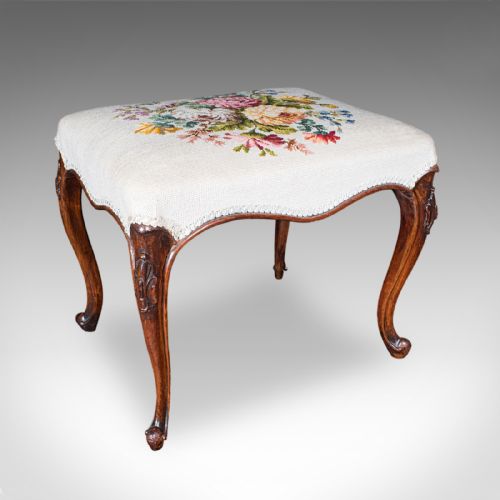
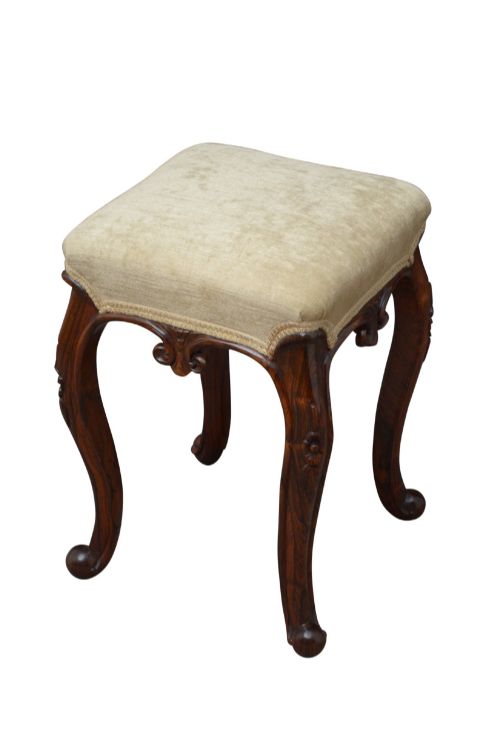
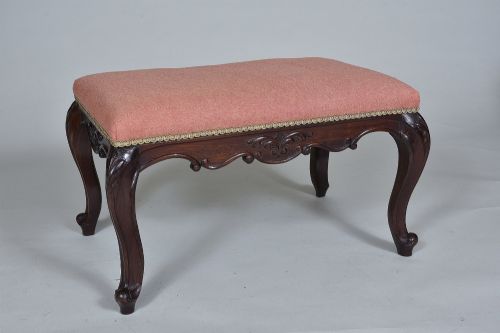
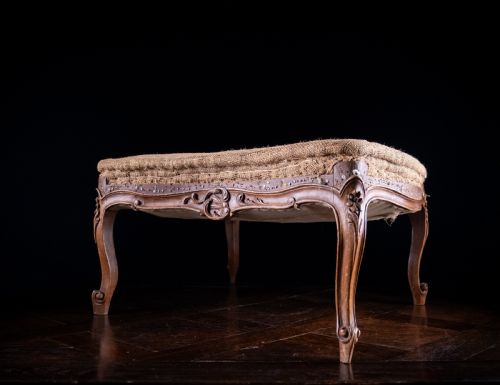
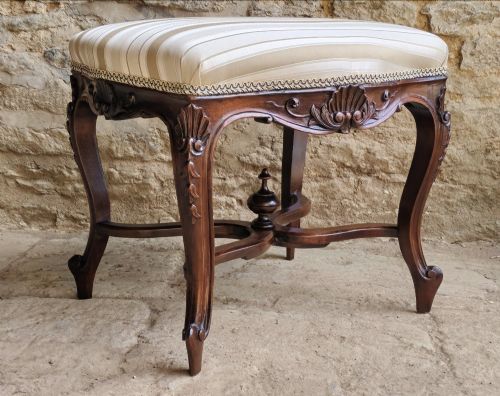
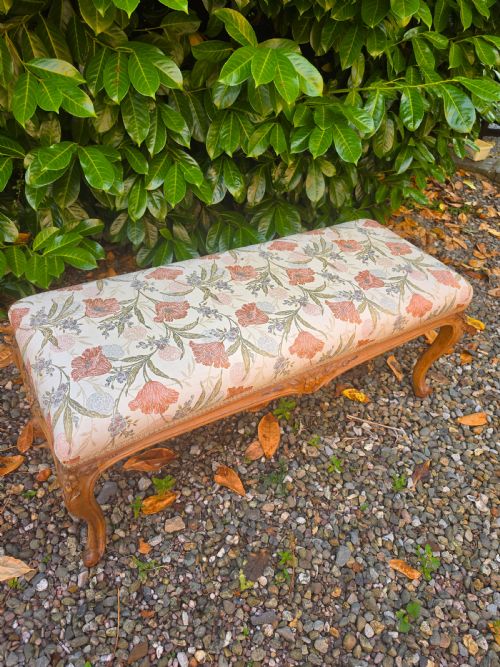
Most examples rely on cabriole legs to lift the upholstered top, echoing the organic motifs of the eighteenth century. Whether encountered as single footstools or matched pairs, these furnishings combine solid timber frames with tactile textile surfaces.
How They Were Made
Craftsmen built the structural frames of these stools using dense hardwoods such as walnut, mahogany, rosewood, and beech. These timbers were carved by hand into scrolling cabriole legs and flowing perimeter rails.
Surface ornamentation involved intricate gilding, paint, or polished wood finishes to accentuate the carved details. Upholsters then secured supportive internal webbing and stuffing before applying top layers of velvet, needlepoint, or decorative textiles.
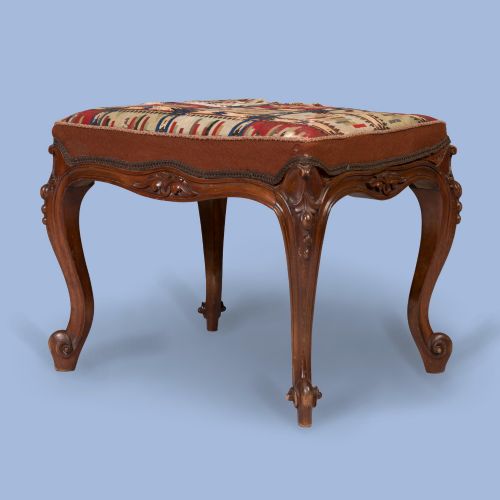
Certain footstools retain robust needlepoint covers stitched by nineteenth-century hands to endure centuries of weary ankles.
What Varies in Quality
The crispness and depth of the timber carving dictate much of the visual merit. Sharply defined scrolls and undercut foliage demonstrate superior craftsmanship compared to soft or shallow moulding.
Subtle differences in timber selection and the retention of original surface finishes separate standard production from exceptional examples. The structural integrity of the frame joints and the quality of the upholstery textile further influence the character of each piece.
The Rococo Upholstered Stool Glossary
- Cabriole leg
- A furniture leg that curves outward at the knee and tapers inward toward the foot, resembling animal limbs. This form is characteristic of rococo and revival designs.
- Giltwood
- Timber coated with a thin layer of gold leaf or powder. It provides a brilliant metallic finish frequently seen on formal French and Victorian seating.
- Needlepoint
- A type of canvas work embroidery executed with yarn. It frequently appears as the original upholstery material on nineteenth-century footstools and fireside seats.
- Centre stool
- A large freestanding stool designed to be viewed from all angles in the middle of a room rather than placed against a wall.
- Louis XV style
- A revival design movement drawing upon the asymmetrical curves and natural motifs popular during the mid-eighteenth-century French court.
Rococo Upholstered Stool: Frequently Asked Questions
Where were these stools used?
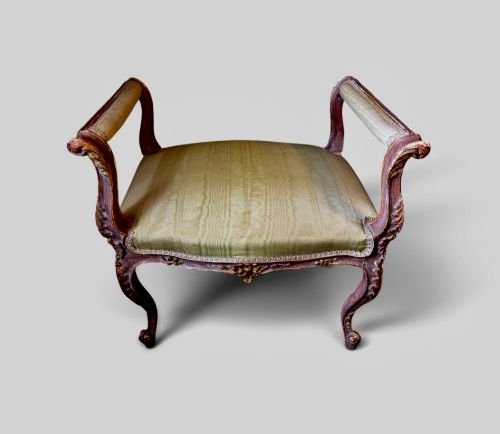
These stools served versatile roles in domestic interiors, appearing beside drawing room fireplaces, in front of dressing tables, and as window seats.
Larger centre stools functioned as flexible seating options in reception rooms, while smaller footstools provided comfort paired with armchairs.
How do I identify the period?
Dating relies on timber choices, construction methods, and stylistic revival cues. Nineteenth-century examples often utilise solid walnut, rosewood, or mahogany with hand-cut joinery.
Later pieces from the early twentieth century may incorporate different finishing techniques or lighter beech frames while closely mimicking earlier French prototypes.
Are original textiles common?
Original upholstery fabrics such as period needlepoint do survive on certain pieces, displaying authentic wear patterns and hand-stitched details.
Many pieces, however, have received sympathetic reupholstery over time to ensure structural soundness and suit modern interiors.
How do I care for the wood?
Maintenance requires keeping wooden frames away from direct heat sources and strong sunlight to prevent timber shrinkage and finish cracking.
Gentle dusting with a dry cloth preserves the polished surface without introducing moisture that could harm aged veneers or gilded details.