


Rococo Style Nightstands Pair
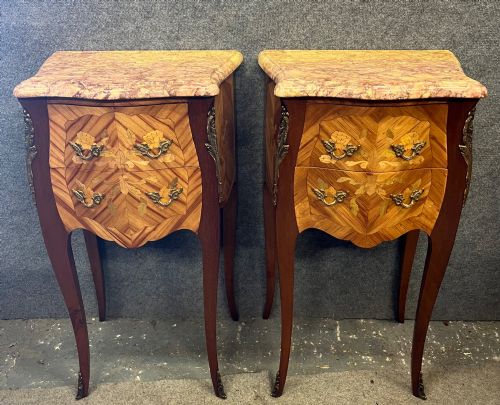
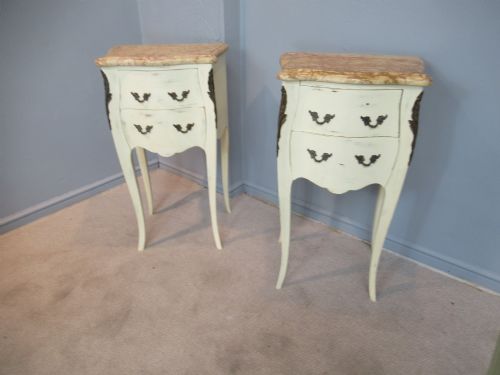
These rococo style nightstands pair items bring French character to a bedroom, offering matching bedside storage with curved lines.
Rococo Style Nightstands Pair
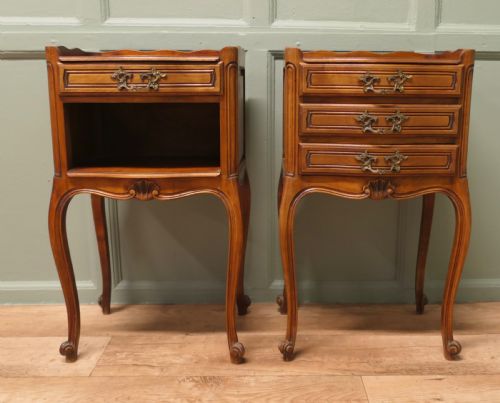
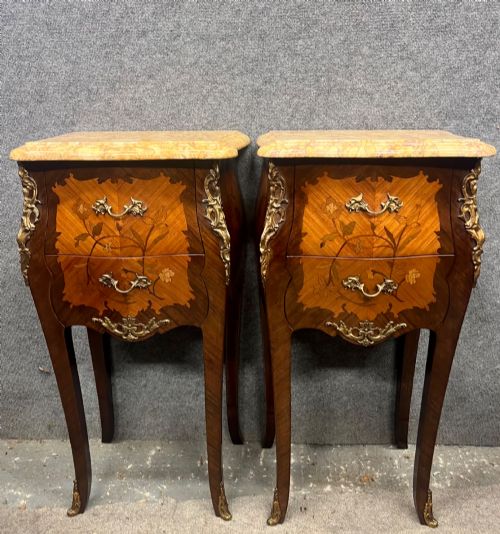
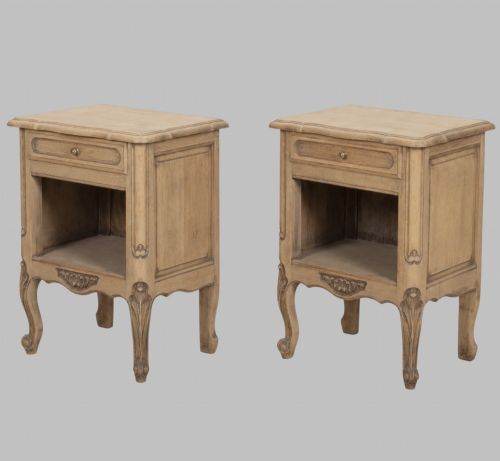
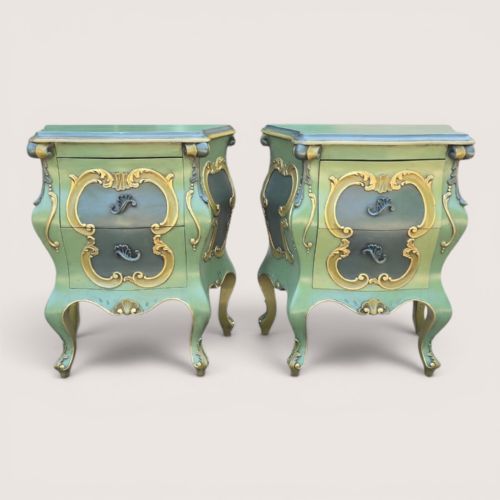
When you search for rococo style nightstands pair, you are looking at matched pairs of small bedside tables, cabinets, and chests originating from the nineteenth and early twentieth centuries. The pieces on this page span the 1880s through 1930, capturing revival periods such as Louis XV and Rococo Revival, alongside French Provincial and French Chateau influences. Forms range from compact lamp tables and side cabinets to bombe commodes and bedside chests with drawers or cupboards.
You are most likely to meet walnut, kingwood, and cherry wood versions, often enhanced with marquetry inlay or painted and gilded finishes. Many examples feature shaped marble tops and decorative metal mounts in brass or ormolu. These pairs provide symmetrical bedside storage while displaying the characteristic serpentine fronts and cabriole forms associated with the style.
What varies in quality
The sophistication of the timber selection and marquetry work sets superior examples apart from simpler pieces, particularly in the precision of the veneer matching and inlay details. Finer items display crisply carved woodwork and substantial marble tops with accurate edge profiling.
The integration of metal mounts and the execution of painted or gilded finishes also distinguish the construction standards. Higher quality items show careful attention to internal drawer linings and solid structural joints across both matched pieces.
Some pairs feature kidney shaped designs, proving that eighteenth-century French monarchs had strong opinions on bedside geometry.
The Rococo Style Nightstands Pair Glossary
- Commode
- A low chest of drawers or cabinet with doors, often featuring a decorative marble top. These pieces serve as practical bedside storage.
- Kingwood
- A dense, richly figured tropical timber utilised for decorative veneer work. It provides deep brown tones with contrasting lighter streaks.
- Ormolu
- Gilded bronze mounts applied to furniture for decorative accent. These metal details highlight the curved forms of the woodwork.
- Marquetry
- Inlay work using various wood veneers to create pictures or geometric patterns. Craftsmen apply these designs to table tops and drawer fronts.
- Bombe
- An outward swelling or bulging contour characteristic of continental furniture. This curved profile requires skilled shaping of the timber carcass.
Rococo Style Nightstands Pair: Frequently Asked Questions
Are these nightstands strictly French in origin?
The listings show pieces inspired by French design alongside examples explicitly noted as Italian. Makers adopted Louis XV and Rococo styles across various European workshops during the nineteenth and early twentieth centuries.
While the aesthetic draws heavily on French Chateau and provincial traditions, specific pieces reflect regional craftsmanship from different parts of Europe.
How do I care for marble-topped bedside tables?
Marble tops require gentle cleaning with mild, pH-neutral soap and warm water to protect the polished stone surface. Avoid acidic cleaners or lemon-based products that can etch the stone.
Using coasters for drinks and wiping spills promptly helps maintain the finish of both the marble and the surrounding wood veneer.
What is the difference between a chevet and a commode?
A chevet generally refers to a small bedside table or locker designed specifically for night use. A commode is typically a larger chest of drawers or cabinet form.
In the context of these listings, both terms describe compact bedside storage units with similar revival styling.
How can I date early twentieth century pairs?
Dating relies on construction methods, timber characteristics, and stylistic revival markers recorded in the titles. Pieces from the 1900 to 1930 range often combine traditional joinery with early twentieth-century manufacturing techniques.
Examining the drawer construction, secondary woods, and wear patterns helps place an item within the nineteenth or early twentieth century timeframe.