
Rococo Style Brass Lighting
Rococo style brass lighting brings swirling asymmetrical forms and exuberant ornamentation into interior spaces through chandeliers, wall lights, and table lamps.
Rococo Style Brass Lighting
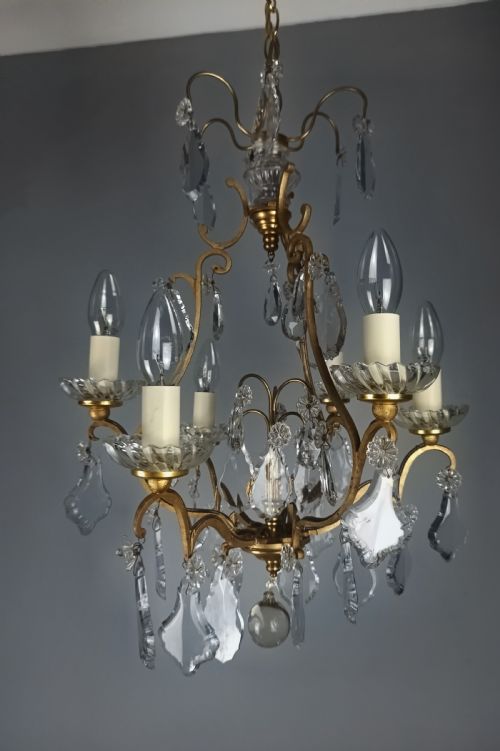
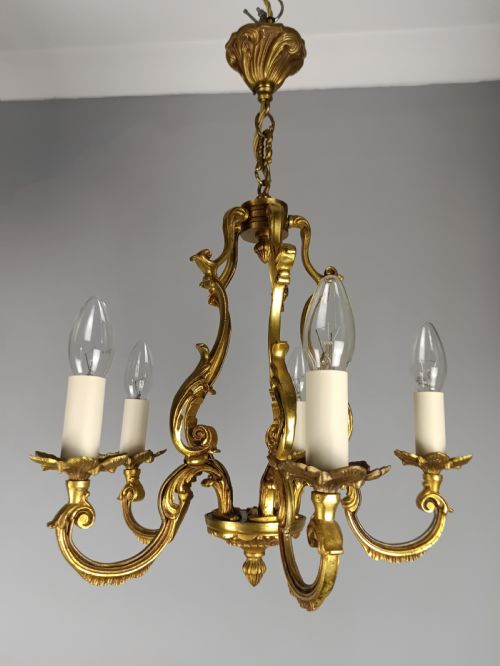
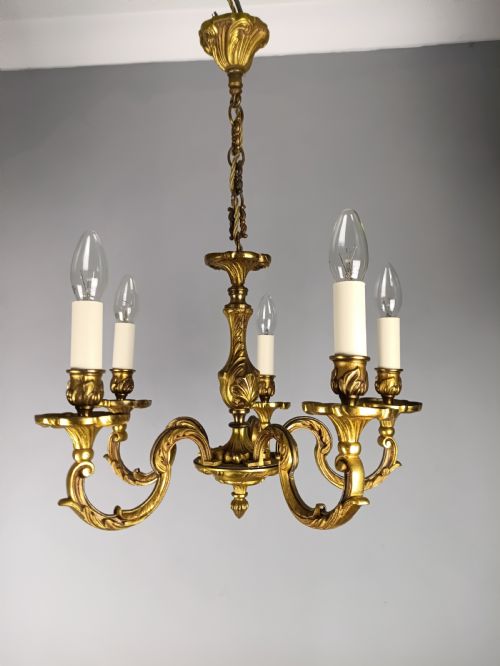
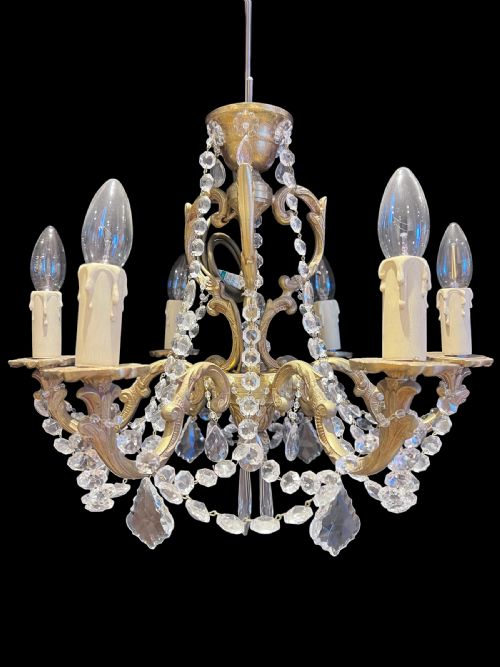
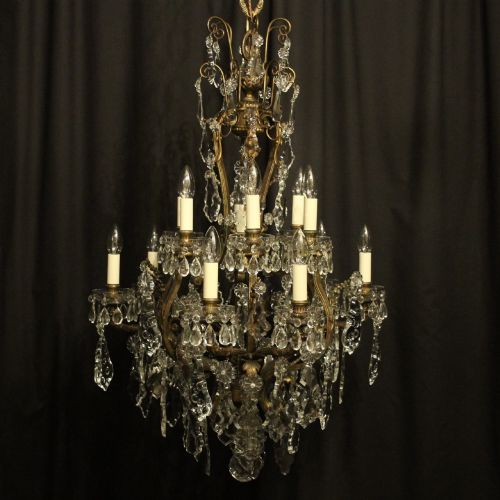
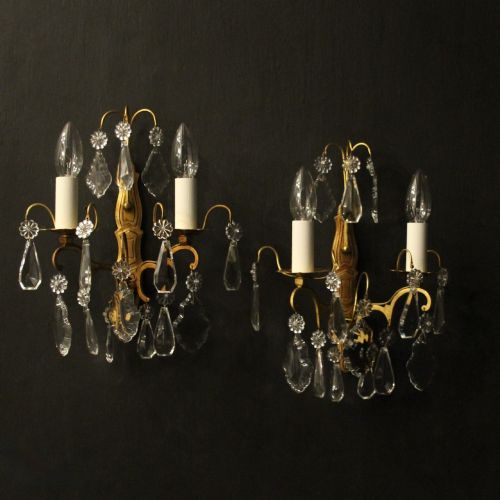
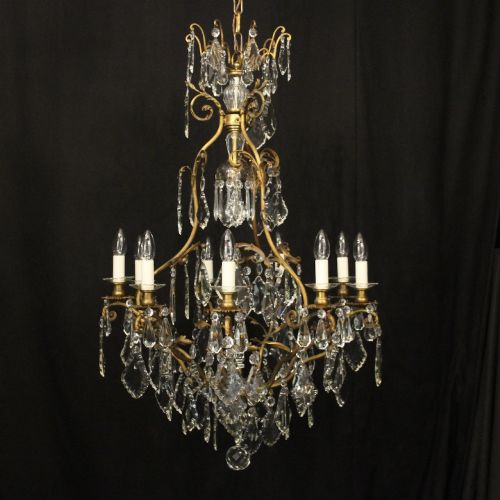
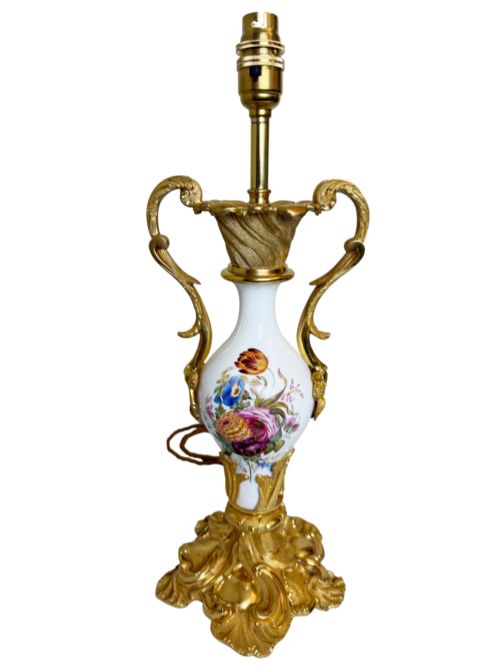
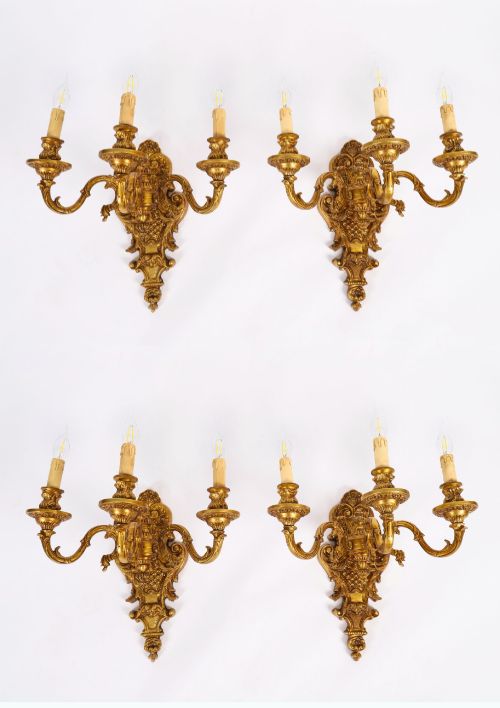
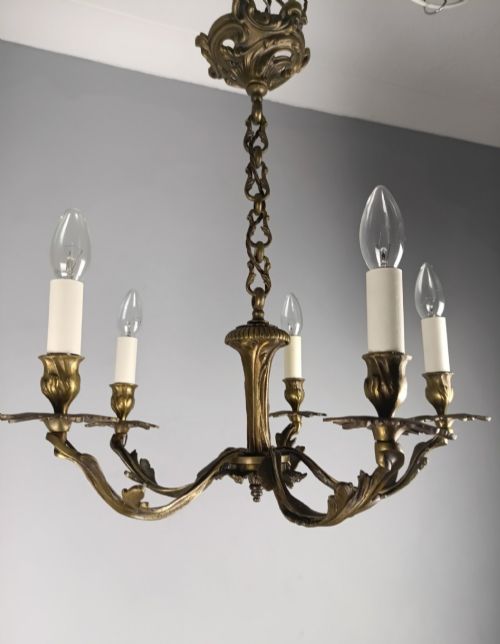
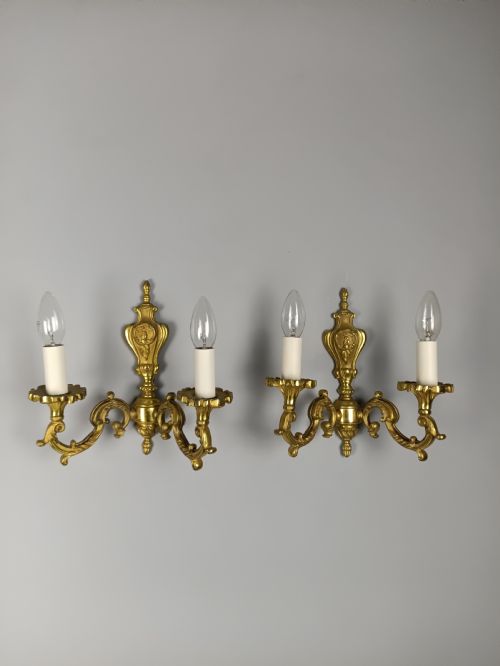
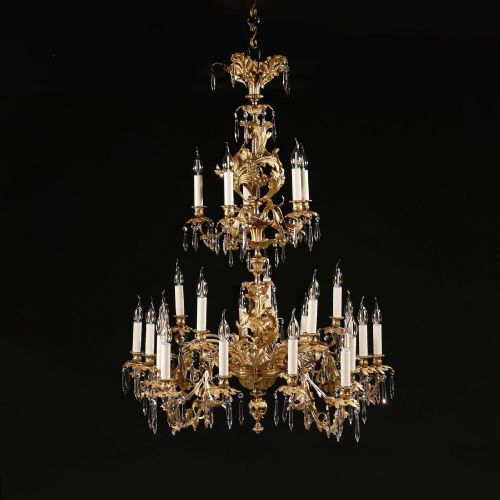
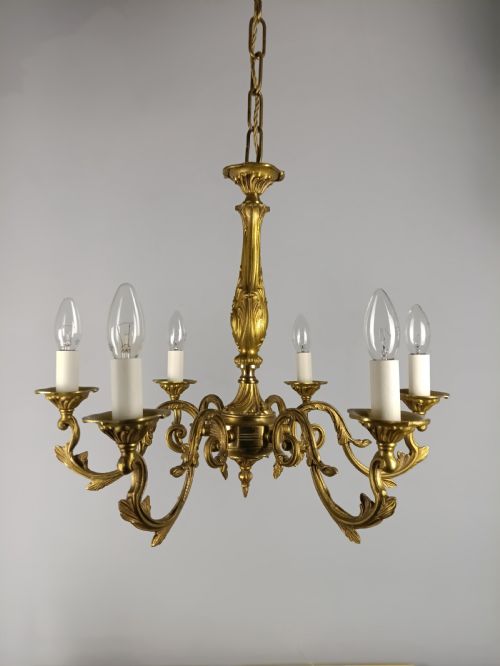
The dominant forms emulate the fluid lines of the Louis XV period, incorporating cast brass, gilt bronze, and ormolu frames dressed with crystal drops or porcelain floral elements. Alongside grand twelve light chandeliers, the inventory includes petite single light lanterns, figural candelabra, and mirrored wall sconces.
Originating largely from French and Italian makers, these fixtures display distinct regional interpretations of the rococo revival style, ranging from dark bronze finishes to heavily gilded surfaces paired with cut glass.
Materials and construction techniques
The primary structural material is cast brass or bronze, frequently enhanced with fire gilding or ormolu finishes to achieve a brilliant metallic lustre. Metal components are cast in intricate, asymmetrical scrolls and floral motifs characteristic of the style.
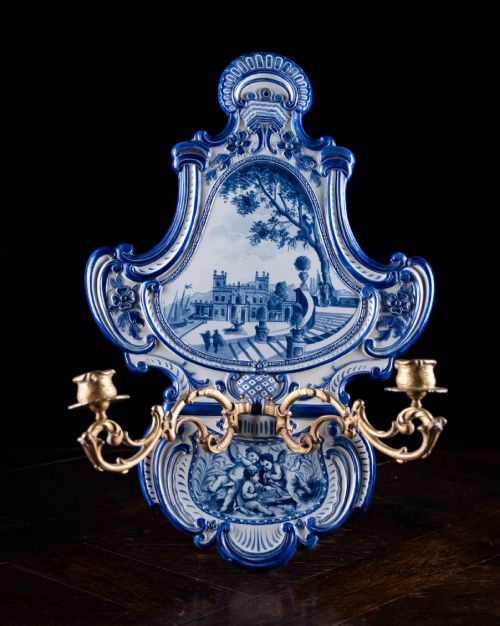
Chandeliers and wall sconces are frequently integrated with cut crystal pendants, glass beads, and occasionally porcelain floral details or Delft ceramic inserts. Wiring and electrical components represent later adaptations, as many forms originated before electrification.
Listings span periods from the mid nineteenth century through 1930, uniting brass, gilt bronze, crystal, and porcelain materials.
Distinctions in quality
Quality in these pieces rests upon the crispness of the metal casting and the depth of the chasing work on the bronze or brass surface. Superior examples exhibit sharply defined asymmetrical scrolls, leaves, and figural elements rather than softened, repetitive contours.
The choice of secondary materials also dictates the grade of the fixture, where hand cut crystal prisms and robust fire gilding outrank pressed glass drops and superficial surface lacquers.
The Rococo Style Brass Lighting Glossary
- Ormolu
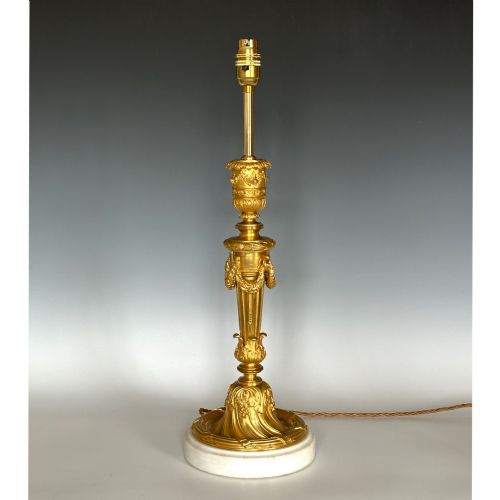
- Gilded bronze, produced by applying a mercury and gold amalgam to a bronze base and heating it to drive off the mercury. This technique creates a durable, rich golden surface typical of high grade nineteenth century French lighting.
- Chandelier
- A branched ceiling mounted lighting fixture designed to hold multiple light sources. In this category, they often incorporate crystal drops and birdcage metal frames.
- Sconce
- A wall mounted lighting fixture with one or more arms extending forward to support lamps or candles. Period examples frequently feature mirrored backs to amplify the illumination.
- Candelabra
- A branched candlestick or lamp stand designed for multiple candles or bulbs. Rococo revival versions frequently incorporate figural bronze casts.
- Ewer
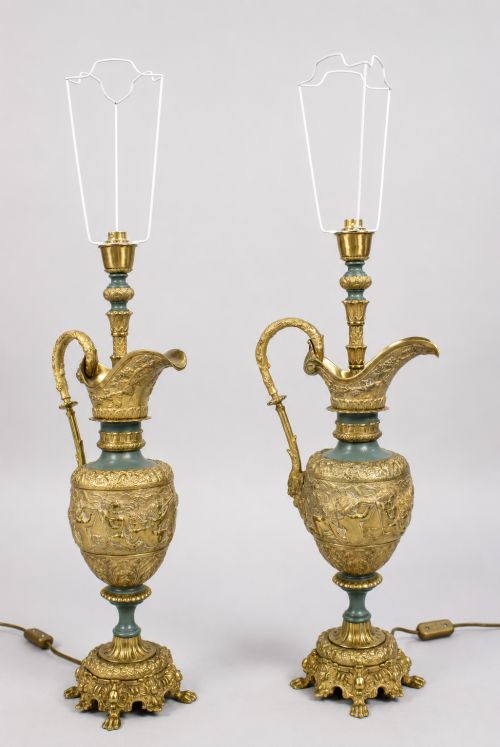
- A large jug with a wide spout, commonly utilised as the sculptural body for eighteenth and nineteenth century style table lamps.
Rococo Style Brass Lighting: Frequently Asked Questions
What periods do these lights come from?
The lighting pieces predominantly date from the nineteenth and early twentieth centuries, spanning the Victorian era through the 1930s. Revival styles from this timeframe deliberately emulated earlier eighteenth century French aesthetics.
Craftsmen during the late 1800s and early 1900s reproduced these intricate forms using traditional casting methods alongside contemporary wiring adaptations.
How do I clean gilt bronze and brass?
Gilt bronze and ormolu require gentle dusting with a soft, dry cloth to prevent damage to the delicate surface gilding. Chemical polishes must be avoided entirely because they strip away the historic metallic finishes.
Crystal components can be carefully wiped down with a mild soapy solution while detached from the main metal frame.
Were these fixtures originally electrified?
Many of the lighting fixtures from the late nineteenth and early twentieth centuries were originally designed for gas or candles and were subsequently converted for electricity. Conversion work often took place during period renovations or when items changed hands.
Buyers should examine the internal wiring to confirm it meets current safety standards upon acquisition.
How do I identify rococo revival style?
Rococo revival design is characterised by C-scrolls, S-scrolls, asymmetrical floral motifs, and naturalistic shell shapes. Straight lines are largely absent in favour of fluid, organic curves derived from mid eighteenth century French decorative arts.
This aesthetic appears prominently across the brass frames, wall sconces, and table lamp bases found in the collection.