





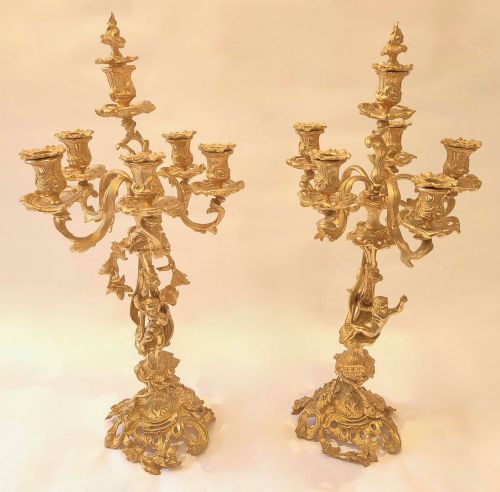


Rococo Style Brass Candelabra
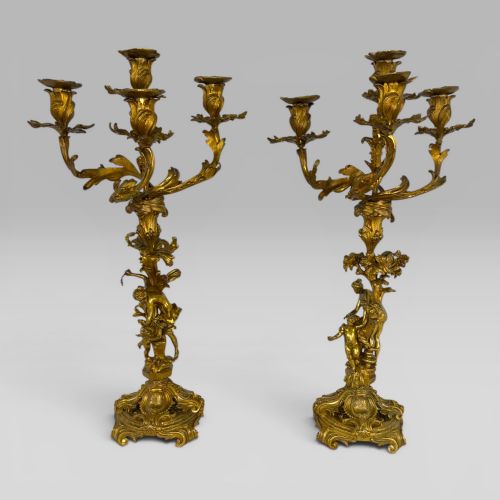
These rococo style brass candelabra bring elaborate scrolling curves and opulent metalwork to any mantelpiece.
Rococo Style Brass Candelabra
When you search for rococo style brass candelabra, you find multi-branch lighting fixtures and decorative metalwork designed with asymmetrical scrolling and naturalistic motifs. These items emerge primarily from the nineteenth century, with examples spanning the 1860s through to the 1920s.
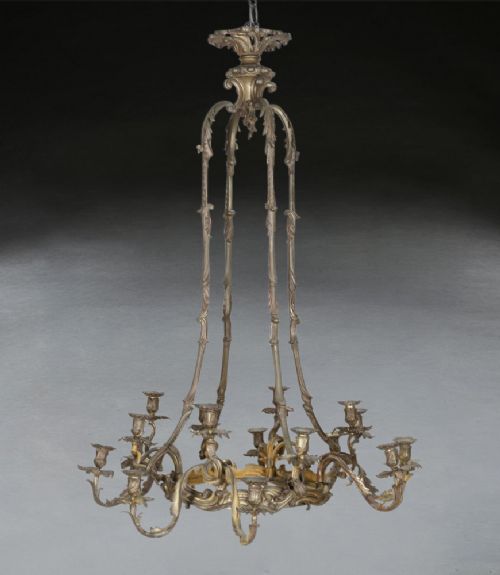
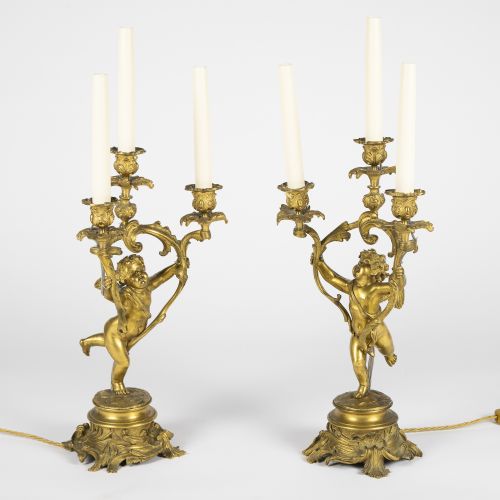
The selection on this page leans heavily towards French rococo revival designs, often pairing gilded brass, ormolu, or gilt bronze with glass and crystal elements. You will encounter pairs of candelabra alongside related lighting forms such as chandeliers, table lamps, and wall lights.
How they were made
The manufacture of these pieces relies on casting metals such as bronze, brass, and ormolu to achieve deep relief and complex sculptural forms. Craftsmen then applied gilding to the surfaces, creating a luminous finish that highlights the intricate flora and fauna motifs typical of the style.
Many items integrate secondary materials, suspending crystal drops or incorporating porcelain birds and ceramic vases into the metal armature. These mixed-media constructions required skilled assembly to secure heavy branches and glass components safely.
Rococo Style Brass Candelabra Retail Price Guide 2026
Typical asking prices for rococo style brass candelabra among the pieces listed under this phrase on Sellingantiques today, from the lower quarter to the upper quarter. They describe what is for sale here now, not the wider market.
The material palette spans standard brass and heavy bronze through to gilded metals paired with porcelain bird figures and glass.
What varies in quality
Quality in these items rests upon the crispness of the original metal casting and the depth of the subsequent chasing work. Finer examples display sharp, well-defined scrollwork and naturalistic details where the artisan has manually refined the cast surface.
The richness and durability of the gilding also distinguish the grade of a piece, alongside the weight and clarity of any integrated crystal or glass. Heavier metal gauge and substantial construction separate superior decorative objects from lighter commercial productions.
The Rococo Style Brass Candelabra Glossary
- Ormolu
- A golden-coloured alloy of copper, zinc, and sometimes nickel used to mimic gold on decorative metalwork. It provides a durable, bright surface finish.
- Rococo Revival
- A nineteenth-century design movement that revived the ornate, asymmetrical scrolls and shell motifs of the eighteenth-century French rococo style.
- Gilt Bronze
- Bronze metal that has been coated with a thin layer of gold leaf or gold amalgam. This technique protects the underlying bronze while offering a brilliant metallic sheen.
- Candelabra
- A branched candlestick holder designed to support multiple candles simultaneously. They frequently serve as centrepieces or garniture set components.
- Garniture
- A set of decorative objects, typically comprising clocks, vases, or candelabra, designed to be displayed together on a mantelpiece or sideboard.
Rococo Style Brass Candelabra: Frequently Asked Questions
Are these candelabra wired for electricity?
Many items originating as candelabra or candlesticks have been subsequently adapted to function as table lamps with electrical wiring.
Other examples retain their original configuration intended solely for wax candles, so checking the individual listing details is essential.
How do I clean gilded brass and ormolu?
Maintenance requires only a gentle dusting with a soft, dry cloth to prevent the accumulation of dirt within the intricate recessed carvings.
Harsh chemical polishes must be avoided entirely, as abrasive scrubbing will strip away the delicate historical gilt surface.
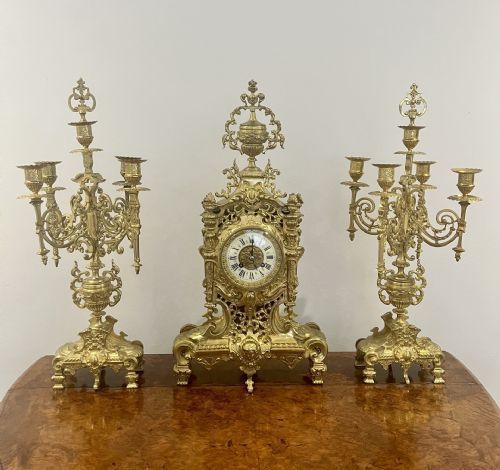
What is a clock garniture set?
A clock garniture is a matched decorative ensemble consisting of a central mantel clock flanked by matching items like candelabra or urns.
These sets were designed to create a balanced, symmetrical display across a fireplace mantel in nineteenth-century interiors.
How can I tell the period of a candelabrum?
Dating relies on examining the casting techniques, the style of the mounting screws, and the composition of the metal alloys used.
Nineteenth-century pieces often display heavier cast bronze or ormolu work compared to lighter twentieth-century revival adaptations.