


Rococo Side Table Pair
A rococo side table pair brings symmetrical French decorative grace to a room, offering matched surfaces designed for balance.
Rococo Side Table Pair
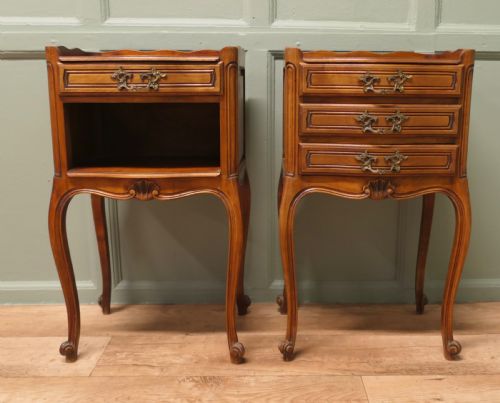
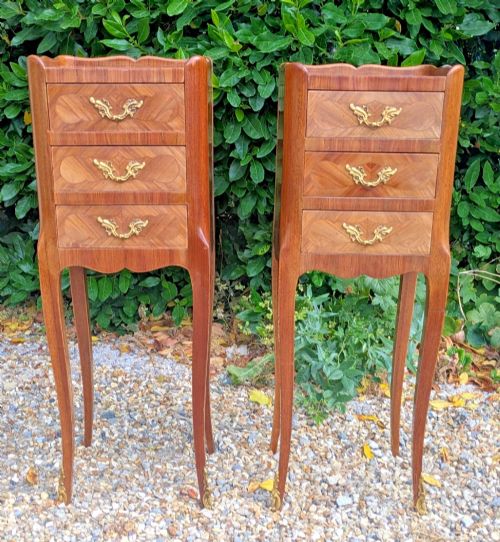
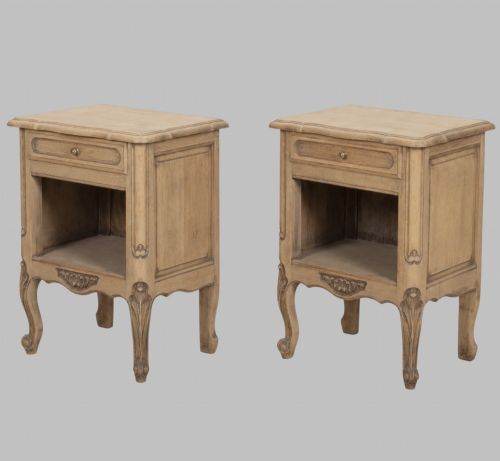
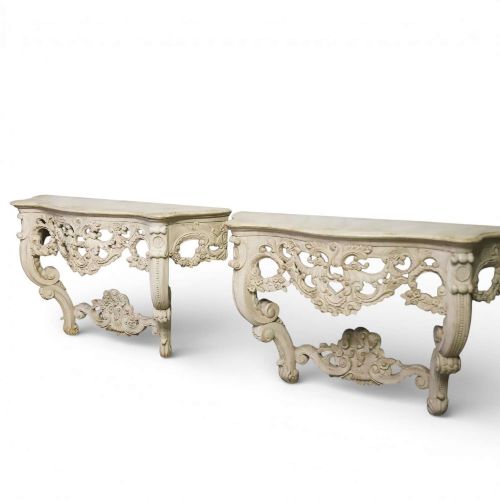
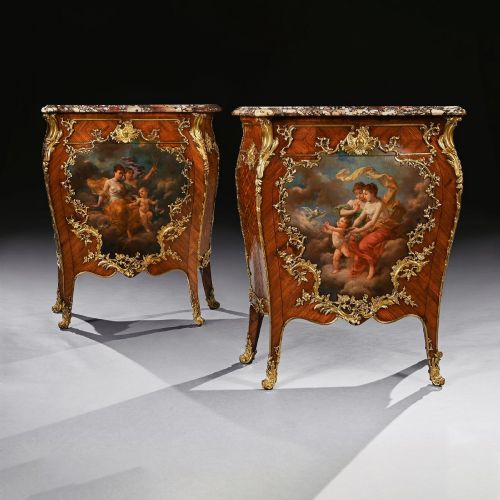
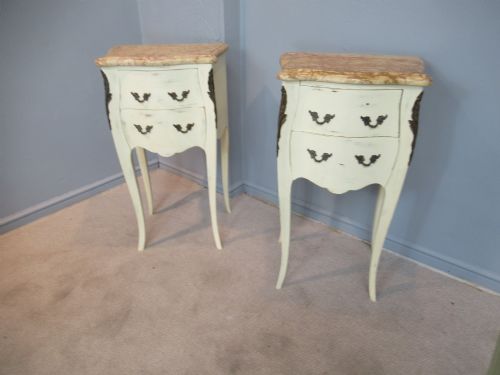
A rococo side table pair encompasses matching bedside cabinets, lamp tables, and console tables designed with the flowing asymmetrical curves typical of the style. Most examples belong to revival periods spanning the nineteenth and early twentieth centuries, alongside occasional eighteenth-century survivals.
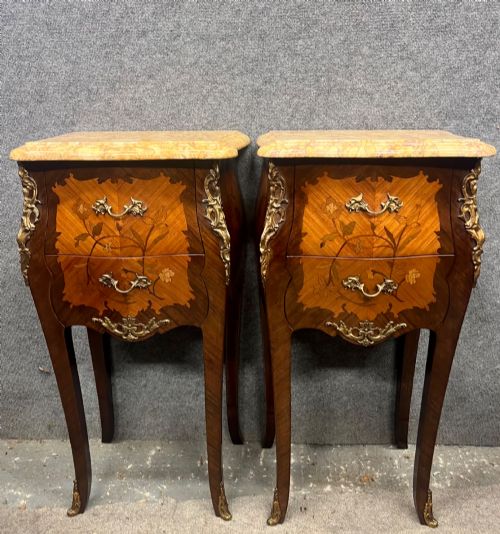
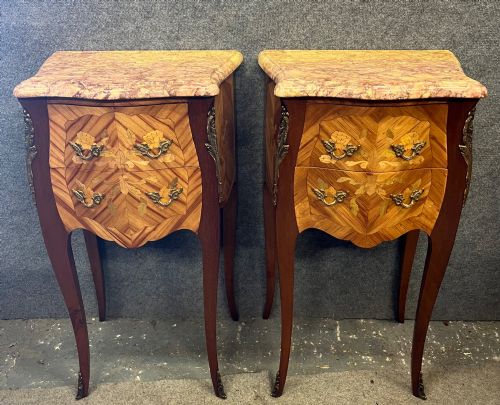
Buyers encounter walnut, kingwood, and painted finishes frequently, often paired with marble tops or intricate marquetry inlay. The selection includes wall console tables, two-tier occasional tables, and smaller bedside chests suited to domestic settings.
Materials and construction
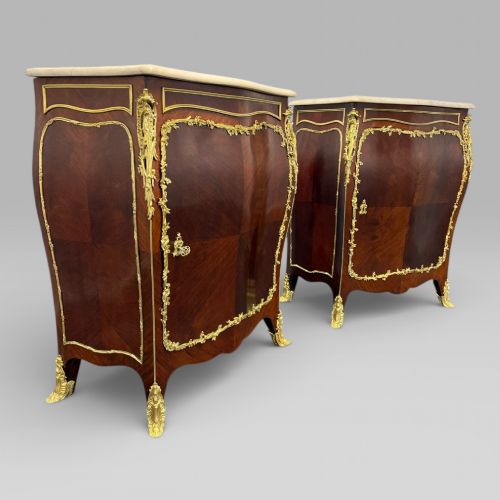
Cabinet makers utilised dense hardwoods such as walnut and kingwood as foundations for detailed floral marquetry and parquetry patterns. Ormolu and gilt bronze mounts were cast and applied to highlight the structural corners and apron mounts.
Slab marble tops, frequently shaped to follow the serpentine outlines of bombe cabinets, provide durable working surfaces. Hand-carving defines the wooden frames, particularly along the cabriole legs characteristic of the period.
Listings feature walnut, kingwood, marble, and ormolu across pieces dating from the eighteenth century to the 1930s.
Judging execution
Quality rests in the precision of the marquetry and the crispness of the cast bronze or ormolu mounts rather than the mere presence of decoration. Superior pieces display seamless veneer matching across curved drawer fronts and cabinet sides.
The weight and selection of the marble top, along with the depth and sharpness of the hand-carved woodwork on the cabriole legs, distinguish workshop standards. Finer examples maintain tighter joints and more complex timber selections throughout the carcase.
E. Kahn
The Rococo Side Table Pair Glossary
- Marquetry
- Decorative veneer work forming pictures or geometric patterns using various coloured woods. It requires considerable skill to fit the pieces precisely into the carcase.
- Ormolu
- Gilded bronze used for decorative mounts and hardware on furniture. The technique involves applying a mercury and gold amalgam to bronze.
- Cabriole leg
- A furniture leg that bends outward in a convex curve and then tapers inward in a concave arc, ending in a pad or scroll foot. This shape derives from animal limbs.
- Bombe
- A swollen or bulging out furniture shape, characteristic of continental case pieces from the period. It demands advanced woodworking techniques to shape the timber accurately.
- Vernis Martin
- A type of simulated Japanese lacquer developed in France to imitate Asian exports. Artisans applied multiple layers of varnish to achieve a translucent gloss finish.
Rococo Side Table Pair: Frequently Asked Questions
How do I place a pair in a room?
A rococo side table pair works effectively when positioned symmetrically on either side of a bed, fireplace, or large sofa. Their matching proportions create visual balance in both compact bedrooms and larger reception spaces.
Because many examples incorporate marble tops or delicate marquetry, keeping them away from direct heat sources helps preserve the timber and finish over time.
Are these pieces eighteenth century?
While the design originates in eighteenth-century France, the majority of pieces available date from nineteenth-century revival periods up to the 1930s. These later interpretations adopted the same forms and techniques as the original workshops.
Examining the construction methods and timber ageing helps determine whether a piece is an eighteenth-century original or a later revival.
How do I care for marble tops?
Marble surfaces require gentle cleaning with a damp cloth and mild soap to avoid dulling the polish. Acidic liquids like lemon juice or wine can etch the stone if left unattended.
Using coasters and placemats protects the polished surface from rings and scratches during daily use.