

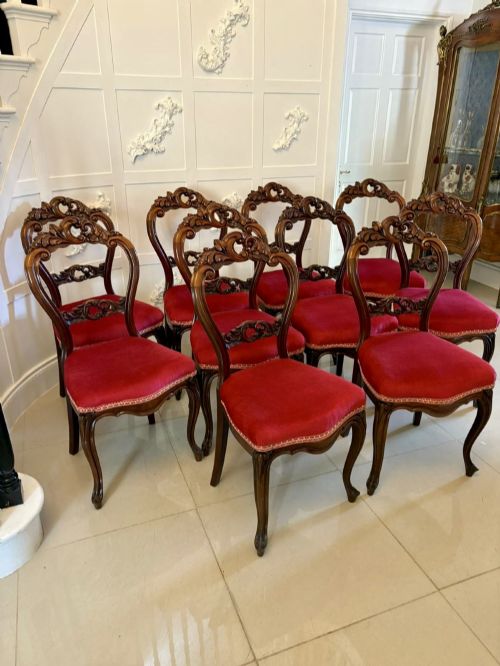
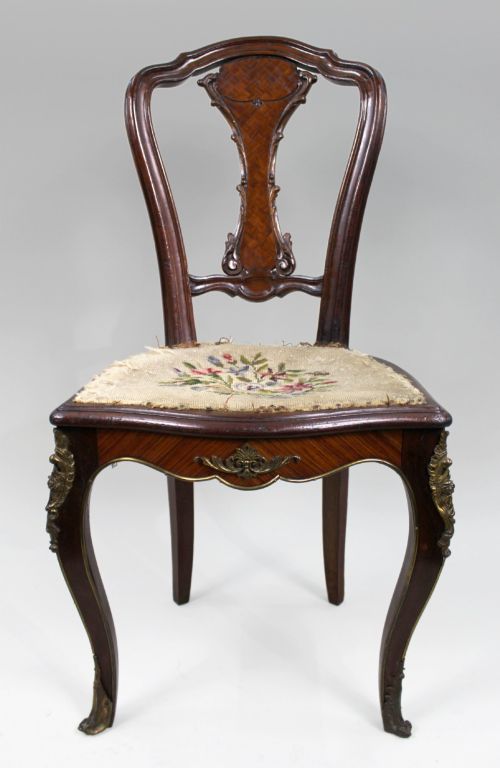
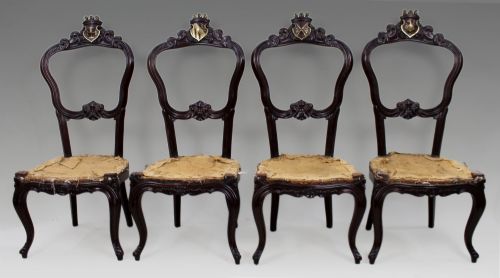
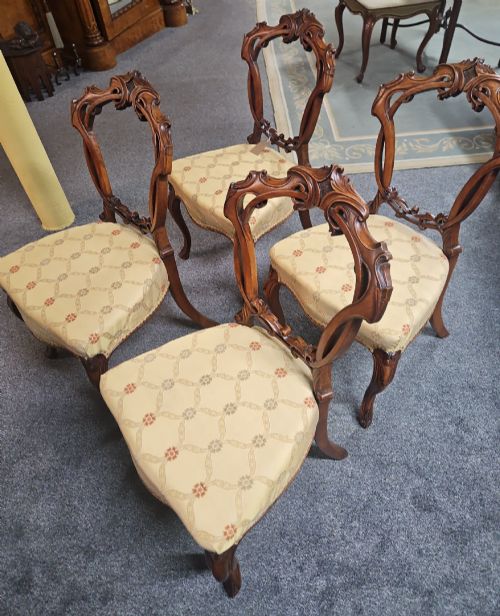
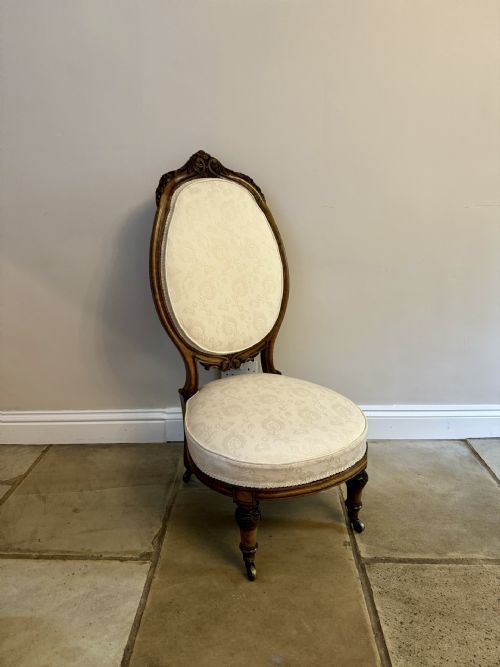
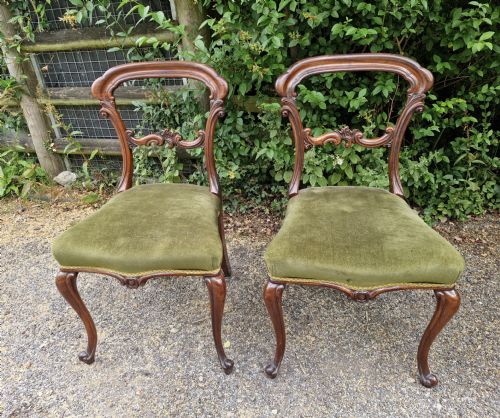
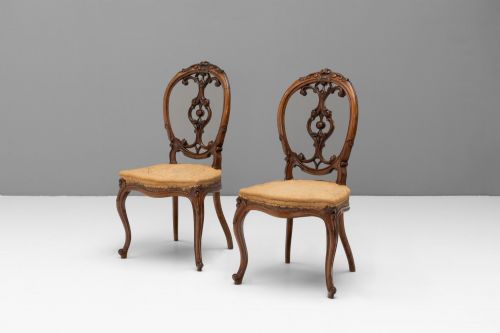


Rococo Side Chairs
Rococo side chairs bring curving carved frames and distinct period presence into a room, joining fluid ornamentation with practical seating.
Rococo Side Chairs
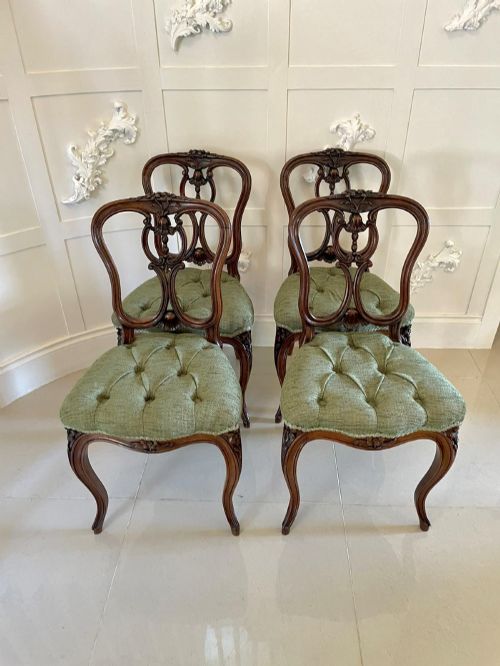
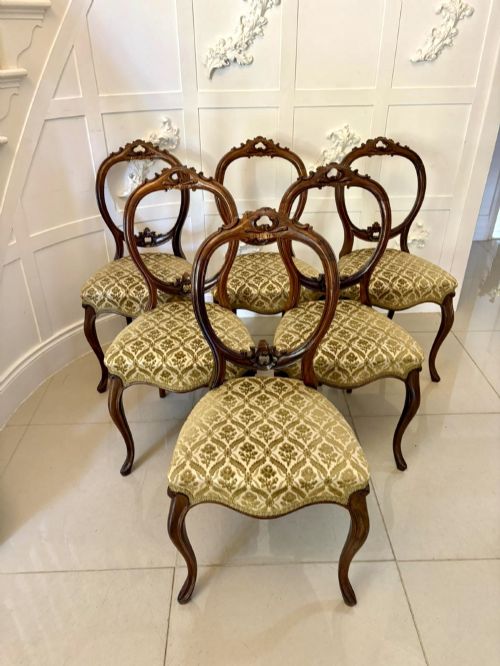
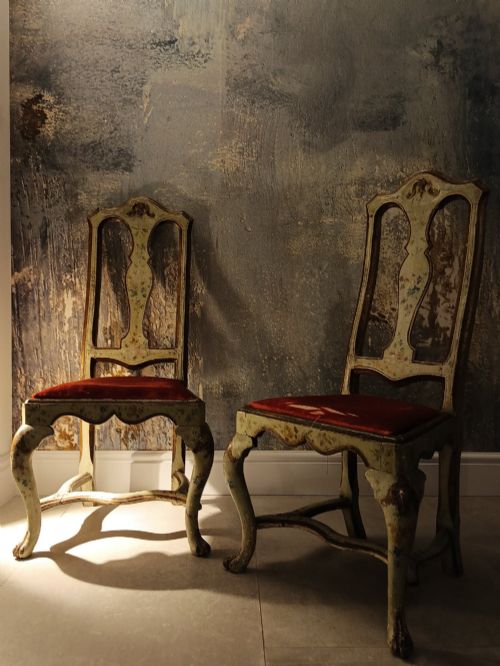
Rococo side chairs encompass seating forms designed with exuberant asymmetrical curves, C-scrolls, and naturalistic carved motifs spanning from the eighteenth century through nineteenth-century revivals. The selection includes examples originating from Italian, French, Dutch, and British workshops.
Buyers frequently encounter Victorian interpretations alongside pieces from the eighteenth century. Walnut, mahogany, and rosewood form the primary timber framework for these surviving examples.
The inventory covers formal dining sets alongside individual salon, hall, and occasional chairs. Many pieces retain fabric, velvet, or silk upholstery ranging from period coverings to contemporary textiles.
Materials and construction
Cabinetmakers shaped dense hardwoods including walnut, mahogany, and rosewood to withstand the deep undercutting required for elaborate pierced splats and scrollwork. Giltwood and kingwood appear alongside applied ormolu mounts on continental European pieces.
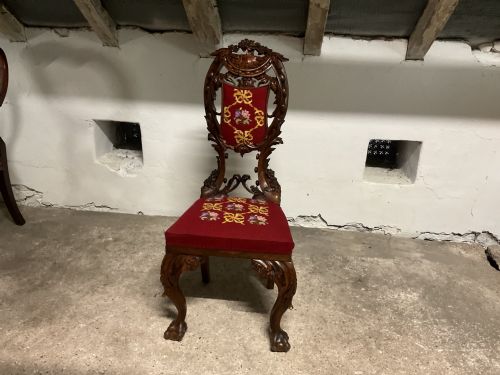
Carvers rendered naturalistic floral motifs, foliage, and crests directly into the solid timber frame by hand. Joinery relies on traditional mortise and tenon construction to support the undulating silhouettes.
Upholstery techniques involve webbing, stuffing, and stitching layers of material beneath top fabrics such as velvet, silk, and contemporary textiles, secured with decorative tarrow or gimp.
The listings span walnut, mahogany, and rosewood frameworks, incorporating eighteenth-century originals alongside nineteenth-century Victorian revival pieces.
Defining characteristics of quality
Quality rests upon the crispness and depth of the hand carving across the crest rail, apron, and cabriole legs. Superior examples display fluent, uninterrupted scrollwork where the wood cutter maintains absolute control over the grain.
Proportion and structural integrity dictate the standing of a piece, distinguishing workshop-produced seating from mass-produced Victorian factory outputs. Well-preserved timber surfaces with retained original patination command greater regard than stripped or heavily altered frames.
The Rococo Side Chairs Glossary
- Cabriole leg
- A furniture leg that bends outward in a convex curve and tapers inward in a concave curve, mimicking an animal's leg. This form dominates rococo seating designs.
- Ormolu
- Gilded bronze mounts applied to furniture for decorative accent. It appears frequently on French pieces.
- Marquetry
- Inlaid patterns using various coloured woods to create pictorial or geometric designs on furniture surfaces. Dutch pieces often employ this technique.
- Splats
- The central vertical strip of wood in the middle of a chair back. Rococo examples frequently feature pierced and carved variations of this element.
- Giltwood
- Wood that has been coated with gold leaf or gold paint. This finish highlights elaborate carved details on formal seating.
Rococo Side Chairs: Frequently Asked Questions
How do I spot a reproduction?
Examine the timber shrinkage, tool marks, and overall wear patterns around the joinery and feet. Genuine period pieces exhibit natural ageing and hand-tool signatures distinct from modern replication.
Check the interior frame construction and material composition for consistency with the stated manufacturing period. Revivals from the nineteenth century carry their own historical integrity distinct from eighteenth-century originals.
Can I use them for daily dining?
These chairs function well for everyday use provided the underlying frame joinery remains solid and stable. Periodic inspection of the leg joints prevents structural failure.
Consider the weight capacity and seat height relative to your dining table. Many antique chairs sit lower than modern standards.
How do I care for the upholstery?
Vacuum textile surfaces gently using a soft brush attachment to remove dust accumulation. Protect silk and velvet coverings from direct sunlight to prevent fading.
Consult a professional restorer for cleaning antique fabric or replacing worn internal padding. Avoid harsh chemical cleaners on fragile textiles.
What defines the revival period?
The nineteenth century witnessed a strong resurgence of eighteenth-century design vocabulary, producing detailed interpretations known as the rococo revival. Makers utilised advanced machinery alongside traditional hand carving to supply affluent Victorian households.
These revival pieces often feature heavier proportions and darker woods like rosewood and walnut. They reflect the period's taste for historicist opulence.