


Rococo Scrollwork Frame
These rococo scrollwork frame pieces bring exuberant asymmetric curves and ornate decoration to domestic interiors.
Rococo Scrollwork Frame
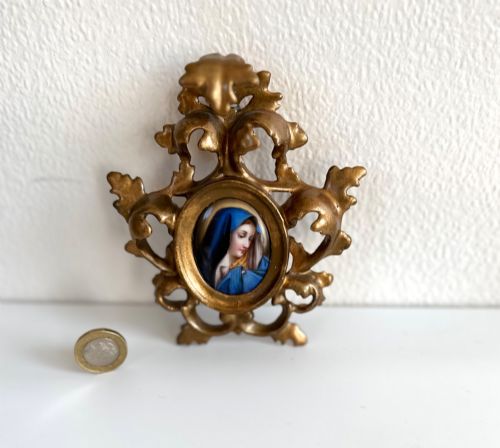
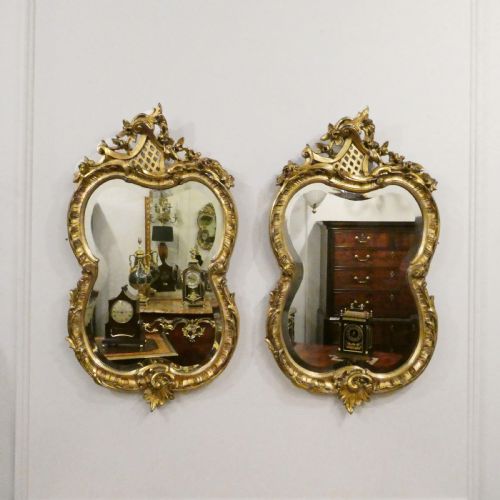
A rococo scrollwork frame delivers the curved lines and elaborate ornamentation typical of revival periods, most frequently appearing here as wall mirrors and occasionally as chandeliers or miniature portraits. The selection spans the Victorian and Edwardian eras alongside the wider nineteenth century, drawing heavily on French and Italian design idioms.
Mirrors dominate the offerings, ranging from modest hall glasses to large carved giltwood wall hangings. These items reflect a sustained taste for ornate decoration, pairing C-scrolls and S-scrolls with traditional craftsmanship.
How they were made
Makers shaped these objects using carved wood, gilt gesso, and cast brass, applying gold leaf to achieve a reflective metallic surface. Carved giltwood and mahogany provide the structural foundation for the larger wall mirrors.
Gilt metal and brass components appear frequently in smaller items and lighting, while glass serves as the central mirror plate or glazing for portrait miniatures.
Recorded periods span the nineteenth century, including specific years from 1850 up to the Edwardian era and 1920.
What varies in quality
The standard of carving and surface finish defines the distinction between pieces, particularly in how sharply the scrollwork and botanical motifs are rendered in wood or gesso. Depth of relief and the quality of the gilding determine the visual presence of the object.
Scale and proportion also influence the work, with larger carved Italian and French examples displaying more ambitious architectural framing compared to simpler domestic brass iterations.
The Rococo Scrollwork Frame Glossary
- Giltwood
- Wood that has been coated with gold leaf or a metallic substitute. This finish gives frames their characteristic bright, reflective surface.
- Gesso
- A plaster-like mixture applied to wood frames to create a smooth surface for gilding and deep relief carving. It allows for intricate scrollwork details.
- Rococo Revival
- A nineteenth-century design movement that revived the ornate, asymmetrical ornamentation of the eighteenth-century French court. It favours curved lines and naturalistic motifs.
- Baroque
- An earlier, heavier decorative style marked by drama and grandeur. Elements of this style often bleed into nineteenth-century revival pieces.
- Cartouche
- An ornamental tablet or frame resembling a rolled-up piece of paper, frequently incorporated into the scrollwork of these designs.
Rococo Scrollwork Frame: Frequently Asked Questions
How do I hang a heavy giltwood mirror?
Large carved giltwood frames require robust wall fixings anchored directly into masonry or substantial studwork to support their considerable weight safely.
Professional mirror hangers often utilise mirror plates or heavy-duty wire rated well above the actual mass of the piece.
What rooms suit a rococo wall mirror?
These ornate frames function effectively as focal points above mantelpieces, in hallways, or as dressing mirrors in bedrooms.
Their reflective glass and decorative borders help to bounce light around smaller or darker interior spaces.
How do I clean an antique gilt frame?
Dusting should be performed gently with a soft, dry brush to avoid disturbing fragile gesso or gold leaf layers. Moisture and chemical cleaners must be avoided entirely, as they damage historical gilding.
Are brass and giltwood pieces from the same era?
Cast brass and carved wood versions both appear throughout the Victorian period and into the early twentieth century. Workshops produced different tiers of domestic items simultaneously to suit various budgets and interior requirements.