





Rococo Revival Bureau Plat
A rococo revival bureau plat brings extravagant serpentine curves and rich mounts to a study, offering a grand surface for writing.
Rococo Revival Bureau Plat
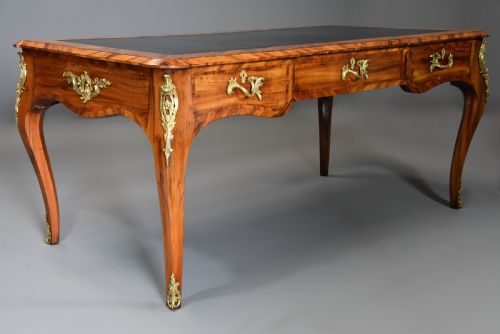
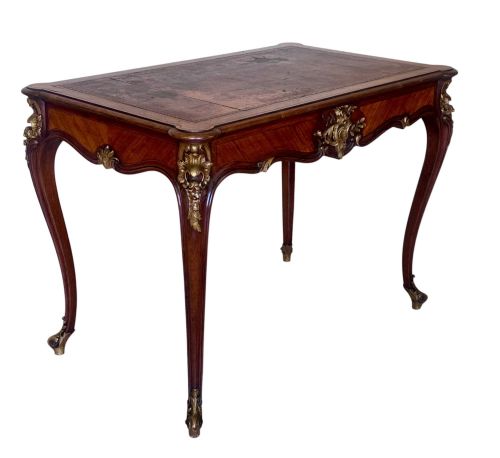
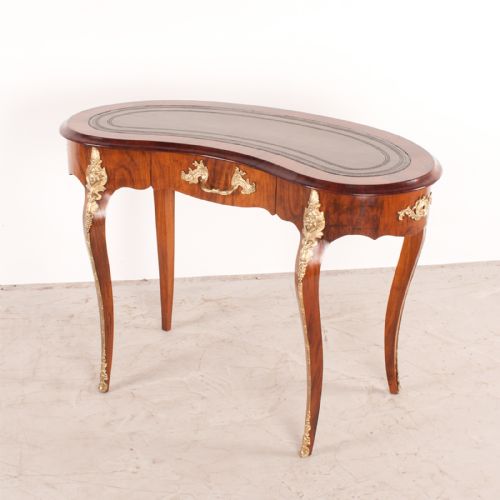
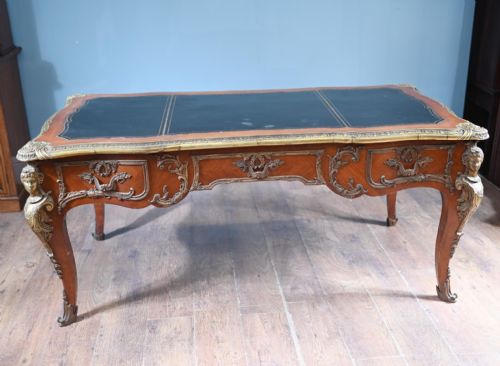
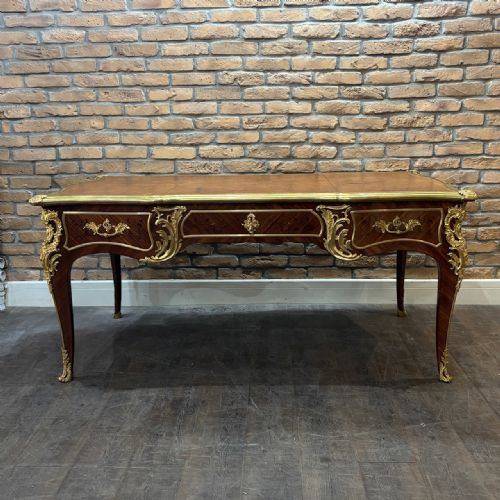
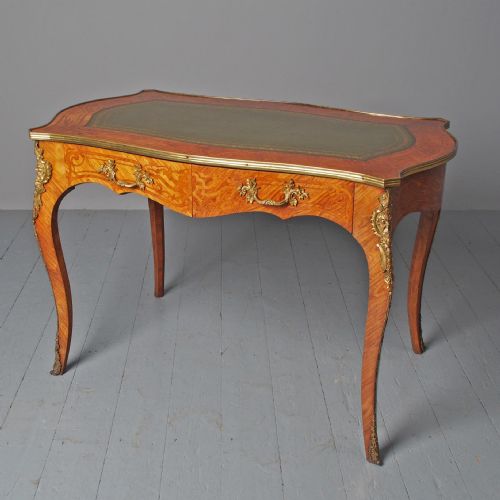
A rococo revival bureau plat is a grand writing table designed in the serpentine and scrolling manner of eighteenth-century France, though the pieces gathered here date largely from the nineteenth century and the Victorian era. These desks serve as striking centrepieces in a room, combining large proportions or kidney-shaped forms with elaborate marquetry and decorative framing.
Most examples on this page reflect Louis XV and Louis XVI French revivals, constructed as freestanding writing tables rather than traditional wall-facing desks. They bridge the gap between ornamental furniture and functional workspace, utilised for correspondence and display.
How they were made
Cabinet makers utilised choice timbers such as kingwood, walnut, burr walnut, mahogany, satinwood, calamander, and goncalo alves, often arranging veneers in intricate marquetry patterns across the surfaces. These carcases are shaped with serpentine fronts and sides, demanding precise woodworking skill to achieve the fluid contours characteristic of the style.
Gilt bronze and ormolu mounts are cast and chased to frame the drawers, corners, and legs, while inset leather writing surfaces provide a functional top panel. Brass details frequently accent the edges and feet, completing the layered metalwork standard in these workshops.
Rococo Revival Bureau Plat Retail Price Guide 2026
Typical asking prices for rococo revival bureau plat among the pieces listed under this phrase on Sellingantiques today, from the lower quarter to the upper quarter. They describe what is for sale here now, not the wider market.
Some nineteenth-century makers hid secret small drawers within the frieze for private correspondence.
What varies in quality
The standard of a bureau plat rests on the crispness of its bronze and ormolu mounts and the complexity of its timber veneers. Finer pieces display deeply chased metalwork that fits the wooden carcase precisely, alongside meticulous marquetry inlay across the top and sides.
Proportion and scale also separate the tiers of craftsmanship, with superior examples maintaining balanced serpentine curves and substantial proportions without feeling heavy. The choice of secondary woods and the refinement of the leather inset further distinguish standard workshop output from exceptional cabinet work.
CH. Jeanselme & Co·Edwards & Roberts·Maison Millet
The Rococo Revival Bureau Plat Glossary
- Bureau plat
- A freestanding writing table, typically fitted with one or more drawers in the frieze. This form originates in France and stands away from the wall.
- Ormolu
- Gilded bronze mounts applied to furniture for decoration and edge protection. The technique involves a mercury amalgam applied to cast bronze.
- Marquetry
- Decorative patterns formed by fitting contrasting veneers into a wooden ground. Makers used various coloured timbers to create floral or geometric designs.
- Serpentine
- A line or surface that curves outward and then inward, creating an undulating wave effect. This shape defines the profile of many revival desks.
- Kingwood
- A dense, heavily figured Brazilian timber with dark violet-brown grain used extensively in fine cabinet making. It provides a rich ground for marquetry work.
Rococo Revival Bureau Plat: Frequently Asked Questions
Where should a bureau plat go?
A bureau plat is designed as a freestanding piece, making it ideal for the middle of a study or library rather than pushed against a wall. This placement shows off the finished back and the detailed mounts from every angle.
Ensure there is adequate natural or task lighting nearby, as the dark leather writing surfaces absorb light. Pair the desk with a low-backed chair that fits beneath the frieze drawers.
How do I care for the leather top?
The leather inset requires gentle cleaning with a slightly damp cloth, avoiding harsh chemical sprays or saddle soaps that might strip the original colour. Conditioning wax can be applied periodically to keep the hide supple.
Keep the desk away from direct sunlight and heat sources to prevent the leather from drying out and cracking over time.
What is the difference between walnut and kingwood?
Walnut offers a warm, figured brown grain with various lighter swirls, used commonly across Victorian writing tables. Kingwood is a denser, darker tropical timber marked by distinct violet and brown contrasts.
Kingwood frequently appears in combination with intricate marquetry and gilt bronze mounts, whereas walnut often relies on its natural grain patterns and carved wooden details.
Can I use a bureau plat for daily work?
These desks accommodate laptops and modern writing materials comfortably, provided you protect the leather surface with a desk pad. The frieze drawers offer convenient storage for small stationery items.
Be mindful of the weight placed on the delicate serpentine frames and avoid overloading the drawers to protect the original nineteenth-century construction.