




Rococo Revival Art
These rococo revival art pieces bring nineteenth-century flourish and fluid ornament to your walls and rooms.
Rococo Revival Art
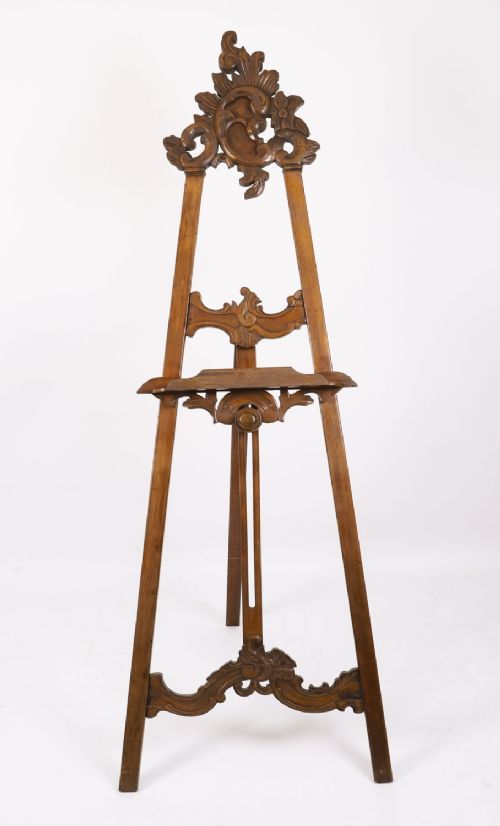
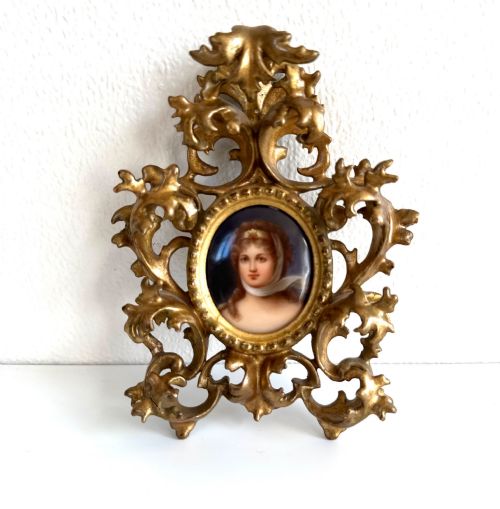
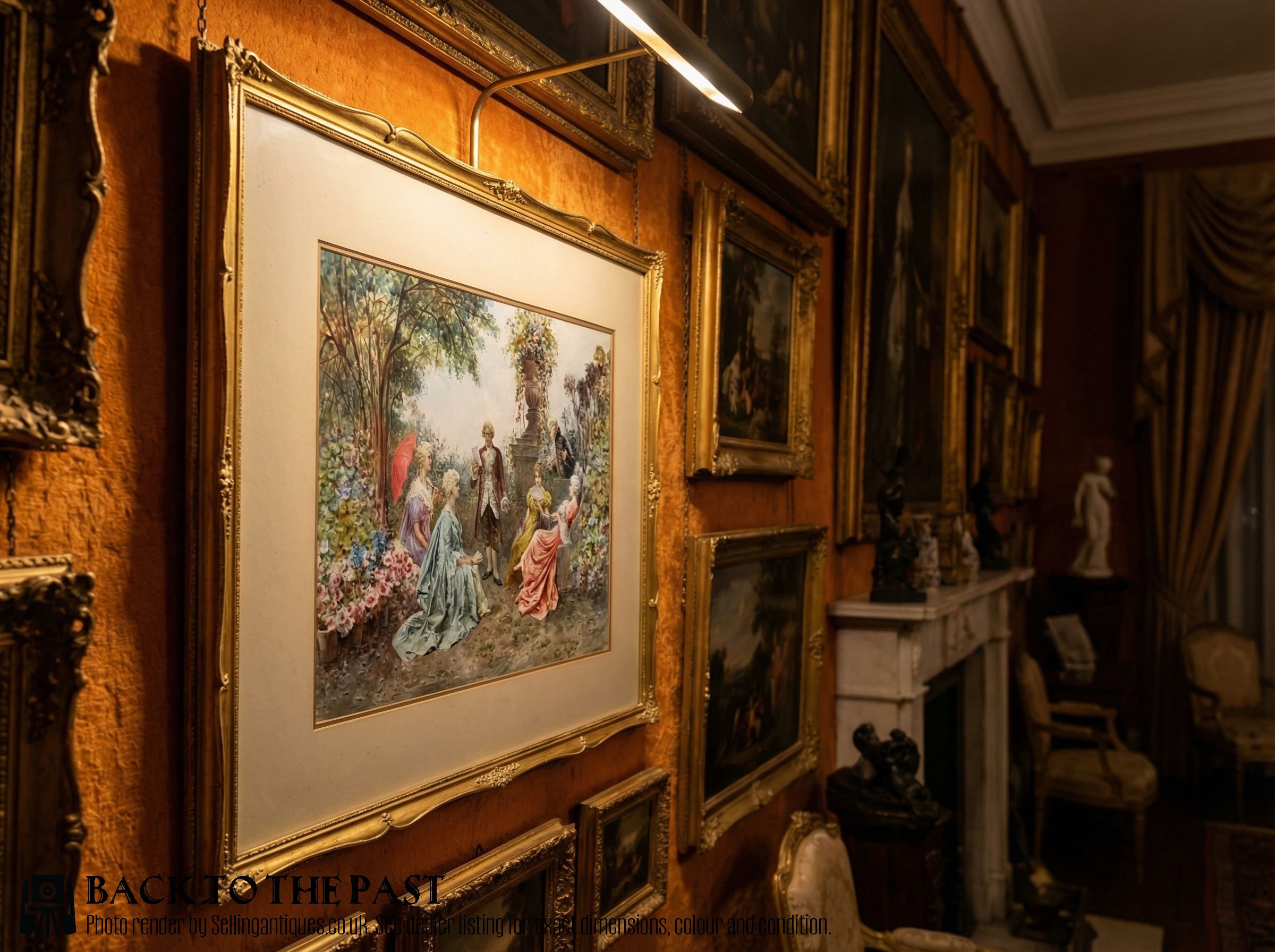
When you search for rococo revival art, you encounter a selection spanning oil paintings, watercolours, picture frames, and occasional furnishings like armchairs or an easel. The nineteenth century dominates this category, bringing together ornate giltwood frames, portrait miniatures, and detailed genre scenes.
You are most likely to meet nineteenth-century oil paintings and heavily decorated gesso frames on this page. These pieces capture the revival of eighteenth-century motifs through nineteenth-century hands, often originating from French, Italian, or British makers.
The assortment balances wall art with decorative objects, including bronzes and needlework. Each object carries the characteristic scrolls and asymmetrical curves of the revival style, whether applied to canvas or carved into wood.
How they were made
Makers built frames and decorative supports using carved wood, gesso, and gold leaf, applying layers to achieve a deep gilt finish. Gilding and gesso work allowed artisans to create high-relief scrollwork and floral motifs characteristic of the period.
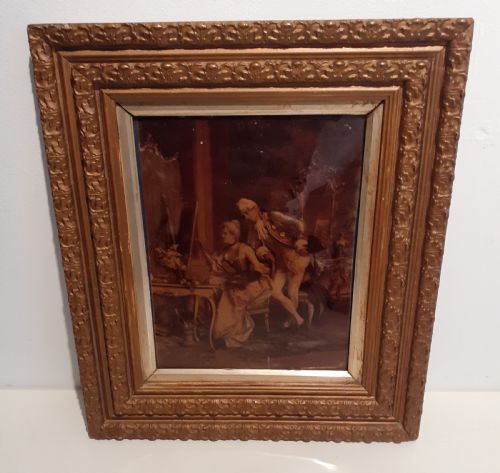
Painters worked primarily with oil on canvas or watercolour on paper, producing historical genre scenes, landscapes, and portraits. Miniatures and crystoleum prints represent the smaller scale of visual work found alongside large gilt frames.
Hardwood structures in seating and easel construction utilised traditional joinery suited to nineteenth-century workshop practices. Metalwork items like bronzes relied on casting techniques to capture fine surface detail.
Current listings feature nineteenth-century oil paintings, watercolours, and giltwood frames alongside bronzes and wood furniture.
What varies in quality
Quality in frames and gilded objects rests on the crispness of the gesso modelling and the preservation of the original gilt surface. Deeper relief and hand-carved details distinguish superior pieces from simpler moulded versions.
In paintings and watercolours, the dexterity of brushwork and the expressive rendering of figures separate accomplished works from standard studio output. Provenance and attribution to named artists elevate the standing of a canvas or watercolour.
For wooden items and bronzes, the integrity of the material and the subtlety of the final finish dictate the grade of the piece. Preservation of original components without aggressive modern intervention marks the better examples.
Martinetti·William Edward Frost·Arturo Orselli·Joaquín Luque y Roselló·Marcel Brunery·Pompeo Massani·Belisario Gioja
The Rococo Revival Art Glossary
- Giltwood
- Wood carved and coated with gold leaf or a metallic substitute. This material provides the brilliant reflective surface seen on many nineteenth-century picture frames.
- Gesso
- A plaster mixture applied to wood surfaces as a base for gilding or painting. Artisans carved and moulded this substance to form raised decorative motifs.
- Crystoleum
- A method of applying a hand-painted colour to the reverse of a glass-mounted photograph or print. This technique gained popularity during the Victorian and Edwardian periods.
- Needlework
- Textile art created with thread and a needle on a canvas ground. Framed examples from the nineteenth century often depict pastoral or domestic scenes.
- Genre painting
- Artwork depicting scenes from everyday life, typically involving human figures engaged in mundane or social activities. These compositions were particularly favoured by nineteenth-century artists.
Rococo Revival Art: Frequently Asked Questions
What is rococo revival art?
It encompasses nineteenth-century paintings, watercolours, and ornate frames that imitate the curved, asymmetrical ornamentation of the eighteenth-century rococo movement.
These objects include framed needlework, bronzes, and portrait miniatures created during the Victorian era.
How do I date these pieces?
Dating relies on stylistic markers, framing techniques, and signatures associated with nineteenth-century artists and workshops.
Evidence on this page points primarily to the mid-to-late nineteenth century and early twentieth century.
Where were these items made?
The pieces originate from various European traditions, with specific works linked to French, Italian, and British makers.
Materials and painting styles often reflect the regional preferences of these artistic centres.
How should I care for giltwood frames?
Giltwood requires careful dusting with a soft, dry brush to protect the delicate gold leaf and gesso surfaces.
Keep these items away from direct sunlight and excessive moisture to prevent cracking or flaking.
Can I hang oil paintings in direct sunlight?
Oil paintings and watercolours are sensitive to ultraviolet light and temperature fluctuations.
Positioning them away from direct sun and damp areas preserves the pigment and canvas integrity.