



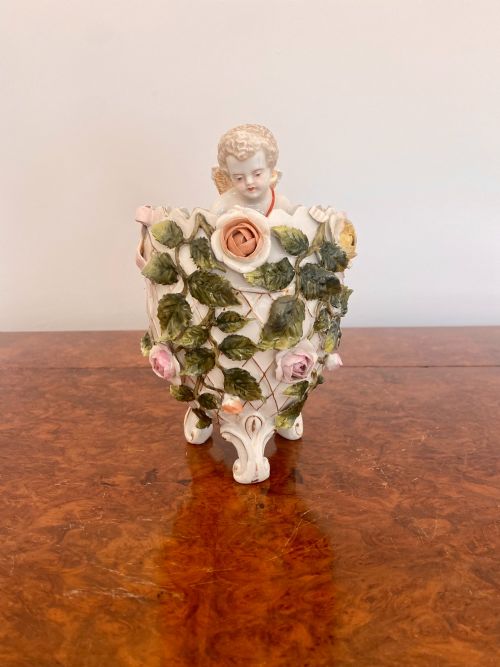
Rococo Porcelain Vessel
A rococo porcelain vessel brings exuberant curves and delicate floral painting into a room, capturing the lively spirit of eighteenth-century design.
Rococo Porcelain Vessel
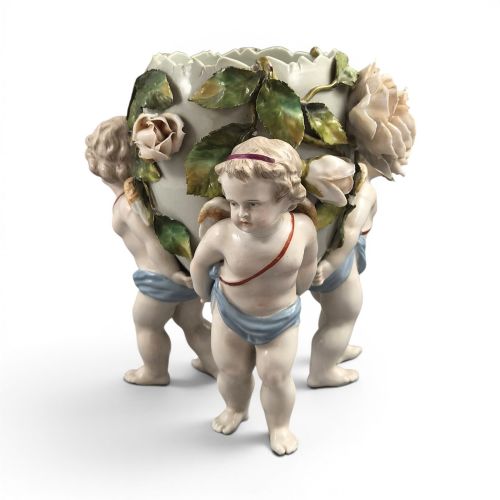
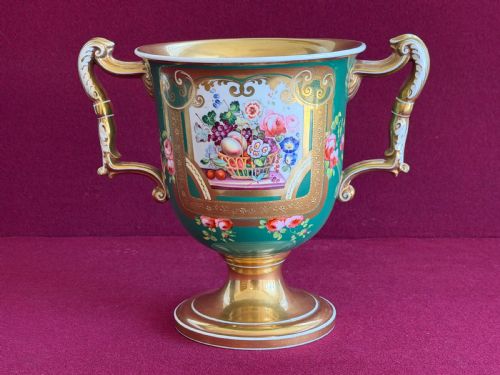
When you search for a rococo porcelain vessel, you encounter a range of forms spanning the eighteenth, nineteenth, and early twentieth centuries. These pieces encompass everything from lidded vases and potpourri jars to loving cups, centrepieces, and bough pots.
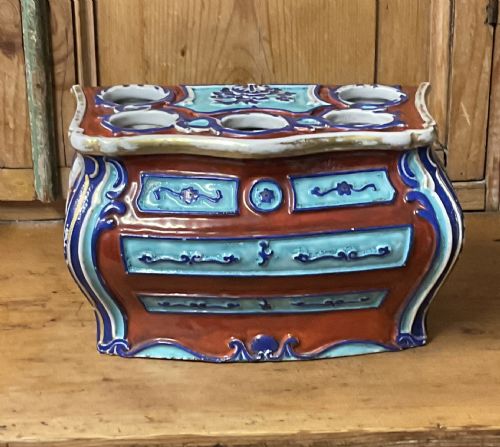
The objects on this page originate from diverse European centres including France, Germany, and Britain, alongside examples influenced by Chinese export traditions. The aesthetic relies heavily on the Rococo and Rococo Revival styles, featuring asymmetrical scrolls, naturalistic motifs, and elaborate mouldings.
You are most likely to meet nineteenth-century interpretations alongside earlier eighteenth-century productions. These later pieces often draw direct inspiration from famous factories like Meissen, Sevres, and Chelsea, replicating their ornate charm for Victorian and Edwardian interiors.
Materials and production methods
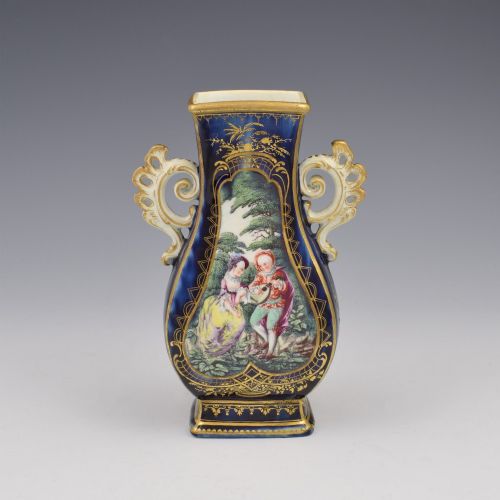
Makers utilised both soft-paste and hard-paste porcelain as the primary body for these vessels, shaping them through skilled moulding and throwing techniques. Painters then applied detailed hand-painted floral designs, gallant scenes after Watteau, and intimate figural motifs directly onto the ceramic surface.
Gilding played a crucial role in finishing the pieces, with artisans applying gold leaf and fine gilding to accentuate raised scrollwork and rims. Many vessels also incorporated cast and chased ormolu and gilt bronze mounts, combining metalwork with porcelain to heighten the decorative effect.
Listings feature porcelain vessels spanning the eighteenth to early twentieth centuries, incorporating both hard-paste and soft-paste bodies with intricate enamel painting.
Distinctions in quality
The standard of a rococo porcelain vessel rests upon the crispness of its moulded details and the finesse of its hand-painting. Superior examples display sharply defined scrollwork, delicate polychrome enamels, and meticulously applied gold leaf that remains bright and intact.
Mounts and secondary materials further differentiate the pieces. High-grade vessels feature heavy, finely chased ormolu or gilt bronze mounts that fit the ceramic body precisely, whereas simpler items rely purely on the glazed porcelain form without supplementary metalwork.
Chelsea Porcelain·H & R Daniel·Sitzendorf Porcelain·Jacob Petit·Coalport Porcelain
The Rococo Porcelain Vessel Glossary
- Soft-paste porcelain
- An artificial ceramic paste fired at lower temperatures than hard-paste porcelain, common in early European factories. It produces a warm, slightly creamy body with a soft glaze.
- Hard-paste porcelain
- A true ceramic compound containing kaolin and petuntse, fired at very high temperatures. It results in a dense, highly durable, and brilliantly white body.
- Ormolu
- Finely ground high-carat gold applied to a bronze base through a mercury amalgamation process, or later via electroplating. It provides a rich, warm golden finish to decorative mounts.
- Bough pot
- A specialised ceramic vessel designed to hold cut branches or flowers for interior decoration. They often feature pierced covers to keep stems arranged neatly.
- Potpourri
- A mixture of dried petals and spices kept in a perforated jar to fragrance a room. The vessels made for this purpose typically include pierced lids or pierced shoulders.
Rococo Porcelain Vessel: Frequently Asked Questions
What is a rococo porcelain vessel?
A rococo porcelain vessel is a decorative ceramic object characterised by asymmetrical scrolls, C-scrolls, and naturalistic motifs typical of the mid-eighteenth-century movement and its later nineteenth-century revivals. These items include vases, urns, and potpourri containers.
They were designed primarily for display on mantelpieces, consoles, and tables in wealthy homes, often serving to showcase the owner's taste and refinement.
How were these vessels used originally?
Originally, these vessels functioned as ornamental centrepieces, floral displays, or containers for scented potpourri and boughs. Their elaborate forms were meant to catch the eye and complement formal interior decoration.
While some held fresh flowers or dried botanicals, many existed purely as luxury art objects to be admired in drawing rooms and parlours.
How do I care for antique porcelain?
Caring for antique porcelain requires gentle handling and regular dusting with a soft, dry brush. Avoid harsh chemical cleaners or abrasive cloths that can damage delicate hand-painted enamel or wear away gold leaf.
If cleaning is necessary, use a damp cloth with mild soap, ensuring the piece is thoroughly dried afterwards, particularly around metal mounts.
How can I tell an eighteenth-century piece from a nineteenth-century revival?
Distinguishing periods relies on examining the paste, the quality of the enamel colours, and any factory marks on the base. Eighteenth-century ceramics often exhibit softer glazes and hand-mixed pigments characteristic of early production methods.
Nineteenth-century revival pieces, while exceptionally well-made, frequently feature brighter, more uniform machine-mixed colours and distinct nineteenth-century factory stamps or style indicators.