
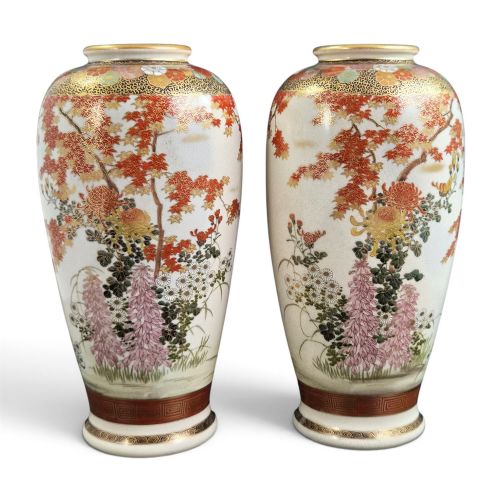
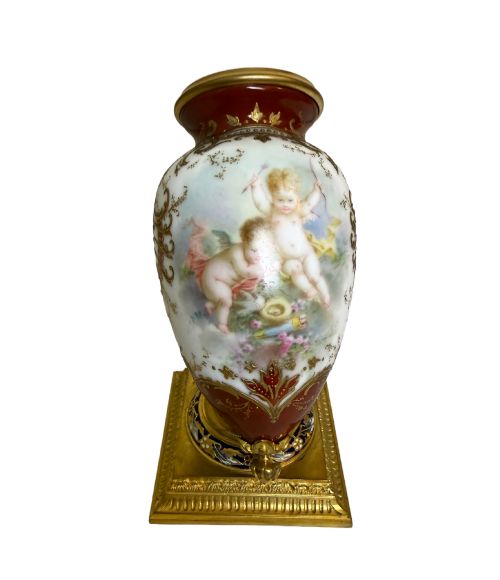
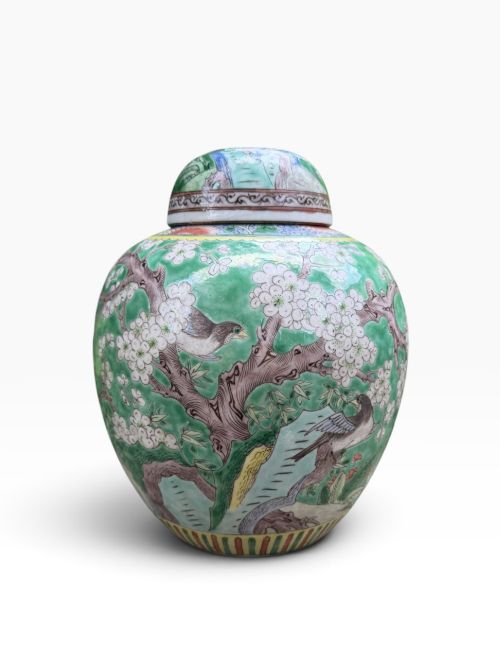
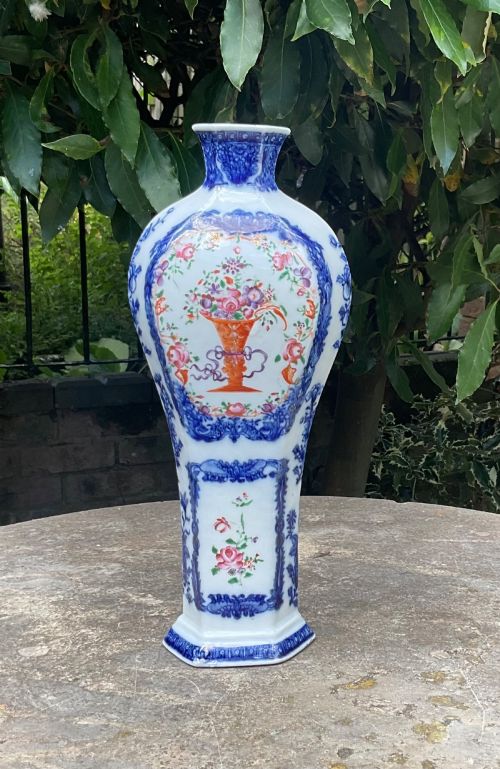
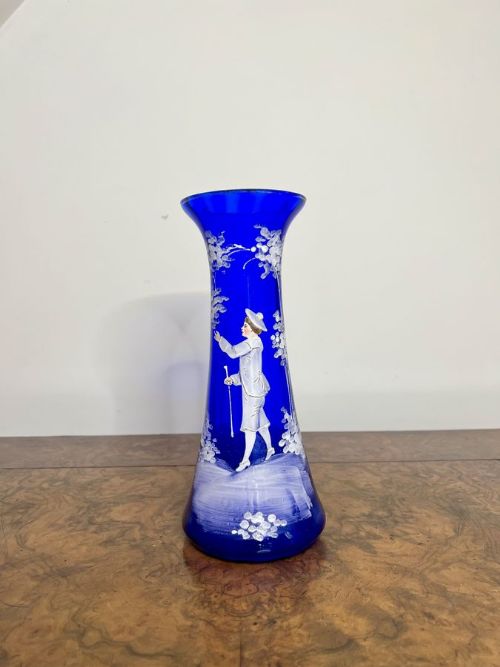
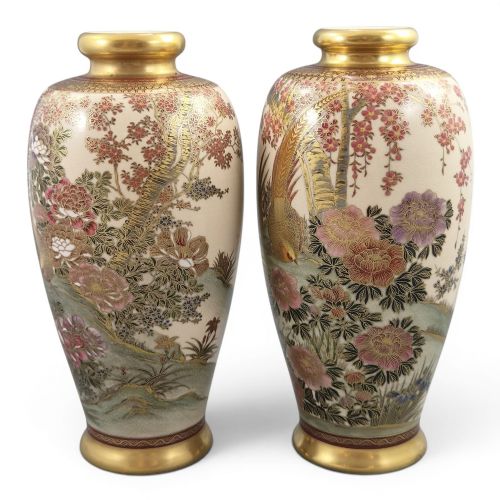
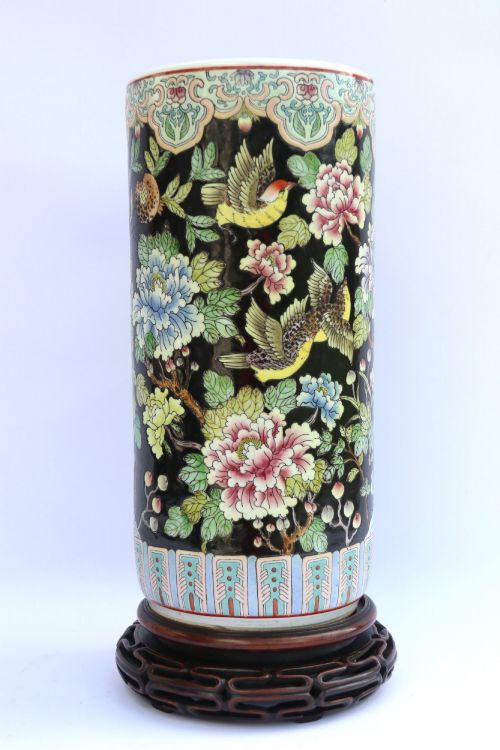

Painted Enamel Vase
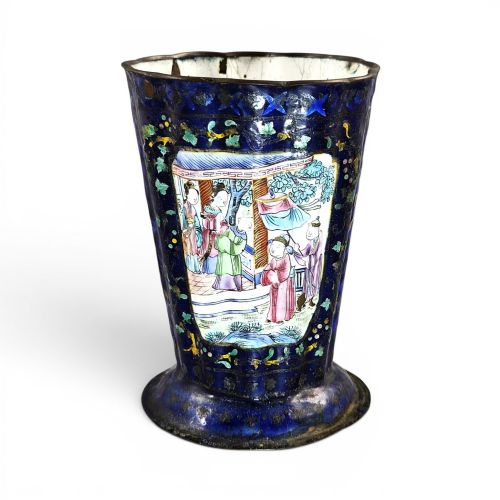
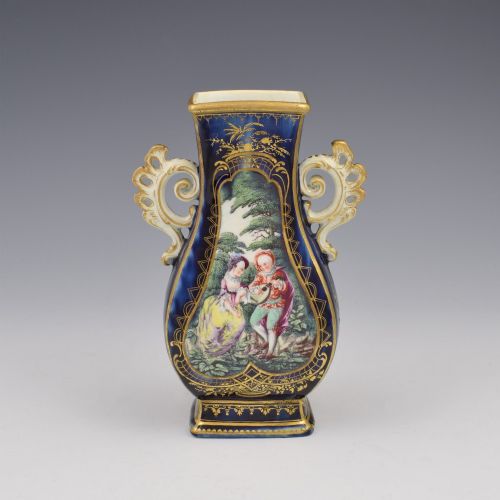
When you search for a painted enamel vase, you are looking at vessels where ceramic or glass surfaces carry hand-painted vitreous pigments fused by heat.
Painted Enamel Vase
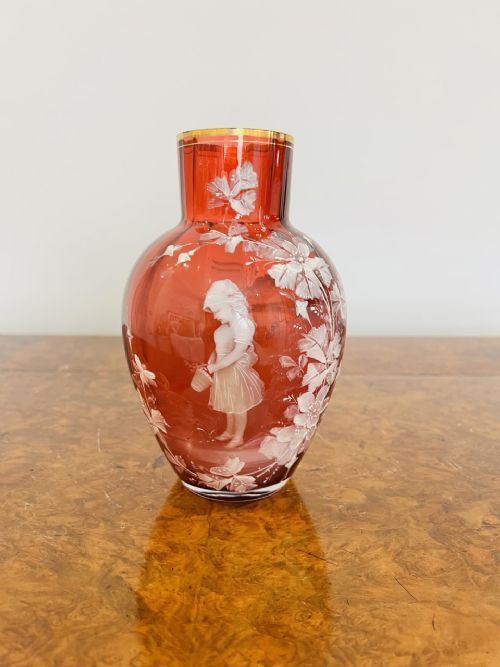
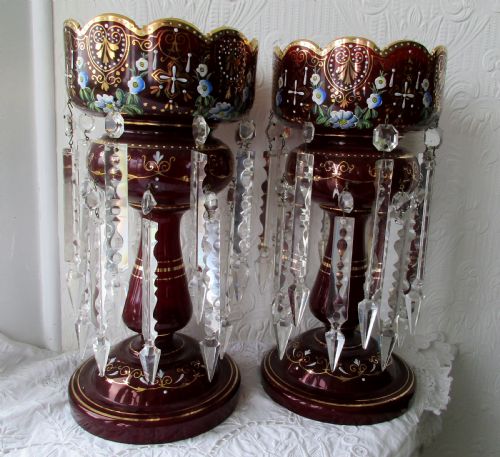
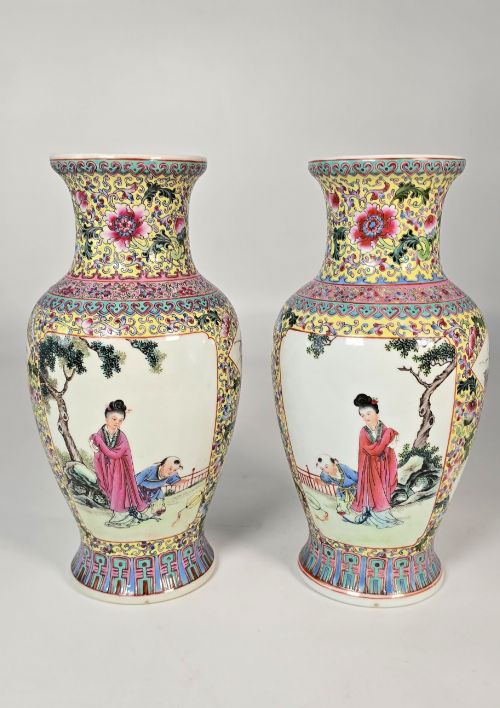
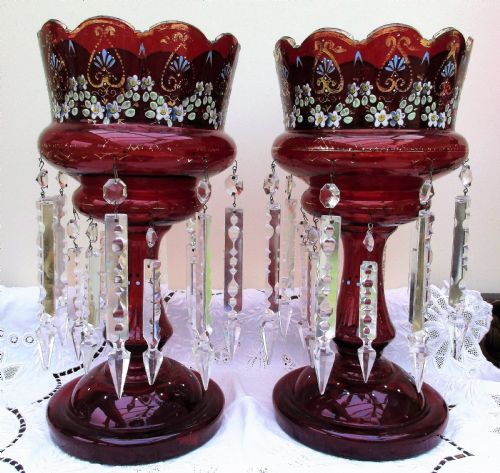
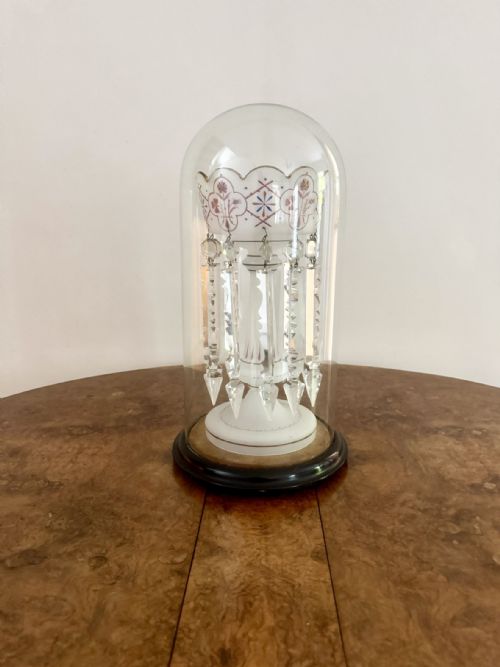
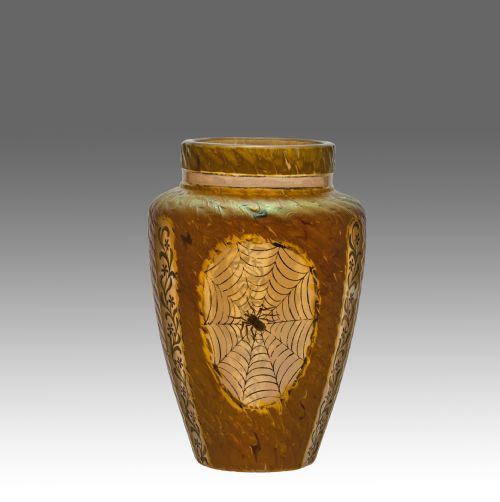
A painted enamel vase brings together works in porcelain, earthenware, and glass decorated with mineral colours fixed by kiln firing. The selections span 18th century Chinese vessels, Victorian ruby glass lustres, and early 20th century Art Nouveau glass.
The form appears in various shapes including ginger jars, mantel lustres, and bulb vases. English, French, Bohemian, and Japanese workshops each brought distinct traditions to the painting of enamels upon vessels.
Victorian cranberry and opaline glass versions sit alongside Chinese export porcelain and Japanese Satsuma earthenware. Buyers encounter these decorative forms across several centuries of production.
How they were made
Craftsmen applied powdered glass or metal oxides suspended in a medium onto porcelain, glass, or earthenware bodies using fine brushes. Subsequent firing in a kiln melted the enamel to fuse the coloured decoration permanently to the substrate.
Gilt highlights and gold leaf frequently supplemented the painted enamel pigments, adding reflective detail to the design. Glass pieces relied on hand-blown techniques in ruby, green, or opaline tones before receiving their enamel surface work.
Listings feature 19th Century, Victorian, and 18th Century periods alongside glass, porcelain, and earthenware materials.
What varies in quality
The precision and detail of the brushwork separate standard production from exceptional pieces. Artisans who rendered floral scenes, figures, or heraldic motifs with careful shading achieved greater depth than those who applied flat, simple washes of colour.
The weight and clarity of the underlying glass or porcelain ground influence the overall standard of the vessel. Original fittings such as glass drops on lustres or matching covers on jars preserve the integrity of the piece.
Kralik Glass·Minton·George Tye·Samson Paris·Moser
The Painted Enamel Vase Glossary
- Enamel
- Powdered glass melted onto a surface by firing in a kiln. It provides durable colour on glass, metal, and ceramic bodies.
- Lustre
- A decorative vase or vessel fitted with hanging glass prisms. These pieces caught and reflected candlelight in period interiors.
- Opaline glass
- An opaque or translucent glass developed in pale shades of blue, pink, or white. It served as a smooth background for painted floral motifs.
- Famille rose
- A palette of Chinese porcelain decoration dominated by opaque pink enamel. The style emerged in the 18th century and continued through later periods.
- Satsuma
- Japanese earthenware featuring a crackled cream glaze decorated with polychrome enamels and gold leaf. Workshops in Kyoto and Kobe produced these intricate wares.
Painted Enamel Vase: Frequently Asked Questions
How do I clean a painted enamel vase?
Dust the surface gently with a soft, dry brush to remove particles without disturbing the raised enamel work.
Avoid immersing antique glass or earthenware in water, as moisture can damage the old adhesives or unprotected metal leaf.
Are these vases suitable for holding water?
Many older vessels, particularly those with delicate gilt work or metal mounts, function best as decorative objects rather than water holders.
Changes in temperature and moisture can stress historical glass and porous earthenware bodies over time.
How can I tell Victorian glass from later pieces?
Victorian glass often displays distinct weight, hand-blown pontil marks on the base, and characteristic colours like cranberry or opaline.
Examination of the enamel style and the wear on the base helps distinguish 19th century production from later copies.
What is the difference between enamel and glaze?
Glaze is applied to ceramics before the main high-temperature firing to form a glassy coating over the clay body.
Enamel is painted onto an already fired and glazed surface, then fixed at a lower temperature.